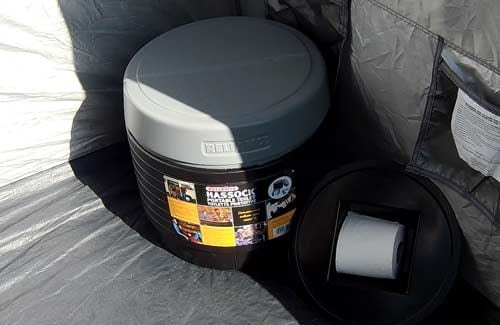
This review of the Reliance Products Hassock portable toilet shows that it’s a dependable, low-cost bucket toilet built for simple trips, supporting users up to 275 pounds (125 kg) under normal static seating conditions.
Table of Contents
How the Reliance Hassock works
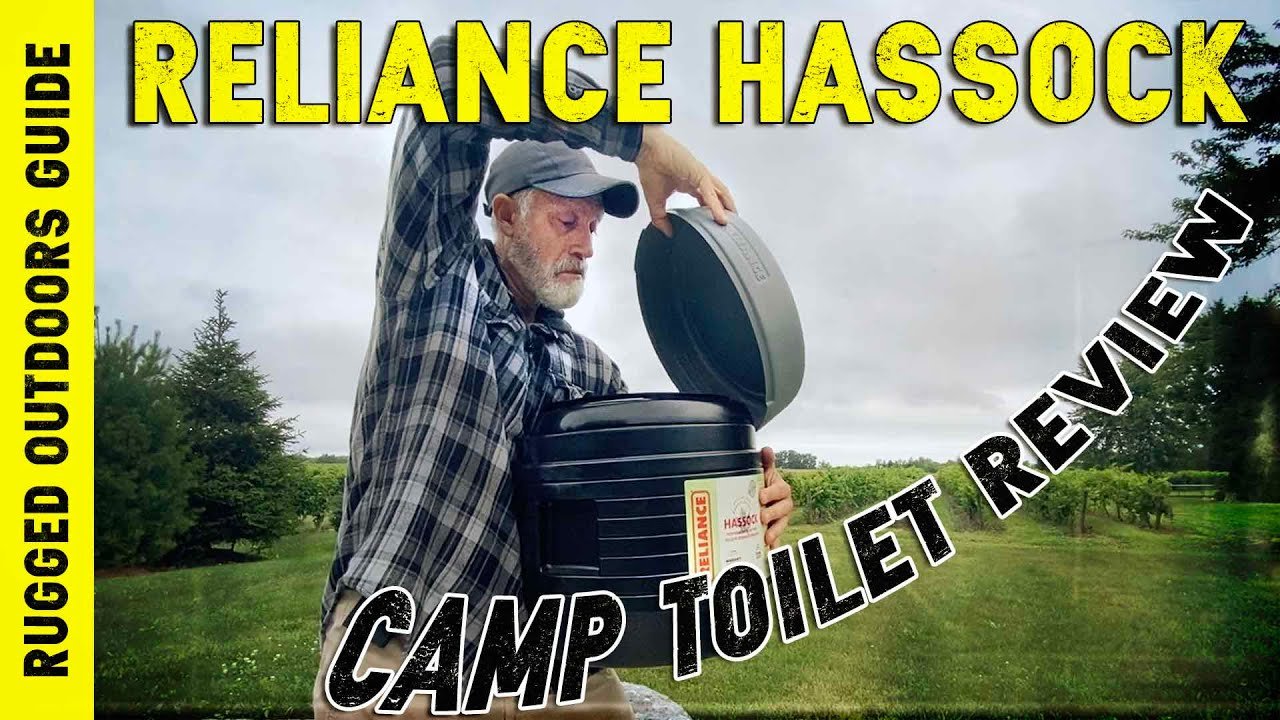
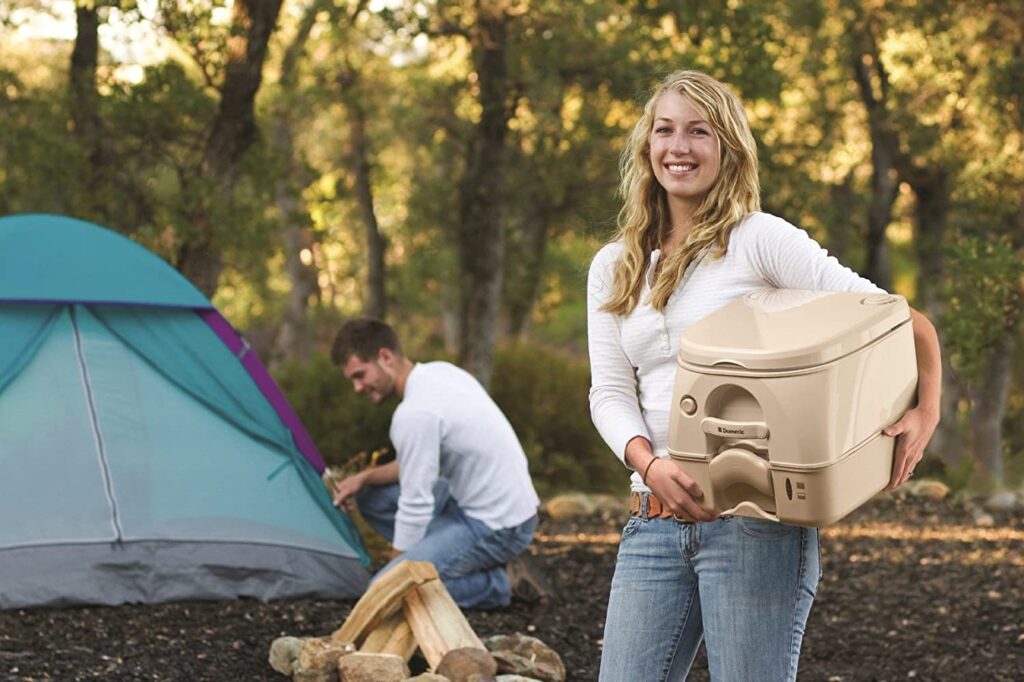
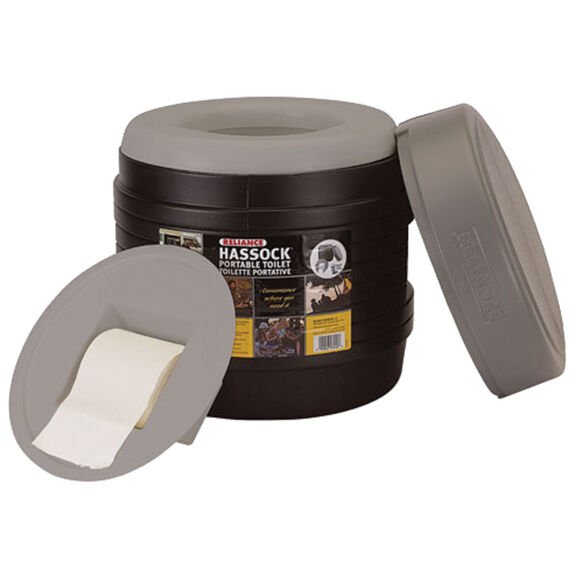
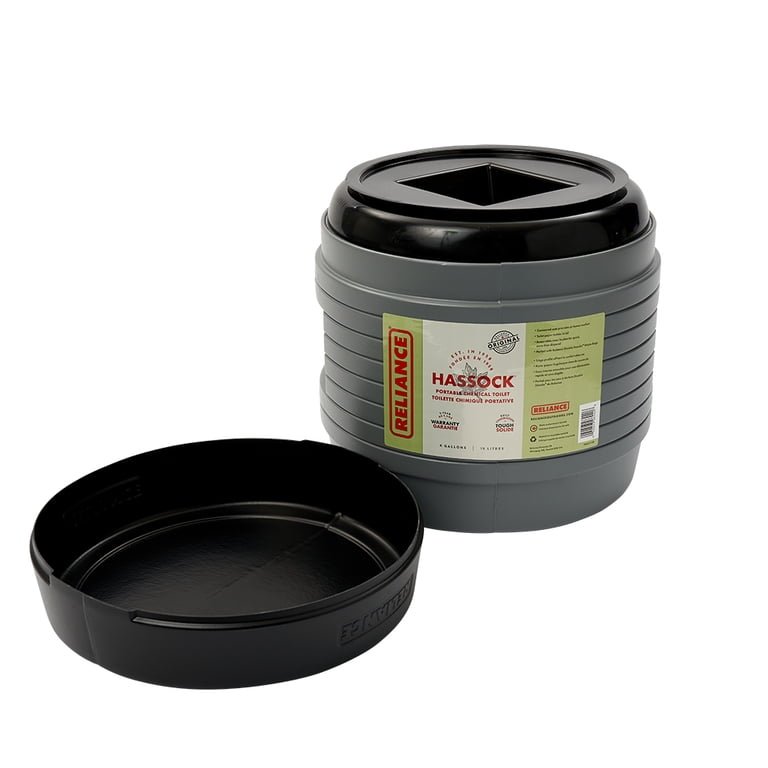
The Hassock is a self-contained, dry bucket commode shaped like a low stool. It features a contoured seat, an inner splash ring, a removable waste pail, an integrated toilet paper holder, and an outer cover that disguises the unit when it’s closed. People use it primarily for car camping, road trips, fishing boats, and home emergencies during municipal power or water outages.
It serves outdoor travelers and homeowners who need an immediate, mechanical sanitation option without spending money on complex cassette systems. The biggest misconception is that the Hassock flushes like a home toilet or seals waste hermetically with mechanical valves. It does neither. It relies on gravity, plastic liners, and absorbent chemicals or sawdust to manage solids, liquids, and odors. A physical air gap remains between the inner pail and the outer shell, so using dry gelling agents is essential for odor control.
The basic method
- Place the toilet base on completely flat ground inside your tent, vehicle, or shelter to avoid tipping hazards.
- Remove the lid and lift the contoured toilet seat along with the splash ring off the inner bucket.
- Insert an eight-gallon heavy-duty waste bag inside the inner pail, smoothing the plastic flat against the bottom so waste won’t stretch the material unevenly.
- Add one packet of dry gelling absorbent or two cups of dry wood shavings into the empty bag before anyone uses it.
- Push the splash ring back down over the bag opening to lock the plastic securely against the rim of the bucket.
- Use the toilet in an upright seated position, keeping feet flat on the floor to distribute your weight evenly across the plastic frame.
- Add one scoop of sawdust or an extra half-packet of gelling powder over solid waste immediately after use to control moisture.
- Pull the bag out of the inner bucket by its drawstrings, expel trapped air gently without squeezing, tie a tight double knot, and put the lid back on the unit.
The single judgement call that separates a clean trip from a ruined floor is knowing when to change the liner. If the bag reaches about one-third full (roughly two to three uses), change it right away; if you wait until the bucket is half full, the weight makes the plastic bag stretch, tear, and leak during removal. When disposing of human waste in backcountry settings where municipal trash cans are absent, consult local land managers or park rangers because burying non-biodegradable plastic violates federal regulations.
Key numbers and settings at a glance
Choosing the right setup depends on the trip length, the number of users, and transport space.
| Situation | What to use | How long | What to watch for |
|---|---|---|---|
| Solo overnight camp | 1 bag with 1 scoop gelling powder | Up to 24 hours | Sharp twigs under the toilet base |
| Family day trip | 1 bag changed every 3 uses | 8 to 10 hours | Bag slippage under the inner ring |
| Home plumbing outage | Double bags with pine shavings | 12 hours between changes | Moisture condensation inside outer shell |
| Van or boat cabin use | Thick liner with citrus odor crystals | 24 hours maximum | Sloshing liquids while moving |
| Multi-day remote camping | Heavy-duty leak-proof waste kit | Change after every solid use | Animal scavengers attracted to scent |
What separates good results from bad ones
Preparation and Sequencing
Experienced travelers always double-line the inner pail. They put a basic trash bag at the bottom as a safety shield, followed by an official, puncture-resistant waste bag on top. They also place a small rubber doormat underneath the base to prevent the hard plastic from sliding on slick tent floors or wet camper decks.
Waste Management Discipline
Never pour loose liquid waste directly into the bare plastic bucket without a liner. The plastic can retain surface odors if not cleaned thoroughly, which may require specialized enzymatic cleaners to neutralize. Keep liquids and solids covered with dry matter immediately. A common mistake is using cheap, four-gallon kitchen trash bags; they often split down the side seam when pulled over the rim, which costs you hours of scrubbing raw sewage off personal gear.
Common problems and quick fixes
Simple mechanical designs still run into sealing and stability problems if handled improperly.
| What you notice | What it usually means | What to do first |
|---|---|---|
| Odors escaping with lid closed | Absorbent powder is fully saturated | Add dry wood pellets and tie off the liner bag |
| Seat creaks or shifts sideways | Base rests on an uneven or sloped surface | Relocate the base to flat, solid ground |
| Bag slips into the pail during use | Splash ring wasn’t pushed down fully | Re-seat the ring firmly until it pinches the bag |
| Condensation in the outer compartment | Hot weather causing trapped sweat or moisture | Wipe with a dry cloth and leave opened to air |
Transport and legal disposal rules
Transporting and discarding untreated human waste is governed by municipal and federal sanitation laws. You can’t throw loose human sewage into public litter bins or storm drains. In federal parklands and wilderness reserves, the National Park Service backcountry sanitation guidelines require visitors to pack out all used toilet paper, hygiene items, and solid human waste in designated pack-out bags whenever cat-holes are banned or ground is frozen. If you travel on public waterways, the United States Coast Guard restricts the discharge of untreated waste within three miles of the coastline. Always dump bagged waste containing approved gelling agents into approved modern dumpsters or sanitary sewer clean-outs, never into wilderness surface waters.
Routine maintenance and storage
Empty, rinse, and sanitize both the inner pail and outer housing after every trip. Wash the inner bucket using warm water and mild liquid dish soap, then spray the surfaces with a mixture of one tablespoon of household bleach per gallon of water. Let it air-dry completely in the sun before reassembling. Trapping moisture inside the closed shell can lead to mold growth. Store the toilet in a temperature-controlled space away from direct sun; prolonged exposure to outdoor UV light degrades polypropylene plastic, causing it to become brittle and crack under a person’s weight.
When to use a different approach
The Hassock is the wrong choice for extended off-grid stays or large travel groups. If you need a toilet for a family of four staying three days at a campsite, choose a sealed cassette toilet with a 5-gallon holding tank instead. The Hassock also fails long-distance hikers; carrying a five-pound bucket on a backpack is impractical, so lightweight trowels are better suited there. Finally, this commode isn’t for individuals with severe mobility issues or knee injuries who can’t squat low, as its seat height sits under 15 inches off the floor. For those situations, use a tall, height-adjustable steel commode chair.
Frequently asked questions
Can you use regular trash bags in this toilet?
Yes, but only if they’re thick eight-gallon outdoor bags. Thin grocery bags tear easily under liquid weight, resulting in messy leaks inside the pail.
What is the weight limit for this portable commode?
The manufacturer states a static weight limit of 275 pounds (125 kg). Sitting down hard or shifting weight abruptly can warp or crack the plastic frame.
Does the toilet include an inner storage container?
Yes, it includes a removable 2-gallon pail with a handle, along with an integrated toilet paper holder inside the housing.
How do you stop it from smelling on warm days?
Add chemical gelling powders or cedar shavings after every use, and tie off the inner bag at least once every twelve hours.
Is it safe to leave liquids in the bucket without a bag?
No, because raw liquid waste stains the porous polypropylene, creates severe odors, and spills easily through the splash ring when the unit gets moved.
Why is the seat lower than a standard house toilet?
It stands roughly 14 inches high to stay compact for car trunks. If you have bad knees, elevate it safely or choose a taller frame.
Final Thoughts
If you’re planning your next camping trip, don’t forget to pick up a box of biodegradable waste bags to keep your setup clean and easy to manage. It’s a simple, reliable choice for your outdoor adventures, and you’ll be glad you’ve got it packed when nature calls in the woods.