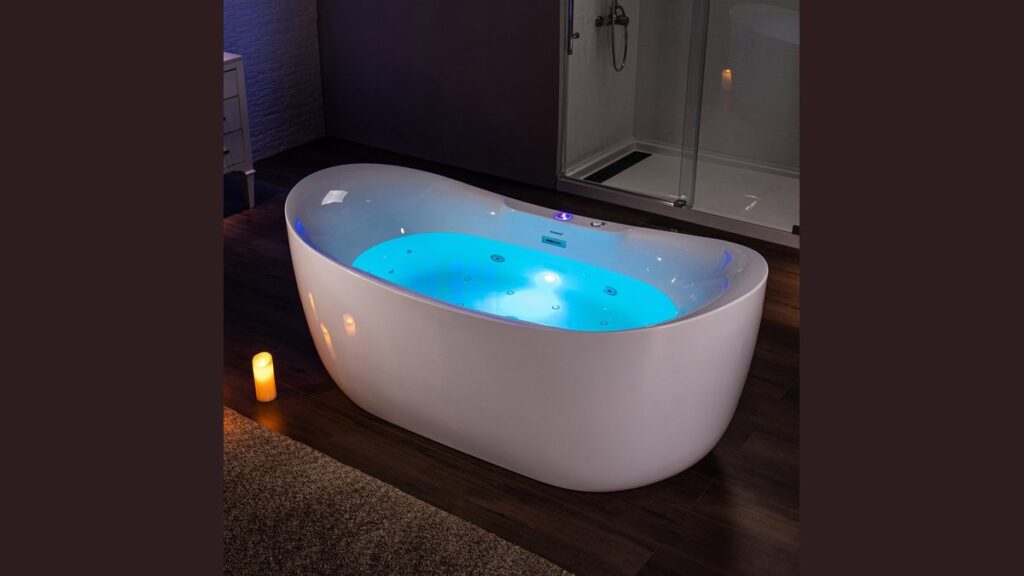
No, standard liquid soap can’t serve as a safe bubble bath for jetted tub use because running the water pump whips the soap into a violent foam. The worst realistic outcome is pump motor burnout and water overflowing onto your bathroom floor, which rots subflooring and causes expensive structural leaks. You can only use ordinary bubbles if the jets stay completely turned off throughout the entire bath.
Table of Contents
Is bubble bath safe for jetted tubs
| Situation | Safe? | Why |
|---|---|---|
| Standard soap with jets running | No | Suds multiply rapidly and flood the room |
| Standard soap with jets off | Yes | Tub acts like a regular soaking basin |
| Low-foam jetted tub crystals | Yes | Salts dissolve without creating thick suds |
| Pure essential oils in running jets | No | Oil coats internal pipes and traps grime |
| Dishwashing liquid in water | No | High-surfactant soap ruins mechanical seals fast |
| Epsom salts dissolved completely | With care | Undissolved grains can scratch internal pump impellers |
What the risk actually is
The harm falls directly on the mechanical pump and your home’s flooring. When water jets run, they force air into the water stream at high pressure. Standard bubble bath formulas use high concentrations of foaming surfactants designed for still water. The jet action multiplies this foam uncontrollably within two minutes. Thick suds quickly travel over the tub edge, soaking drywall and bathroom floors.
Inside the plumbing, foam creates air pockets inside the water pump. Most tub pumps rely on moving water to cool their moving parts. When air pockets fill the pump chamber, the motor runs dry, overheats, and burns out its internal seals. Repairing or replacing an internal bathtub pump often requires cutting through bathroom tile walls to reach the motor housing.
Additionally, soaps leave behind residues made of animal fats, oils, and body soil inside the hidden circulation lines. The Centers for Disease Control and Prevention guidance on hot tub maintenance highlights how warm, wet pipes easily foster sticky bacterial biofilms when not sanitized properly. This sticky film traps hair and dead skin inside the lines, blowing out dark flakes the next time you turn the system on.
The signs to stop immediately

- Foam layers climbing more than 2 inches above the water line, showing suds are multiplying out of control.
- A high-pitched whining or straining sound from the pump motor, signaling that air is trapped inside the intake line.
- Water surging unevenly or sputtering out of the jet nozzles instead of pushing a steady, smooth stream.
- A hot electrical or burning rubber smell near the pump access panel, meaning the motor is dangerously overheating.
- Water pooling on the floorboards around the tub skirt, which means the pump seals have failed under pressure.
If you smell burning wires or see water leaking directly into the motor compartment, stop. Turn off the tub circuit breaker at your main electrical panel immediately, and call a licensed electrician or spa repair technician.
The safer way to do it
- Inspect the tub surface to confirm all intake covers and jet fittings are tightly fastened and free of loose hair.
- Fill the bathtub with warm water until the water level sits at least 2 inches above the highest jet nozzle.
- Check your product label to confirm it says “low-foaming” or “jetted-tub approved”; skip the product completely if it lacks this label.
- Measure exactly 1 to 2 tablespoons of low-foam liquid or specialized bath salts into the tub, adjusting downward for smaller basin sizes.
- Stir the water by hand for 30 seconds to dissolve every single grain before turning on the mechanical equipment.
- Press the pump start button, keeping the air control valve dialed down to its lowest setting to limit violent frothing.
- Run the jets for 15 to 20 minutes maximum, keeping a close eye on the water surface the entire time.
- Drain the tub fully right after your bath so residue doesn’t dry and harden inside the internal plumbing lines.
If it has already happened
Hit the power button immediately to shut off the jets, or trip the emergency wall shut-off switch. Don’t wait for the foam to settle on its own, because it won’t drop quickly. Scoop out as much thick foam as possible using a plastic bucket or dustpan and dump it into the toilet. Drain the tub completely, then wipe down the tub walls with clean towels to remove greasy surfactant residue.
Refill the basin with cold water at least 2 inches above the jets, add 4 ounces of white distilled vinegar to break down residual soap, and run the jets for 10 minutes. If water leaks through the ceiling below or the pump hums without pushing water, the motor seal has broken. Stop testing it yourself and call an appliance repair service or plumber.
Frequently asked questions
Can I use regular bubble bath if I keep the jets off?
Yes, using regular bubble bath is completely safe as long as the pump stays off. The tub functions just like a standard porcelain soaking tub. You won’t hurt the plumbing lines because the soap won’t get sucked into the internal circulation pipes while the motor isn’t running.
What happens if you put Dawn dish soap in a jetted tub?
No, never add dish soap to a jetted tub because it ruins internal seals. Dish soaps produce massive, dense bubbles that overflow the basin within seconds. The high volume of foam produced by dish soap can cause the pump to cavitate, which may lead to motor damage.
Can you use Epsom salts in a whirlpool tub?
Yes, but you must dissolve the salt completely in a bucket of warm water first. If undissolved salt crystals get sucked through the pump suction cover, the sharp minerals can scratch the plastic impeller blades. Avoid scented varieties containing heavy cosmetic oils, which gum up internal tubing.
How do you get rid of bubbles in a jetted tub fast?
The conditioning agents break the surface tension of the soap film instantly, collapsing the foam mountain. Turn the jets off immediately before adding it so you don’t circulate conditioner through the system.
Are bath bombs safe for jetted tubs?
No, bath bombs shouldn’t be used in whirlpool tubs. Most bath bombs contain cornstarch, glitter, flower petals, and heavy oils. These solid particles collect inside the hidden pipes and stick to the jet housings. Once trapped, these leftover ingredients rot, grow mold, and ruin the water flow over time.
How often should you flush the plumbing lines in a jetted tub?
Fill the basin above the jets with hot water, add 2 tablespoons of low-foaming dishwasher detergent, and run the system for 15 minutes to strip away dirt and body oils.
Does bubble bath void the manufacturer warranty on a jetted tub?
Yes, running ordinary bubble bath often voids the pump and plumbing warranty. Most manufacturers state clearly in their user manuals that owners must avoid foaming agents. If a technician inspects a failed motor and discovers heavy soap scale or signs of dry running, the company will reject your claim.
Final Thoughts
If you’re craving a luxurious soak, look for products specifically labeled as low-sudsing or jet-safe. These formulas won’t clog your plumbing or damage the motor, so you can relax without any worries. Check your local home store’s bath aisle next time you’re out, and you’ll find plenty of great, bubbly options.