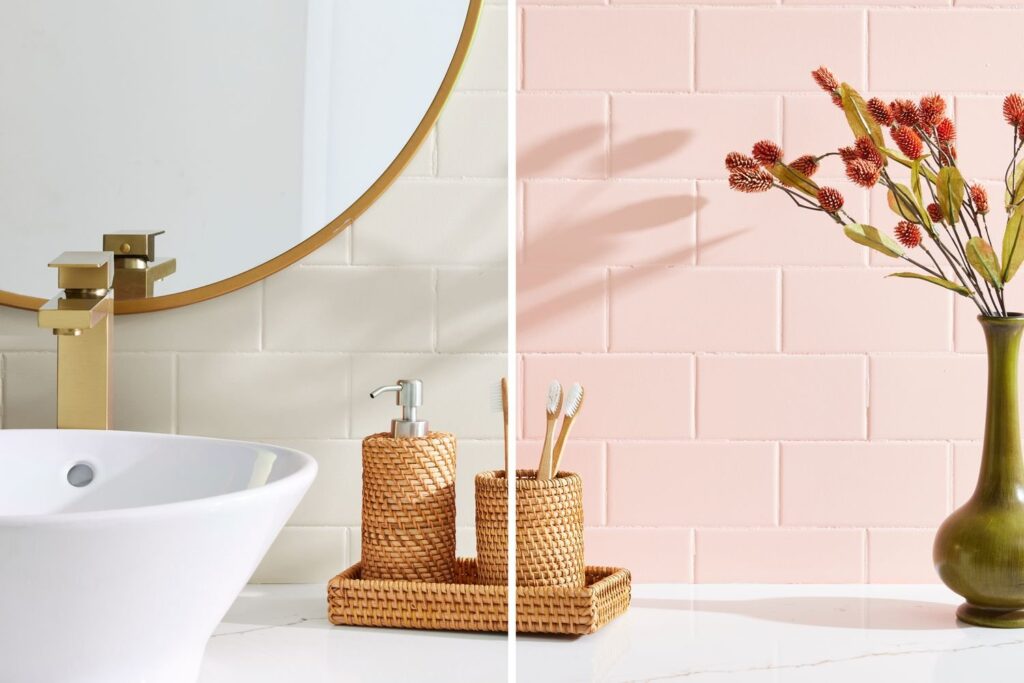
Can you paint over bathroom tile without sanding? Yes, but only on walls. Homeowners often ask this, and the answer is yes if you use a bonding primer designed for slick surfaces. High-moisture areas like shower floors will peel without mechanical abrasion.
Table of Contents
When you can paint bathroom tile without sanding
Your room location and moisture levels determine whether skipping sandpaper works.
| Your situation | Answer | Why |
|---|---|---|
| Dry half-bath accent wall | Yes | Stays dry and handles almost no direct impact |
| Full bath wall away from tub | Yes | Handles steam well if using high-adhesion bonding primer |
| Tub surround walls | No | Constant direct water loosens chemical bonds quickly |
| Bathroom floor tile | No | Foot traffic scuffs paint off unroughened glazes |
| Inside shower floor or stall | No | Standing water causes blisters under fresh coatings |
| Backsplash behind bathroom sink | Yes | Faces minor splashes that wipe off easily |
The bonding primer grip
Paint needs microscopic texture to grab onto a surface. Factory tile has a glass-like silica glaze fired at high heat, which naturally repels liquids. Sanding cuts tiny grooves into this hard glaze so paint can anchor mechanically.
When you skip sanding, you rely entirely on chemical adhesion. Specialized bonding primers contain modified resins that glue themselves to non-porous minerals. The trade-off is durability: a chemical bond alone resists everyday peeling, but it scratches off more easily under sharp impacts than a sanded surface.
Water vapor makes this grip harder to maintain. According to the EPA’s moisture control guidance, high indoor humidity leads to condensation on cold bathroom surfaces. When moisture gets behind a smooth painted layer, it breaks the chemical bond and causes large sheets to bubble.
This no-sand method isn’t for shower pans or rental properties with heavy abuse. If the tile stays mostly dry, use an advanced bonding primer; if the tile sits inside a daily shower stall, sand the glaze thoroughly first.
Applying coatings without sanding

- Scrub with TSP cleaner. Wash every tile using 0.5 cups of trisodium phosphate mixed into 1 gallon of warm water to strip all soap scum. The surface is ready when water sheets flat across the face instead of beading up.
- Remove old perimeter caulk. Scrape away all silicone sealant with a razor scraper held at a flat 30-degree angle. The joint is ready when bare ceramic shows with no rubbery film left behind.
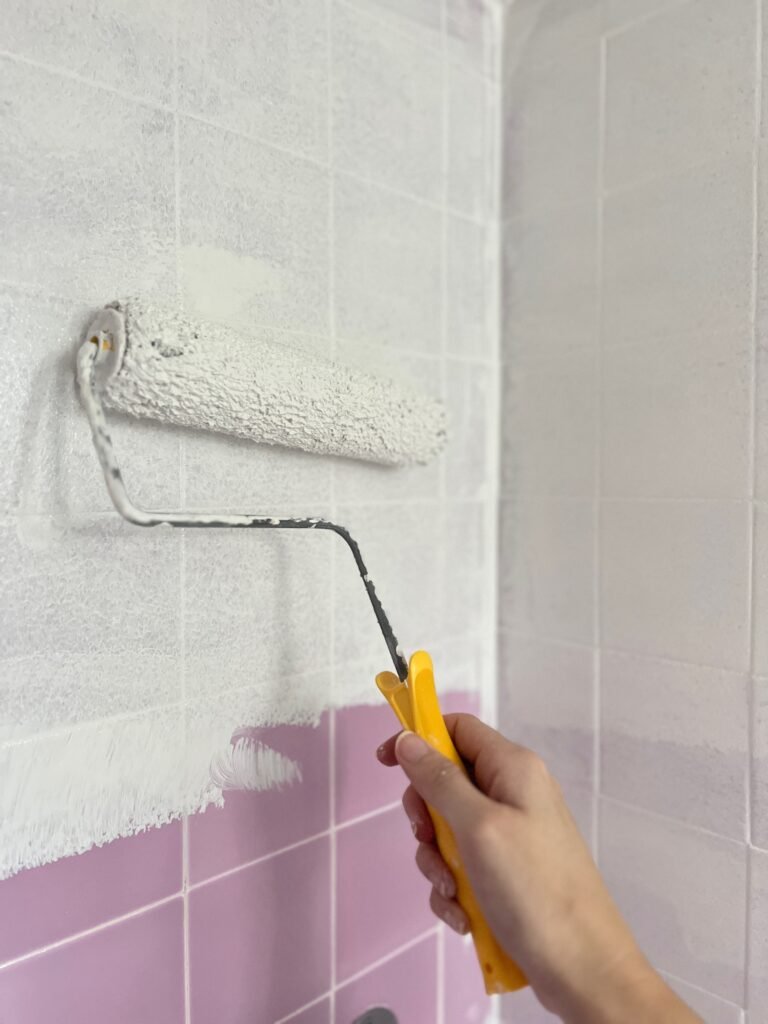
- Apply specialty bonding primer. Roll one thin layer of urethane-modified acrylic bonding primer using a 0.25-inch nap roller. The primer is set when it’s dry to the touch according to the manufacturer’s specified recoat time.
- Roll two finish coats. Apply two thin layers of acrylic enamel paint, leaving 4 hours between coats for proper drying.
- Re-caulk every open seam. Run a bead of 100% silicone bath sealant along the tub edge and corners. The application is successful when the seam forms a continuous, smooth, watertight seal.
Skipping the degreasing step
The single most common mistake is painting over invisible soap scum or body oils. Cleaners like standard glass sprays don’t dissolve bath oils or hard-water mineral films.
Applying primer over these unseen residues costs you the whole project: the paint bubbles within two weeks, forcing you to spend money on chemical strippers and scraping tools to remove the sticky mess. You lose hours of hard work and ruin the finish.
The one check that avoids this failure is the water break test. Splash a few tablespoons of clean tap water onto the scrubbed tile before priming. If the water forms round droplets anywhere on the wall, oil remains and the surface must be scrubbed again; if the water flattens into a continuous sheet, the tile is clean enough for primer.
When to stop and get help

- Tile sounds hollow when tapped with a knuckle, which means water has rotted the backer board behind it.
- Black mold grows deeply inside crumbly grout joints, requiring remediation before any paint will seal.
- Glazed surfaces show wide structural cracks across several adjacent tiles, pointing to shifting subfloors beneath.
When wall tiles are loose or falling away from the wall, stop immediately. Replacing structural drywall, repairing hidden plumbing leaks, or laying fresh cement backer board needs a licensed general contractor or professional tile installer.
Can you paint over bathroom tile without sanding?
Yes, you can do this on dry bathroom walls by using a specialized bonding primer. These primers use modified acrylic resins that stick directly to slick, glossy surfaces without mechanical scratching. Avoid doing this on shower floors or tub basins, because standing water will peel unroughened paint quickly.
How long does painted tile last without sanding?
It lasts for a shorter period on low-traffic bathroom walls. The coating lasts longest when you clean it with gentle, non-abrasive sprays and keep the room well-ventilated. In contrast, surfaces that were sanded first usually last twice as long because the primer sinks into physical grooves.
What happens if you paint tile without primer?
The paint will peel off in large sheets within days. Standard latex or oil paints can’t grip glossy ceramic glazes on their own. As soon as bathroom steam fills the room, moisture creeps underneath the coating and loosens the dried paint film completely from the smooth wall.
Can you clean painted bathroom tile normally?
No, you must avoid stiff scrub brushes and abrasive bleach powders. Clean painted tiles using warm water, mild dish soap, and a soft microfiber cloth. Harsh chemical cleaners and rough scouring pads will scratch through the topcoat and tear the primer away from the slick tile surface.
Is it safe to paint over cracked bathroom tiles?
No, painting won’t seal structural tile fractures or stop leaks. Moisture travels through hair-line cracks and gets trapped behind the waterproof paint layer, rotting the drywall inside the wall cavity. You must repair broken tiles and regrout loose sections before applying any bonding primer to the wall.
Does steam ruin painted tile walls?
Yes, moisture can damage the finish if the paint hasn’t fully cured. Even when paint feels dry after a few hours, the resin core remains soft and vulnerable to moisture. Running hot showers too early traps steam inside the curing film, causing permanent blisters.
What to do next
Wipe the wall with clean water to confirm the surface sheets flat without beading. You should expect an even, opaque finish after two topcoats, showing a smooth uniform color across both tile and grout lines. If you find soft, crumbling drywall behind the tiles while cleaning, stop right there and hire a tile professional.