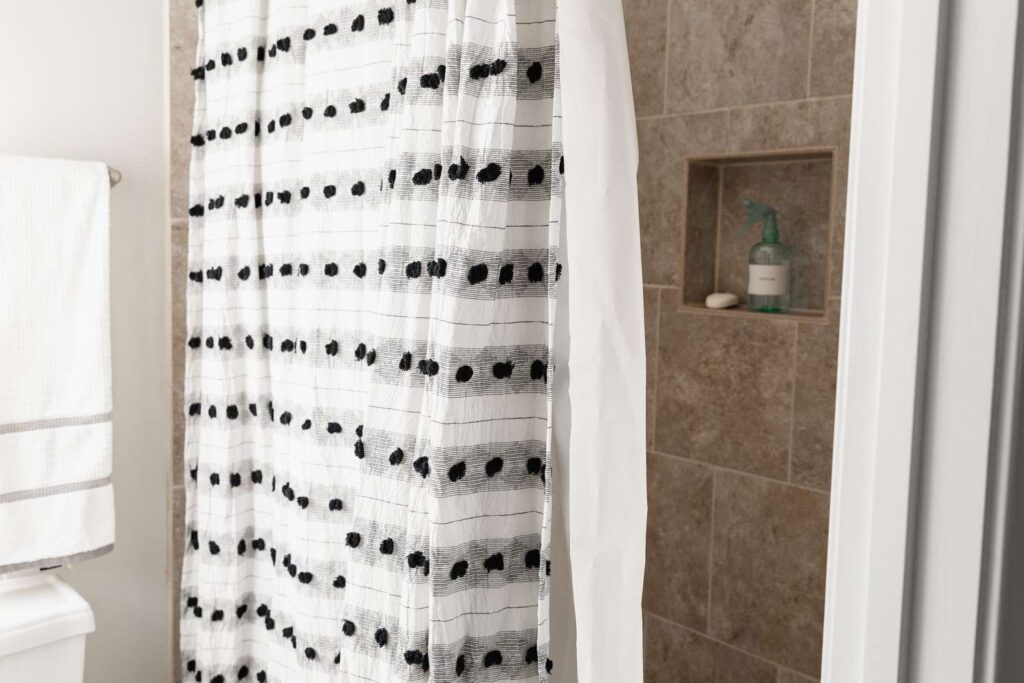
You can clean shower curtain mold vinegar solutions directly by spraying white distilled vinegar straight onto the fabric or plastic, letting it sit for 60 minutes, and rinsing it clean. Lingering moisture trapped in curtain folds is the single most common cause of this dark buildup.
Table of Contents
Why mold grows on your shower curtain

Mold needs water, warmth, and food to grow. Bathrooms provide plenty of heat and water after every shower, and soap scum combined with dead skin cells provides an easy food source. When a shower liner stays bunched against the edge of the tub, trapped water can’t evaporate quickly.
Fungi thrive in damp spaces where air doesn’t move freely. According to the EPA guide to mold cleanup, controlling indoor moisture is the only permanent way to keep mold from returning. Plastic liners like PEVA and vinyl stay wet for hours if left gathered together. Because these materials trap tiny water pools along the bottom seam, dark spots begin to spread across the lower hem within just a few weeks.
Wash in a machine with vinegar
This fix is for washable fabric curtains and sturdy vinyl liners that show widespread gray or black spots. If your curtain has metal grommets that are already rusting, don’t wash it in a machine; wash it by hand instead.
Take the curtain down from the rings. Place it into your washing machine along with two clean, white bath towels. The towels provide extra friction to scrub away the scum without tearing thin plastic. Add 1/2 cup of regular laundry detergent and 1 cup of distilled white vinegar directly into the drum.
Run the machine on a gentle cycle using warm water. If you use hot water on cheap vinyl, the plastic can melt or wrinkle permanently. Once the rinse cycle finishes, pull the curtain out immediately. Hang it back on the shower rod with the bathroom window open to dry. It worked if the dark spots and sour smell are completely gone.
Soak the liner in a tub
This method is for thick plastic liners or weighted fabrics that can’t go into an automatic washer. If the mold spots cover only the bottom edge, you don’t even need to soak the entire sheet.
Fill your bathtub with 4 inches of warm water. Pour in 2 cups of white distilled vinegar. Lay the curtain into the water, pressing the moldy sections down so they stay completely under the surface. Let the material soak for 60 minutes.
Put on rubber cleaning gloves. Take a soft sponge and wipe along the bottom hem. The acid breaks the bond between the plastic and the fungal colonies, so the grime wipes off with light pressure. Drain the tub and rinse the liner with cold water from your showerhead. You’ll know it worked when the surface feels smooth rather than slimy, and the dark stains wash away down the drain.
Scrub with baking soda paste

This fix is for heavy, set-in black mold that survived a normal wash or soak. While it takes more physical effort, it saves you from throwing away an expensive decorative curtain. This isn’t for paper-thin disposable liners, because heavy scrubbing will tear the seams open.
Mix 1/2 cup of baking soda with 3 tablespoons of warm water in a small bowl until it forms a thick paste. Lay the affected hem flat across the bottom of your tub. Spread the paste directly over the dark spots. Next, spray undiluted white vinegar directly over the paste using a spray bottle. The mixture will foam immediately.
Wait 15 minutes for the chemical reaction to lift the grime. Scrub the area using a firm nylon brush in small circular motions. Rinse with warm water. This method trades your time and elbow grease for saving a curtain, but if the fibers remain stained after two attempts, the mold has permanently dyed the threads.
What not to do
- Don’t mix vinegar and chlorine bleach. Combining these two common cleaners creates toxic chloramine gas, which damages your lungs and causes severe chemical burns.
- Don’t put plastic liners in the clothes dryer. The high heat will melt or warp vinyl and PEVA, completely ruining the liner and risking a house fire.
- Don’t scrub smooth plastic with steel wool. Wire pads leave deep scratches in the plastic that trap water and give future spores an even better place to hide.
- Don’t bundle the wet curtain into a laundry basket. Leaving wet, moldy fabric piled in a dark basket lets the fungus spread deep into the clean sections before you can wash it.
How to stop it happening again
A simple change in daily bathroom habits keeps mold from returning to your clean curtain.
| If you’re doing this | Do this instead | Why |
|---|---|---|
| Leaving the curtain pushed to one side | Pull the curtain completely shut across the rod | Spreading the fabric lets air circulate so moisture dries before mold can start |
| Keeping the bathroom door closed after bathing | Run the exhaust fan or open a window for 20 minutes | Removing humid air drops the room’s moisture level below what spores need |
| Letting the liner sit inside standing tub water | Hang the liner so the bottom edge sits freely inside the tub | Standing water keeps the hem permanently wet and feeds fungal growth |
| Washing only when dark spots appear | Spray the lower liner with diluted vinegar once every week | Regular light acidity kills new spores before they can form visible colonies |
Frequently asked questions
Can vinegar kill mold on plastic shower curtains?
Yes, white distilled vinegar contains acetic acid that kills most household mold species on non-porous plastics. Spray it undiluted onto the plastic surface, let it sit for a full hour, and wipe it away with a damp sponge.
How long do you let vinegar sit on shower curtain mold?
Leave the vinegar on the curtain for at least 60 minutes before rinsing. This contact time gives the acid enough opportunity to penetrate the fungal membrane and break down stubborn soap scum holding the spores in place.
Why does my shower curtain keep getting black mold?
Your bathroom stays too humid for too long after each use. When water drops sit trapped inside folded curtain plastic without good airflow, spores land on soap residues and multiply into visible black patches.
Is it safe to wash a shower curtain with rings attached?
No, you must take the plastic or metal rings off before washing. Loose rings can snag on the washing machine drum, tear the curtain eyelets, or break off and clog your machine pump.
What happens if you leave vinegar on fabric too long?
Vinegar is a mild acid that rarely harms polyester, but soaking cotton or delicate fabrics for over 12 hours can weaken the fibers. Stick to the standard one-hour soak to protect fabric seams from degrading.
Can you use apple cider vinegar instead of white vinegar?
No, you should only use clear white distilled vinegar for cleaning. Apple cider vinegar contains natural plant tannins that can leave light brown stains behind on white curtains and pale plastic liners.
Final Thoughts
To keep your bathroom looking fresh, try leaving the curtain fully extended after each use so it dries completely. This simple habit prevents dampness from settling into the fabric, which stops those stubborn spots from coming back. You’ll find it’s much easier to maintain a sparkling space when you don’t have to scrub.
Related guides
- Bath Fitter Shower Prices: Cost and Value Comparison Guide
- 3 Handle Tub and Shower Faucet Guide for Bathroom Upgrades
- Basco Shower Doors Reviews: Expert Verdict on Quality and Fit