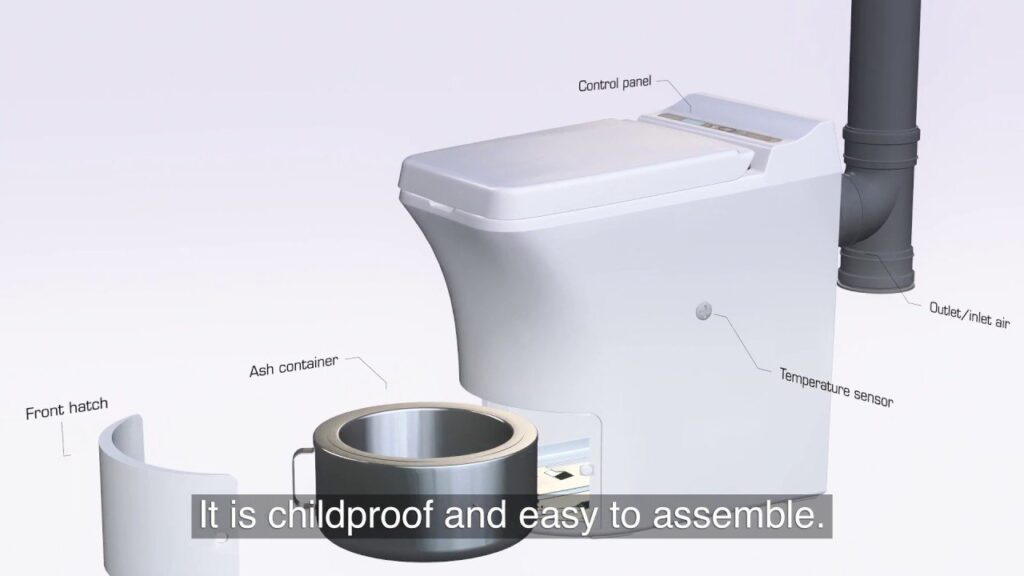
How does an incinerating toilet work? It uses high heat to burn human waste inside a sealed chamber at extreme temperatures, turning liquid and solid waste into a small pile of sterile ash. You drop a paper bowl liner into the bowl, use the toilet, and press a button or foot pedal. The liner drops into a burn pot below, an electric coil or gas flame heats the space, and an exhaust pipe vents the odorless steam outside.
Table of Contents
How an incinerating toilet functions
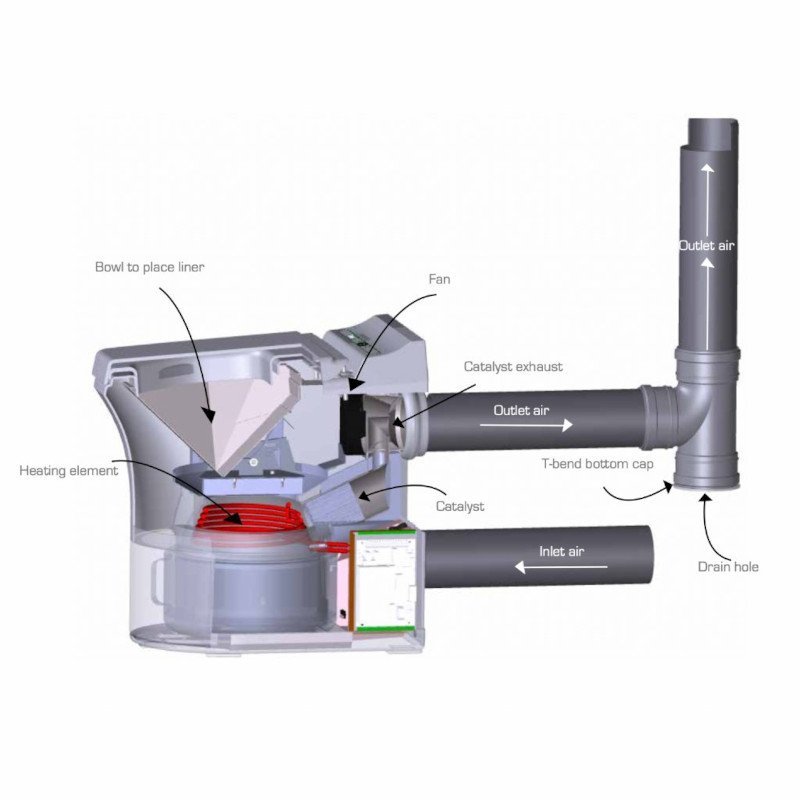
| Part or input | What it does | What you notice when it goes wrong |
|---|---|---|
| Bowl liner | Holds waste and drops clean into the chamber | Waste sticks to bowl or hatch won’t seal |
| Drop hatch | Opens to dump waste, seals during burn cycle | Bad room odors or heat escaping into bathroom |
| Heating element or burner | Heats chamber to burn waste into fine ash | Incomplete burn, leaving wet residue in pan |
| Blower fan | Pulls air through chamber and pushes smoke outside | System shuts off automatically or triggers heat error |
| Catalytic converter | Filters smoke and stops bad smells outside | Strong burning smell coming from the exhaust pipe |
| Ash collection pan | Catches the sterile ash under the burn pot | Overfilled tray blocks airflow, causing cycle errors |
What happens, step by step
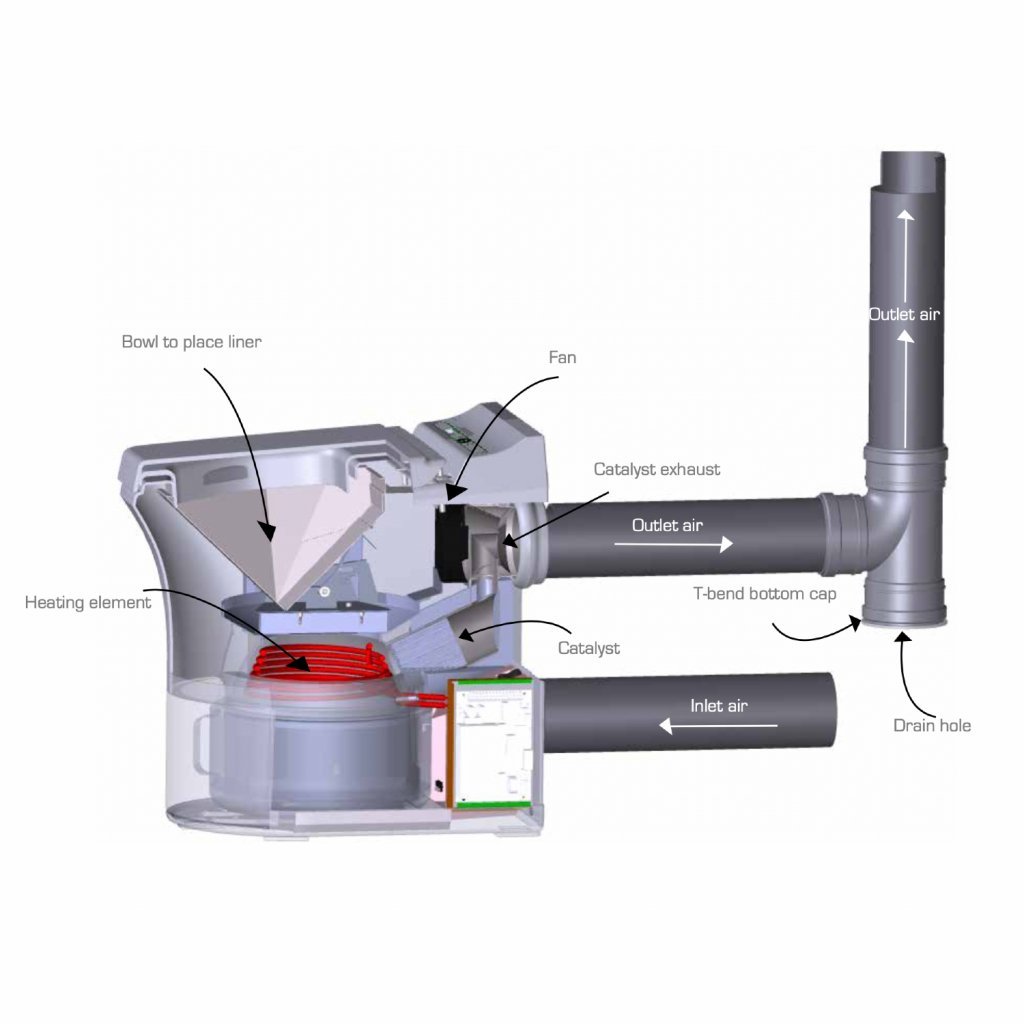
- You place a wax or paper liner into the bowl, which keeps the stainless steel surface clean, and close the lid after using the toilet.
- Pressing the start button opens the mechanical hatch beneath the bowl, dropping the liner and waste directly into the sealed burn chamber below.
- The hatch snaps shut to isolate the heat, and the blower fan starts pulling fresh room air through the burn box to supply oxygen.
- An electric heating loop or propane burner switches on, raising the inner chamber temperature between 950°F and 1,000°F (510°C to 538°C) over 15 to 25 minutes.
- Liquid waste boils away first as clean steam, leaving behind solid matter that catches fire and burns until only dry mineral ash remains.
- The exhaust air passes through a platinum catalytic converter, which removes smoke particles and sulfur odors before the blower sends air outside through a metal pipe.
- The heater shuts off after roughly 45 to 90 minutes—depending on whether the cycle burned liquid or heavy solids—while the fan runs until the pot drops below 130°F (54°C).
Why this matters when something goes wrong
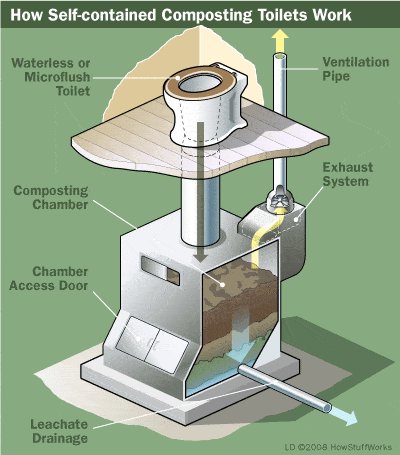
Every step in the burn cycle relies entirely on the mechanical step before it. If the drop hatch gets jammed by a misplaced liner, the internal safety switches prevent the heating coil from turning on. Forcing the flush pedal when it resists often bends the linkage rod, and replacing that mechanism costs hundreds of dollars in specialized parts and shipping.
Airflow problems cause most burn failures. The blower fan must create continuous negative pressure so smoke moves out the vent pipe rather than into your living space. If you notice a dark scorch mark around the lid, your exhaust vent is likely choked with lint or insect nests. You can safely clear an exhaust pipe yourself using a regular dryer-vent brush, but an electrical element that trips your home breaker requires a certified electrician.
The combustion process produces harmless mineral powder when working correctly. The EPA guidance on waterless toilets notes that proper thermal treatment eliminates biological pathogens completely without standard sewer plumbing. However, when the element fails to reach full operating heat, you end up with charred, foul-smelling sludge instead of dry ash.
What you can change, and what you cannot
What you control
- The quality and placement of the paper bowl liner before every single use.
- Emptying the ash pan every 30 to 50 uses so airflow stays clear.
- Rinsing the removable ash pan with plain water when mineral scale builds up.
- Cleaning the catalytic converter mesh with a soft brush regularly.
Fixed by design
- The burn chamber temperature target, which is hard-coded into the internal circuit board.
- The minimum venting pipe diameter, which can’t be reduced without causing dangerous heat buildup.
- The overall cycle length, because boiling water out of waste takes a fixed amount of thermal energy.
Any repair touching the gas valves, high-voltage heating loops, or sealed wiring harness requires an appliance technician licensed for high-temperature equipment.
Getting more out of it
If you only need to urinate, don’t run a full cycle every time; if multiple people are visiting, run one combined burn cycle after several uses to save energy. This setup isn’t for high-traffic rental cabins where guests throw feminine products, plastic wrappers, or cigarette butts into the bowl, since synthetic materials ruin the catalytic filter instantly.
Your biggest ongoing trade-off is high electricity or gas use in exchange for zero water consumption. For exact clearing distances and vent run lengths, this varies by model—check the label behind your unit’s service panel before installing elbows on the exhaust line.
Frequently asked questions
Can you use an incinerating toilet while it’s burning?
Yes. The unit temporarily pauses the heater, drops the new waste into the chamber, seals the hatch again, and resumes heating.
Does an incinerating toilet smell when it burns?
No, it doesn’t smell like sewage inside or outside the house. The built-in catalytic converter oxidizes organic compounds at high heat, turning sulfur and ammonia into water vapor and carbon dioxide. You might notice a light scent outside similar to a wood stove or burning paper.
How much ash does an incinerating toilet make?
About one tablespoon of ash per person per day. A household of four people using the toilet full-time produces roughly one cup of sterile ash per week. You only need to empty the collection tray whenever it becomes full under normal household use.
What happens if you forget to use a paper liner?
Waste sticks directly to the stainless steel hatch and bowl surfaces. The waste won’t slide into the burn box, causing severe burning smells inside the bathroom when the hatch warms up. You’ll have to wait until the toilet cools down completely to scrub the bowl by hand.
Is the leftover ash safe to put in garden soil?
Avoid using large amounts on acid-loving plants like blueberries, as the ash has a high pH.
How long does a full cycle take?
Between 45 and 90 minutes. A cycle with only liquid waste takes roughly 45 minutes to boil away and cool down. A heavy solid load requires the heating element to run longer, taking up to an hour and a half before the cooling fan shuts off completely.
Final Thoughts
Keeping your unit clean is the best way to avoid these frustrating mechanical failures. You’ll want to check the ash pan regularly and clear out any debris that builds up over time. If you stay diligent with your maintenance, your system won’t let you down when you need it most.
Related guides
- Why You Should Always Flush the Toilet Before Using It
- Cheapest Place to Buy Toilet Paper Near Me: Where to Save
- Can You Sit on a Toilet Seat Lid? Safety and Weight Limits