
Improving bathroom airflow requires matching your room volume to a fan rated at one CFM per square foot, and this complete guide covers everything you need for lasting moisture control. For rooms over 100 square feet, add 50 CFM for each toilet, shower, or standard tub. You’ll learn how to plan duct routes, select proper intake gaps, and set runtime controls that short guides skip.
Table of Contents
Select the right fan to improve airflow
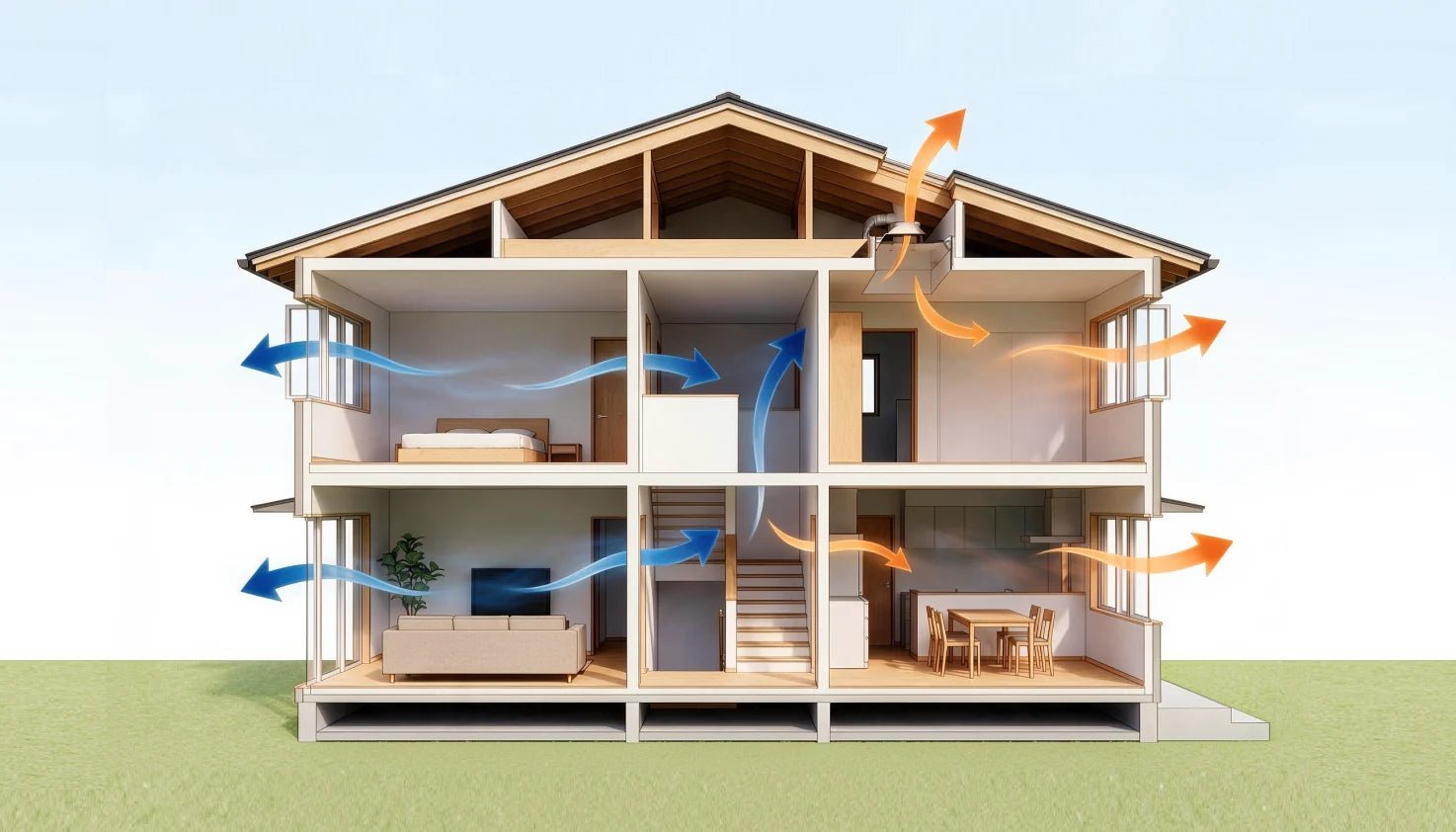
A bathroom exhaust fan is an electric blower that pulls wet, warm air out through an insulated duct to the outdoors. It stops condensation from settling on drywall, mirrors, and wood trim where mold spreads fast. This tool is built for homeowners and renters dealing with steamed-up rooms or lingering odors.
One common misconception is that a louder fan moves more air. Sound has nothing to do with power; it’s simply the quality of the motor and housing. Mechanical ventilation relies on air exchange: the fan pushes damp air outdoors while fresh air enters through the gap under the bathroom door. Without that lower intake space, the fan can’t pull moisture out because air pressure inside drops. A unit that’s too small leaves surfaces damp, while a massive unit in a tiny room pulls out heated or cooled household air unnecessarily.
The basic method
- Measure your room’s width and length in feet, then multiply them to get the square footage.
- Check the sound rating on the box, measured in sones. Choose an 0.5 to 1.5 sone model if you want quiet operation, or a 2.0 to 3.0 sone model if background noise doesn’t bother you.
- Shut off the electric power at the main breaker panel before touching any existing unit, then test the wires with a non-contact voltage tester to verify zero current.
- Mount the fan housing to the ceiling joists using the manufacturer-provided hanger bars to isolate the unit and reduce vibration noise.
- Attach a 4-inch or 6-inch smooth metal duct to the fan’s outlet collar, and wrap the joint with foil-backed HVAC tape.
- Run the duct directly through an exterior wall or roof vent cap, keeping total length under 20 feet and using no more than two 90-degree elbows.
- Install a mechanical wall timer switch set to 20 minutes so the motor clears residual humidity after your shower finishes.
If your attic run is long, use straight rigid metal pipe; if your run is under six feet, semi-rigid metal works fine. The single judgement call that matters is duct routing. A straight line vents moisture quickly, while dips in the pipe trap water that drains back into your motor. If your home has old wiring without a ground wire or requires running new circuits, hire a licensed electrician to avoid fire hazards.
Key numbers and settings at a glance
Airflow demands change based on bathroom dimensions, fixture types, and duct lengths.
| Situation | What to use | How long | What to watch for |
|---|---|---|---|
| Long duct run over 15 ft | Upsize fan by 20 to 30 CFM | 20 minutes after use | Moisture collecting inside duct |
| Enclosed water closet | 50 CFM dedicated fan | 15 minutes after use | Weak door gap blocking air intake |
What separates good results from bad ones
Preparation and layout
Good installations focus entirely on smooth ducting and makeup air. Run smooth, rigid metal pipe rather than flexible ribbed foil. Ribbed foil creates air friction that cuts airflow by more than half across long spans. Make sure the bathroom door sits between 0.5 and 0.75 inches above the finished flooring. If your door sweeps the tile or carpet tightly, air can’t enter to replace the exhaust, and the fan motor will strain against a closed box.
Mid-point checks and restraint
Check the exterior vent cap flapper before finishing the ceiling drywall. The outdoor flap must swing open smoothly without catching on siding or screws, and it needs to drop shut by gravity when the unit stops. Don’t vent exhaust into an unheated attic or soffit. Dumping warm, wet air directly into an attic rots roof sheathing and insulation within a single winter. Secure your joints with metal foil tape instead of standard fabric duct tape, which loses its adhesive within a few seasons from heat and humidity changes.
Common problems and quick fixes
When bathroom airflow drops, the root cause is usually a blockage, poor layout, or wrong power settings.
| What you notice | What it usually means | What to do first |
|---|---|---|
| Fog stays on mirror past 20 minutes | Fan CFM is too small or duct is clogged | Vacuum the grille and measure room volume |
| Water drips down from fan cover | Duct pipe is uninsulated in a cold attic | Wrap ductwork in R-6 foil-faced insulation |
| Fan runs loud with a rattling sound | Housing vibrates against loose ceiling joist | Tighten joist bracket screws and check motor balance |
| Air blows back into the room | Backdraft damper stuck shut at the exit | Free the external damper flap from lint or paint |
| Fan hums but wheel doesn’t spin | Motor bearings worn or blocked with hair | Clear hair from spindle or replace the motor |
Ventilation codes and energy standards
Building codes protect homes from structural rot and high moisture loads. The ENERGY STAR bathroom exhaust fans program sets standards requiring qualifying units to use up to 70% less energy than standard models while maintaining high airflow rates under pressure.
Local building codes under the International Residential Code (IRC) require mechanical ventilation to exhaust directly outside, never into attics, crawlspaces, or soffits. This varies by model — check the label for proper duct size matching. If you must cut through load-bearing roof trusses or install new circuit breakers in an older electrical panel, call a licensed general contractor or electrician to protect your property and comply with municipal building codes.
Routine maintenance and cleaning
Bathroom exhaust fans collect airborne dust, lint, and hair spray that choke motor power. Clean your fan cover and blower wheel regularly to keep air moving smoothly. A clear sign your fan needs immediate cleaning is a visible gray fuzz along the grille slots or a motor that takes several seconds to spin up to speed.
Pull down the plastic cover plate gently, squeeze the two metal wire springs toward each other, and remove the plate. Wash the grille in warm, soapy water and let it dry completely. Vacuum the internal motor housing, electrical plate, and blower wheel blades using a brush attachment. Never spray water or liquid cleaners directly inside the metal housing. Snap the dry plastic cover back into place, turn on the wall switch, and test airflow by holding a single sheet of toilet paper flat against the grille; the suction should hold the paper firmly in place.
When to use a different approach
An exhaust fan isn’t the right choice for an unheated outbuilding, an open-air pool house, or a basement bathroom cut deep below the frost line without exterior wall access. For basements lacking any duct exit paths, an active mechanical dehumidifier with a dedicated floor-drain hose removes moisture far better than an undersized fan on a 40-foot vertical pipe. In small commercial settings with multiple public stalls, continuous-run heat recovery ventilators (HRVs) replace standard spot fans to balance energy loss while cycling air through the whole property.
Frequently asked questions
Can I vent a bathroom fan through the soffit?
No. Moist air pushed out through a perforated soffit vent gets pulled straight back into your attic by the roof ridge vents. This trapped moisture condenses on cold roof rafters, causing wood rot and wet attic insulation. Always vent out through an exterior wall or the roof deck.
How long should I leave the fan on after a shower?
Leave the fan running for 20 minutes after your shower ends. This allows enough time to dry wet shower walls, tile grout, and towels without wasting electricity. A simple push-button digital wall timer handles this automatically so you don’t forget to shut it off.
Is it safe to leave a bathroom fan running all day?
No. Standard bathroom fan motors aren’t designed for non-stop continuous operation. Cheaper shaded-pole motors can overheat, collect heavy lint, and present a house fire risk if left running for days unattended. Use continuous-rated models if you need 24-hour ventilation.
What happens if the duct pipe is too small?
A duct pipe that’s too small restricts airflow and forces the fan to work against high static pressure. A 110 CFM fan forced into a 3-inch duct will run loudly and move significantly less than its rated air volume.
Why does cold air blow in through my fan in winter?
A backdraft damper stuck open allows outdoor wind to blow straight down the ductwork. Check the small flap inside the fan housing collar and the outdoor vent hood to make sure both open and close freely by gravity without catching on screws.
Final Thoughts
Once you’ve installed your new system, you’ll notice that lingering dampness and foggy mirrors become things of the past. It’s a simple upgrade that protects your home from long-term water damage. Take a moment to test your fan’s suction with a piece of tissue paper, and you’re all set for years.






