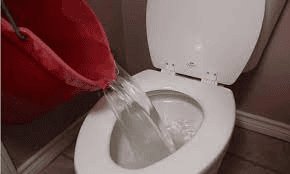
To manually flush toilet systems, pour about 1.5 to 2 gallons of water straight into the bowl in under three seconds.
Table of Contents
Tools to manually flush your toilet

- A 2-gallon or 5-gallon plastic bucket with a sturdy carry handle.
- At least 2 gallons of water per flush, taken from any clean or greywater source.
- Rubber cleaning gloves to shield your hands from splashes.
- A standard mop or old towel set beside the base to catch stray spills.
- A small plastic pitcher or saucepot if your bucket is too heavy to lift safely.
A clean mop bucket or storage tote works fine as an alternative, but thin kitchen bowls don’t hold enough volume to start the siphon.
Step-by-step
- Put on your rubber gloves and clear all bath rugs away from the base of the fixture.
- Fill your bucket with 1.5 to 2 gallons of water.
- Lift the bucket to waist height and position its rim directly above the center of the bowl opening.
- Dump the remaining water forcefully and directly into the drain hole at the bottom within two seconds. Careful: Dumping water against the front dry porcelain causes harsh backsplashes over the rim, so aim purely for the trap hole.
- Step back as the rapid displacement of water triggers the siphon effect to pull the bowl’s contents out through the drain line. Tip: Pouring too slowly simply fills the bowl up to its spill line without triggering the flush mechanism at all.
- Wait 30 seconds for the trapway to rest, then pour an extra 2 cups of water gently down the side to refill the standing water trap.
If waste still refuses to move after two proper tries, the main waste line is clogged; step away and call a licensed plumber rather than risking a major spill.
Matching volume to your setup
Different fixture models and household situations require different amounts of water to clear properly.
| Household Situation | Time or Water Cost | Main Difference | What to Watch For |
|---|---|---|---|
| Modern low-flow toilet | 1.3 to 1.6 gallons | Needs smaller volume dumped very quickly | Water rising above the internal rim |
| Broken tank lever | 0 gallons lost | Mechanism is fine; only the pull handle failed | The rubber flapper sealing back down |
| Main pipe freeze | 2 gallons wasted | Drain is solid ice and won’t accept water | Water backing up immediately |
If the bowl empties slowly, stop right away; if it clears easily, you can flush again. Starting with a smaller pour prevents a massive overflow on your bathroom tile.
How to tell you did it right

A proper manual flush finishes with a distinct sucking gurgle as air rushes into the empty trapway. The water should vanish down the pipe in roughly three to four seconds, leaving the trapway filled with water.
A poor result leaves cloudy liquid resting near the rim. This failure happens because the pour lacked enough downward speed to push water over the internal weir. Pouring too slowly is a common mistake that wastes your stored water and leaves the fixture full.
You can prevent this by holding the bucket at waist height and tipping it fast.
Standard guidelines and cleanup
Federal efficiency standards enforced under the EPA WaterSense program certify residential models that clear waste using no more than 1.28 gallons per cycle.
Wipe down the porcelain rim with a disinfectant wipe to kill any bacteria that splashed during the dump. Check your bathroom floor for stray drips, dry them with an old rag, and store your bucket in a clean closet.
This manual fix lasts indefinitely, but you must refill the bowl’s standing water seal every time to block sewer gas from entering your home.
Alternative flushing methods
Lift the internal flapper
Remove the tank lid, set it on a thick towel, and reach inside the cistern. Grab the rubber chain or flapper arm and pull upward for three seconds. This lets clean tank water drop directly through the valve seat without lifting a heavy bucket.
Fill the tank directly
Pour 1.5 to 2 gallons of water straight into the open cistern instead of the bowl. Fill the tank until the water level hits the top of the overflow tube. Push the normal handle down to flush the unit just like normal.
Use a small handheld pitcher
Fill a small handheld pitcher with 4 cups of water and pour it rapidly into the bowl three consecutive times. This option eliminates heavy lifting for people with bad backs. However, breaking the volume into smaller parts often creates a weaker suction pull.
Frequently asked questions

Can you manually flush with soapy water?
Yes, soapy water from a clean bath or dishes clears the bowl without damaging your drain pipes. Don’t use water containing harsh chemical drain cleaners or thick grease, as both leave caustic residue inside the trap.
Will boiling water break the toilet?
Yes, boiling water quickly cracks cold porcelain bowls due to sudden thermal shock. Always use cold or lukewarm tap water to avoid ruining the entire fixture and flooding the room.
Why won’t my bucket flush work?
Your pour was probably too slow to create the suction vacuum needed to pull the waste over the trap. If the water simply rises and stays there, you either poured too softly or the downstream waste pipe has a physical clog.
What happens if you pour water into the tank instead?
Filling the tank lets you flush the system using the standard trip lever. It works identically to a normal flush, though it requires carrying water twice if you need a second run.
Is it safe to use pool water?
It flushes waste effectively without leaving deposits or damaging the internal plastic components of the drain line.
Final Thoughts
Once the water level drops, you shouldn’t have any lingering concerns about the clog. If it doesn’t clear on the first try, you’ll likely need a plunger to finish the job. Keep one handy in your bathroom, as it’s the most reliable tool for handling stubborn blockages in the future.