
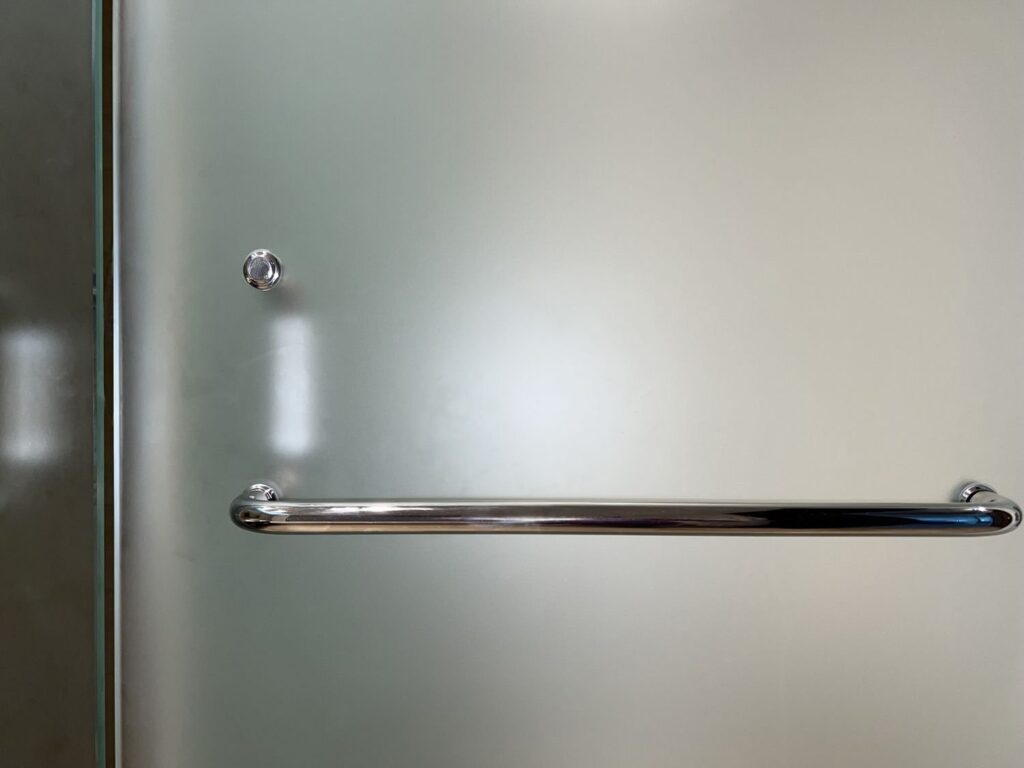
The best way on how to clean a frosted glass shower door is spraying a warm 1:1 mix of distilled white vinegar and water, waiting 10 minutes, and scrubbing gently with a soft microfiber cloth. The entire job takes 20 to 30 minutes, costs a nominal amount in pantry supplies, and rates as easy. You only need a clean microfiber cloth and common white vinegar before starting.
Table of Contents
Supplies for cleaning frosted glass

| Item | How much | Why it’s needed | A substitute |
|---|---|---|---|
| White distilled vinegar | 1 cup (240 ml) | Dissolves alkaline mineral deposits | Fresh lemon juice |
| Warm tap water | 1 cup (240 ml) | Dilutes acid to protect seals | Distilled warm water |
| Spray bottle | 1 empty bottle | Spreads solution evenly | Clean bowl with sponge |
| Baking soda | 2 tablespoons (30 g) | Lifts heavy soap scum spots | none — don’t swap this |
| Microfiber cloths | 2 dry cloths | Cleans pits without scratching glass | Soft cotton washcloth |
| Dry towel | 1 standard bath towel | Catches drips on the floor | Old clean rag |
Before you start
- Take all shampoo bottles, soaps, and hanging caddies off the door frame.
- Place a dry towel along the floor beneath the door to catch sour drips.
- Turn on your bathroom exhaust fan or open a window to vent vinegar fumes.
- Don’t use this acidic method on doors framed in natural marble or unsealed stone, as vinegar etches calcium-rich stone permanently. Contact a stone restoration professional if you have stone surrounds.
- People often skip wiping dry dust off the door first, which turns loose dust into mud once sprayed.
Step by step
- Mix 1 cup (240 ml) of warm water and 1 cup (240 ml) of white vinegar inside your spray bottle. Shake it for 5 seconds until completely mixed.
- Spray the vinegar mix across the rough, frosted side until the glass is completely wet from top to bottom. You’ll see the liquid cling to the small pits.
- Leave the liquid on the door for 10 minutes so the mild acid breaks down hard water minerals. The surface must stay damp the whole time.
- Wipe the surface firmly using a damp microfiber cloth in small circular motions for 3 minutes. Circular wipes pull scum out of the microscopic grooves better than straight strokes.
- If soap scum remains, make a paste with 2 tablespoons (30 g) of baking soda and 1 tablespoon (15 ml) of water. The paste should feel like wet toothpaste.
- Rub this paste directly over cloudy spots with your cloth using light pressure for 1 minute. Stop immediately if you feel gritty sand particles.
- Rinse the entire glass pane thoroughly with 2 to 3 gallons (8 to 11 liters) of warm water from your shower wand. Run your fingers over it to check that no chalky residue stays behind.
- Wipe the glass completely dry with a fresh microfiber cloth within 2 minutes. The glass will show its soft, even matte look again.
How to know it worked
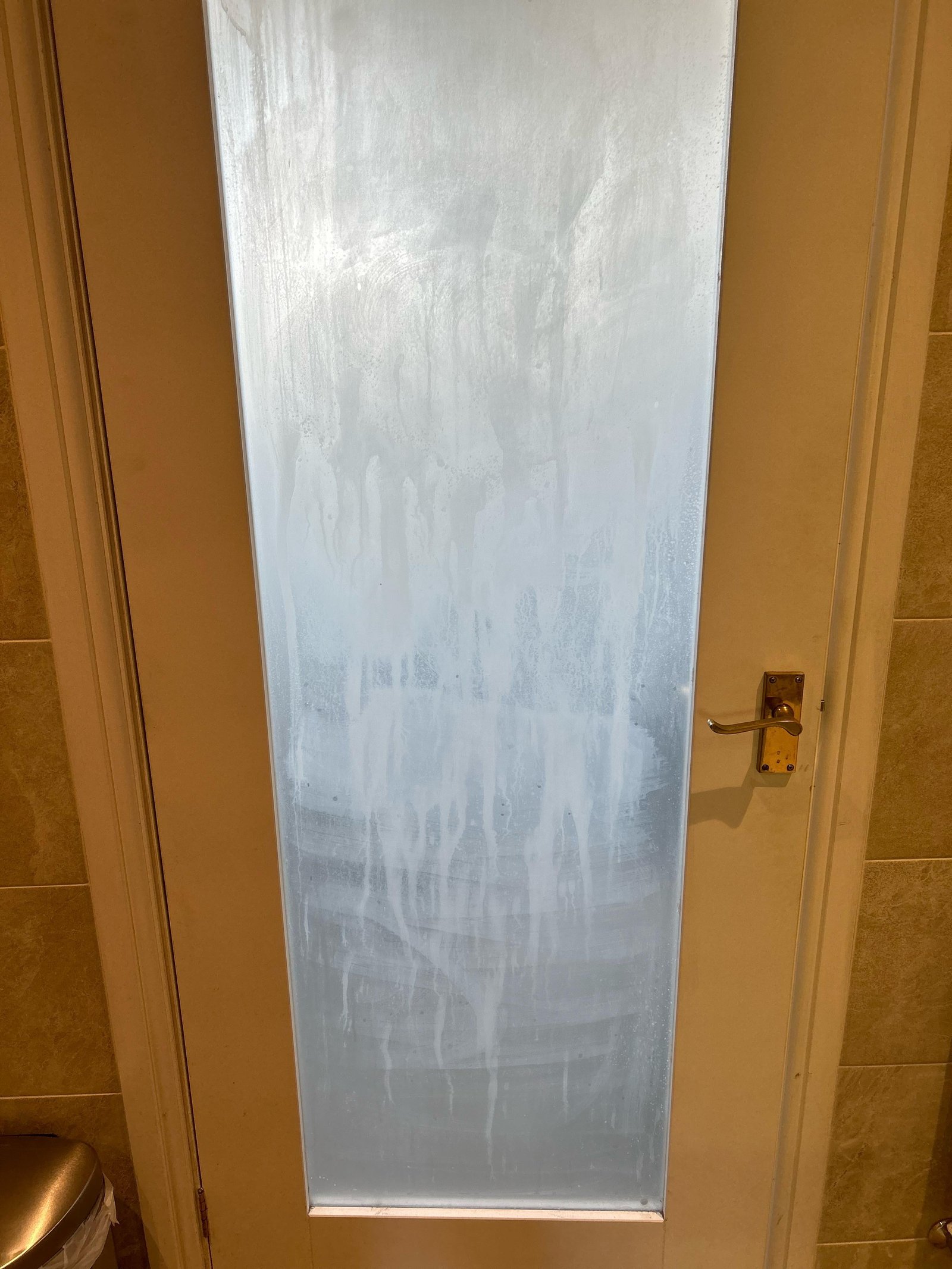
Check the door after the glass dries completely. A clean frosted door looks uniform and matte across every square inch. If you turn on the bathroom overhead light, you won’t see shiny patches, cloudy streaks, or yellowish oil stains from body wash.
When you run clean, dry fingertips across the rough texture, the surface feels smooth and even rather than tacky or rough. If you feel drag under your fingers or see milky rings around the bottom third of the door, mineral scale is still trapped inside the etched pits. That means the glass needs a second application of the warm vinegar spray left on for another 10 minutes.
If something goes wrong
| What happened | Why | What to do |
|---|---|---|
| Milky white haze remains | Acid dried before rinsing | Spray warm water and wipe |
| Glass looks blotchy | Uneven contact time | Treat dry patches again |
| Scratch marks appear | Scouring pad was used | Consult a glass polisher |
| Pungent vinegar smell stays | Room lacks air movement | Run fan for thirty minutes |
| Metal trim discolors | Acid sat on bare aluminum | Polish with metal cleaner |
How often to do this
Clean the door deeply once every two to three weeks under standard household conditions. Two main factors change this schedule. First, water hardness dictates the frequency: if you live with hard water containing high calcium levels, clean every single week to stop scale from binding to the frosted texture. You can verify your area’s mineral levels through your local tap water supplier or review water quality standards via the USGS water hardness guidelines.
Second, the number of daily users moves this timeline. A guest bath used twice a week only needs cleaning as part of your usual clean, while a busy family shower needs attention regularly.
Frequently asked questions

Can you use a squeegee on frosted glass shower doors?
No, standard rubber squeegees don’t clear water out of frosted glass. The textured surface has microscopic pits that stop the blade from creating a tight seal. The blade skips across peaks, leaving dirty water puddles in the valleys that turn into spots. Use a dry microfiber cloth instead.
Can you use Magic Eraser on frosted glass shower door?
Yes, you can use an authentic melamine foam sponge with light hand pressure and plenty of plain water. Melamine foam acts like extremely fine sandpaper. It reaches inside the frosted texture to lift soap residue, but rubbing too hard can smooth down the frosted finish over time.
Why does my frosted glass look clear when wet?
Water fills the micro-crevices on the etched surface, matching the refractive index of the glass and letting light pass straight through. Once the water dries out of those tiny crevices, light scatters across the textured glass again, returning the door to its normal, non-transparent privacy state.
Is vinegar safe for all frosted glass doors?
No, pure or strong vinegar isn’t safe if your frosted door has genuine metal frames made of unanodized aluminum. Acid causes aluminum to pit and tarnish quickly. If you have bare metal frames, dilute the vinegar further or use mild, pH-neutral dish soap with warm water.
What happens if you use bleach on frosted shower glass?
Bleach will sanitize mildew, but it won’t remove hard water deposits or mineral scale. Bleach can’t break down alkaline minerals like calcium and magnesium. It also gives off strong, dangerous fumes in enclosed shower stalls and can break down rubber edge gaskets over time.
How long does vinegar take to dissolve hard water spots?
About 10 to 15 minutes is enough time for a 1:1 vinegar mix to soften light calcium buildup. If the minerals formed thick, raised crusts from months of neglect, leave the solution on the glass for up to 30 minutes, misting occasionally so it never dries out.
Final Thoughts
To keep those panels looking clear and streak-free, try squeegeeing the surface after every shower. This simple habit prevents soap scum from building up in the first place, so you won’t have to deep clean nearly as often. Your bathroom will stay bright and fresh, and you’ll save yourself plenty of time.
Related guides
- Finally Fresh Washing Machine Tablets Unleash the Power of Clean
- Clean Shower Curtain Mold With Vinegar: A Simple Guide






