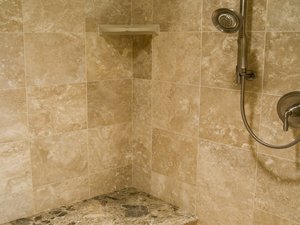
You wipe spores away with diluted three percent hydrogen peroxide or a pH-neutral stone cleaner, because how to clean travertine shower mold safely requires non-acidic treatments that protect sensitive calcium carbonate from permanent chemical etching. The full process takes about 45 minutes of active labor. It costs very little since standard peroxide and basic brushes are cheap household supplies. The difficulty level needs care because natural stone scratches easily. You must have a soft-bristle nylon brush ready before beginning.
Table of Contents
Supplies for cleaning travertine shower mold

| Item | How much | Why it’s needed | A substitute |
|---|---|---|---|
| Hydrogen peroxide (3%) | 16 fluid ounces | Kills fungus without acid damage | pH-neutral stone cleaner |
| Distilled water | 16 fluid ounces | Dilutes cleaner without minerals | Tap water |
| Spray bottle | 1 standard bottle | Distributes liquid evenly across stone | none — don’t swap this |
| Soft nylon scrub brush | 1 hand brush | Lifts spores from pits gently | Soft microfiber towel |
| Microfiber cloths | 3 dry cloths | Dries surfaces to prevent moisture | Clean cotton rags |
| Baking soda | 1 cup | Lifts deep grout discoloration | none — don’t swap this |
Before you start
- Turn on the bathroom exhaust fan and open nearby windows to ensure steady airflow while working.
- Remove all shampoo bottles, soaps, razors, and loofahs from the shower ledges.
- Take down or pull back the shower curtain so it stays dry.
- This isn’t for bathrooms with mold infestations larger than 10 square feet, which require professional remediation teams.
- People often skip clearing drain hair traps first, which causes standing rinse water that re-soaks the bottom stone tiles.
Step by step
- Pour equal parts three percent hydrogen peroxide and water into your spray bottle. Check the label on your peroxide bottle first to ensure it matches this standard concentration.
- Mist the diluted mixture directly over the visible dark patches across the shower wall. You’ll know you sprayed enough when the tile surface looks evenly damp but not dripping heavily.
- Allow the liquid to rest untouched on the travertine surface for exactly 15 minutes. The peroxide needs this contact time to break down fungal structures inside microscopic stone pores.
- Scrub the damp area gently using your soft-bristle nylon brush in small circular motions. Stop scrubbing when the dark grime lifts away and the bristles glide across clean stone.
- Mix baking soda with plain water into a thick paste if dark patches remain on grout lines. Apply two tablespoons of paste directly over discolored joints with a soft cloth.
- Let the grout paste sit for 10 minutes to draw out trapped stains from porous cement. The paste looks slightly chalky and dry around the edges when this soaking window finishes.
- Rinse the entire shower wall thoroughly using warm tap water from your hand shower nozzle. Continue rinsing until all slippery residue and chalky powder wash completely down the drain.
- Dry the wall surface immediately with clean microfiber cloths using firm, wiping downward strokes. The stone is ready when running your dry hand across the surface leaves no moisture on your skin.
How to know it worked

The shower tiles will show a uniform, light stone color with zero black or green spots visible inside the pits. Grout lines between the tiles will match their original light grey or beige tone without dark streaks. Check the stone under a bright flashlight held at an angle across the wall face. If the surface shows uniform natural texture without slick slimy film, the spores are gone. If you still see dark speckling inside deep travertine cavities after drying, the fungus has penetrated deeply and needs a second application. If calcium deposits remain hazy, don’t scrub harder; this requires a dedicated stone poultice instead of repeated surface scrubbing.
If something goes wrong
| What happened | Why | What to do |
|---|---|---|
| Stone looks dull | Acid stripped polish finish | Polish using stone marble compound |
| Dark spots remain | Roots sit deep in pores | Repeat peroxide soak for longer |
| Grout looks chalky | Baking soda dried unrinsed | Wash wall using warm water |
| Scratch marks appear | Scrub brush bristles too stiff | Buff gently using microfiber cloth |
| Liquid bubbles excessively | Peroxide reacted with organic matter | Wipe clean and rinse thoroughly |
How often to do this
Perform a thorough mold check regularly to catch damp growth early. The main trade-off of deep treatments is that frequent scrubbing wears down protective sealers over time, even with soft nylon tools. If two people use the shower daily, deep cleaning as part of your usual clean keeps spore colonies from penetrating grout. If five people share that same bathroom, high humidity demands a treatment whenever you notice it. High daily bathroom steam speeds up fungal growth, while running the ventilation fan for twenty minutes after each shower delays spore returns significantly, reducing how often you need to clean. The EPA mold cleanup guide emphasizes that controlling persistent indoor moisture is the only lasting way to stop growth.
Frequently asked questions

Can you use bleach on travertine tile?
No, bleach will weaken stone sealers and cause yellow discoloration on light travertine surfaces. Bleach also dries out cement grout lines, making them brittle and porous. Use diluted three percent hydrogen peroxide instead because it sanitizes effectively without degrading the structural binder of natural limestone materials over time.
Why does travertine mold so easily?
Natural travertine contains thousands of tiny voids and surface pits that trap stagnant water droplets. When bathroom moisture sits inside these unsealed stone pockets alongside warm air, airborne fungal spores settle into the crevices quickly. Without regular stone sealing, moisture easily soaks deep into the underlying calcium structure.
How long does stone mold treatment take?
About 45 minutes from initial bottle spraying to the final towel dry. The chemical breakdown requires 15 minutes of quiet dwell time, while manual scrubbing and thorough rinsing take roughly 20 minutes. Drying the entire shower enclosure thoroughly by hand takes about 10 minutes of steady effort.
Is vinegar safe for travertine shower walls?
No, vinegar contains acetic acid that chemically dissolves calcium carbonate on contact. The acid immediately burns a permanent dull, rough patch called an etch mark into the polished stone surface. Always check cleaner bottles to confirm they hold a neutral pH reading of approximately 7.0.
What happens if you skip drying after cleaning?
Mold will regrow in the damp cavities within three to four days. Travertine absorbs standing surface water readily, creating the exact humid conditions fungal spores require to thrive. Leaving water behind also allows mineral scale to form cloudy deposits over the natural tan patterns.
Does sealing prevent all travertine mold?
No, stone sealer only slows down liquid absorption rates into deep layers. Surface mold can still attach itself to residual soap scum and body oils sitting atop the sealed stone face. You still need routine surface wipe-downs, even when your barrier sealer remains fully intact and functional.
Final Thoughts
Once the stone is dry, apply a high-quality stone sealer to protect those porous surfaces from future moisture buildup. It’s a simple habit that’ll keep your shower looking beautiful for years. You shouldn’t skip this final layer, as it’s the best way to prevent those stubborn spots from ever coming back.
Related guides