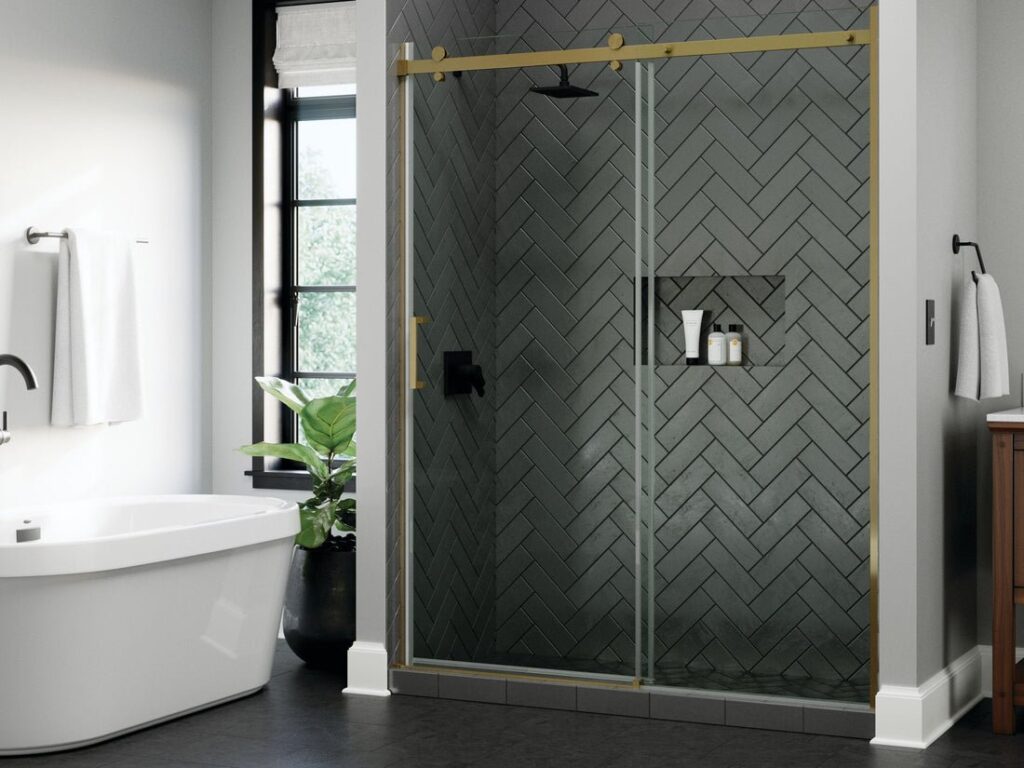
A successful shower door rollers replacement your ultimate guide to a smooth experience requires matching wheel diameter within 1 millimeter, securing new hardware in 30 to 45 minutes, and adjusting the mounting screws until the pane hangs level. Most sliding panels use standard 19 mm to 25 mm wheels attached with an M4 or M5 machine screw. This walkthrough explains how to safely measure glass openings, release bottom guides without cracking tempered panels, and set proper wheel alignment.
Table of Contents
Understanding how shower door rollers operate

A shower roller is a small nylon, brass, or stainless steel wheel mounted on a bearing that carries the weight of a heavy glass door along a metal rail. It allows thick panels to slide with minimal effort while keeping water inside the enclosure. This repair is for anyone dealing with a stuck, grinding, or jumping shower door who wants to avoid paying for an entire enclosure replacement.
A common misconception is that a sticking door always means the track is bent. In most homes, the roller’s internal steel ball bearings have simply rusted or gathered soap scum, causing the wheel to drag instead of turn. When the wheel stops rotating, the bottom edge drags against the metal frame, which can scratch surfaces or chip the glass. This repair requires physical access to both sides of the glass panel.
The basic method
- Place two thick bath towels flat inside the shower tray and two outside on the bathroom floor to protect the glass edges during handling.
- Loosen the bottom guide blocks or plastic retaining clips by turning their screws counterclockwise with a number 2 Phillips screwdriver.
- Have a helper support the door while you lift the entire glass panel straight up 1 inch to clear the bottom channel, then swing the bottom out and set the panel down on the towels.
- Unscrew the center bolt holding each old roller to the glass using a screwdriver or a 10 mm open-end wrench, keeping one hand flat on the opposite side to catch the wheel.
- Wipe the glass mounting holes clean using a microfiber cloth and 2 tablespoons of rubbing alcohol to remove old soap residue.
- Install the new rollers through the glass holes, placing the rubber washer between the metal and the glass, and tighten the M4 or M5 mounting screws until snug—don’t overtighten.
- Lift the panel back onto the top rail, seat the top wheels into the runner groove, and guide the bottom edge into the lower track.
- Turn the eccentric adjustment screw on top rollers a quarter-turn at a time to raise or lower each corner until the door edge seals flush against the wall jamb.
The single judgment call that determines success is how you balance panel clearance: if the door scrapes the bottom channel, raise both top rollers; if water leaks under the glass, lower them until the sweep clears the sill by 1/8 inch. Handling large frameless glass carries an inherent risk of sudden shattering if dropped, so if you can’t safely lift the weight with a partner, hire a licensed glazier.
Key numbers and settings at a glance
Use these hardware dimensions and setup values to pick the correct replacement parts before removing your bathroom doors.
What separates good results from bad ones
Preparation and Proper Hardware Sizing
Careful measurement before buying parts makes the difference between an easy swap and a wasted weekend. A mistake people actually make is measuring only the outer wheel diameter while ignoring the wheel thickness and hole offset; this error costs them return shipping fees and leaves their bathroom unusable for days. Take an old roller off first, wipe away grime, and measure the wheel diameter, the wheel thickness, and the screw thread size with a caliper.
Alignment and Gentle Fastening
Proper order of work prevents damaged glass and misaligned doors. Experienced fitters hang the top rollers first, seat them securely in the overhead rail, and confirm the panel hangs plumb before attaching bottom guides. Metal tools should never contact bare glass. Always leave factory rubber or plastic protective sleeves around the mounting screw inside the glass hole. This mechanical rule involves a clear trade-off: tightening the mounting bolt provides a firmer door hold, but over-torquing the screw creates localized stress points that can cause tempered glass to fail unexpectedly. Stop tightening the instant the rubber gasket compresses flat against the pane.
Common problems and quick fixes
Match the door behavior to these direct mechanical causes to resolve sliding issues quickly.
| What you notice | What it usually means | What to do first |
|---|---|---|
| Door bumps repeatedly while rolling | Flat spot worn into nylon wheel | Replace the roller assembly completely |
| Metal scraping sound along top track | Bearing collapsed, letting metal housing rub | Lift panel out and check top track for groove damage |
| Door slides open on its own | Overhead track or rollers are out of level | Turn the eccentric screw to lift the lower side |
| Bottom of glass catches the frame | Top rollers adjusted too low | Raise top rollers by turning adjustment cams clockwise |
| Roller jumps out of the track | Bottom spring-loaded guide is broken | Install new spring guide to maintain upward tension |
Safety standards for enclosure glass
Bathroom glass installations must follow specific building and consumer safety guidelines to prevent serious injury. The CPSC standard for architectural glazing materials (16 CFR Part 1201) sets impact and shatter performance rules for shower doors sold in the United States. This rule mandates fully tempered or laminated safety glass that breaks into small, dull pebbles rather than sharp shards when broken.
Tempered panels carry extreme internal surface tension. Impacting the edge or corner with a metal screwdriver can cause the entire sheet to shatter instantly. If your door has deep edge chips, hairline cracks, or damaged structural clamps, stop the repair immediately and replace the glass pane rather than installing fresh rollers.
Preserving your rolling hardware
Keep sliding door assemblies moving freely by wiping down the lower rail regularly to prevent lime, hair, and soap curd from baking into the tracks. Spray the wheel bearings as part of your usual clean using a 100% silicone lubricant spray. Never apply thick automotive grease or petroleum jelly; these attract loose grit that grinds down nylon wheels over time. This maintenance setup holds up until hard water crust visibly accumulates along the wheels, which signals it’s time for a thorough descale with warm water and mild dish soap.
When to use a different approach
Replacing individual rollers is the wrong choice if your overhead aluminum track is pitted, corroded, or bent upward. New wheels will still stick inside a deformed track, requiring you to install a full replacement track kit instead.
This guide isn’t for homeowners with heavy, custom barn-door style sliders that hang from solid overhead steel bars. Those systems carry glass panels weighing well over 80 pounds, use proprietary industrial trolleys, and require specialized structural wall anchors. Attempting a solo roller swap on heavy frameless structural glass risks serious physical injury; hire a certified shower glass installation contractor instead.
Frequently asked questions

Can I replace single shower door rollers with double rollers?
No, you can’t switch roller styles unless your overhead track profile has enough clearance. Double-wheel units require a wider channel and sit at a different height than single-wheel assemblies, which often prevents the glass from entering the bottom track guide correctly.
Why do new shower rollers feel stiff to push?
New wheels feel stiff if the mounting screw was tightened off-center, binding the nylon against the glass bracket. Loosen the center screw by a half-turn, re-center the inner spacer inside the glass opening, and check that the wheel spins freely before hanging the door.
How long do replacement shower door rollers usually last?
Roller lifespan depends entirely on your household water hardness and cleaning habits. In homes with untreated hard water, mineral buildup can corrode bearings as it ages, while soft water and regular silicone lubrication allow wheels to roll smoothly for many years.
What happens if I overtighten the roller mounting screw?
Overtightening pinches the tempered glass directly between hard metal washers. Because tempered glass can’t absorb localized point pressure, squeezing the fastener too hard can trigger an immediate, explosive shatter that destroys the entire panel.
Is it safe to replace shower door rollers by myself?
Yes, it’s safe if the panel is small, but frameless panels over 1/4 inch thick require two people. Glass is heavy and slippery when wet; an extra pair of hands keeps the bottom corners from striking the tile floor during removal.
Final Thoughts
Once the door slides silently, take a moment to apply a light coat of silicone lubricant to the tracks. This simple habit prevents future buildup and keeps your hardware moving like new. You’ll find that a little maintenance goes a long way, so enjoy your refreshed shower space and the quiet operation.