
Spray warm distilled white vinegar directly on the glass to remove hard water stains from glass shower doors, let it sit for 30 minutes, and wipe it away with a non-scratch sponge. Tap water contains dissolved minerals that stay behind when droplets evaporate. Acting while the haze is fresh keeps these deposits from permanently etching into the surface.
Table of Contents
Understand why hard water stains form
Hard water carries high amounts of dissolved minerals, mainly calcium and magnesium carbonate. As the USGS water science school explains, these dissolved minerals stay behind whenever tap water evaporates from a surface.
Every time someone showers, water splashes across the enclosure and begins drying. The liquid turns to vapor, leaving the mineral solids stuck to the glass. At the same time, fatty acids from bar soaps bond with these minerals to create sticky soap scum. If you leave these deposits on the glass for months, they become increasingly difficult to remove, and the buildup can trap other debris, making the glass appear permanently cloudy.
Spray with warm white vinegar
This method works best for light, hazy spots that appeared recently.
- Pour 2 cups of plain distilled white vinegar into a microwave-safe bowl.
- Heat it for 60 seconds until it feels warm to the touch, then pour it into a clean spray bottle.
- Coat the entire shower door thoroughly.
- Let the liquid sit on the pane for 30 minutes so the mild acid can dissolve the calcium bonds.
- Scrub the door using a damp microfiber cloth or a non-scratch synthetic sponge.
- Rinse the panel completely with cold water.
You’ll know it worked when water sheets flat across the clear glass instead of clinging to rough white patches. If the spots remain rough under your fingertips, move to a mildly abrasive paste.
Scrub with baking soda paste
This fix is for heavy, textured buildup that vinegar alone can’t melt away. The trade-off is clear: you get much stronger cleaning power, but scrubbing requires real physical effort.
Mix 1/2 cup of baking soda with 3 tablespoons of liquid dish soap in a plastic bowl until it forms a thick paste. Spread the paste over the damp glass using a non-scratch sponge. Let it rest for 15 minutes. Scrub firmly in small circles, focusing on the bottom corners where water pools. Rinse thoroughly with warm water and dry the pane with a squeegee. A clear, smooth surface shows the mineral layer is gone.
This method isn’t for doors with factory-applied tint films or soft plastic panels, as even mild powders can leave permanent micro-scratches on delicate plastic.
Apply a sulfamic acid cleaner
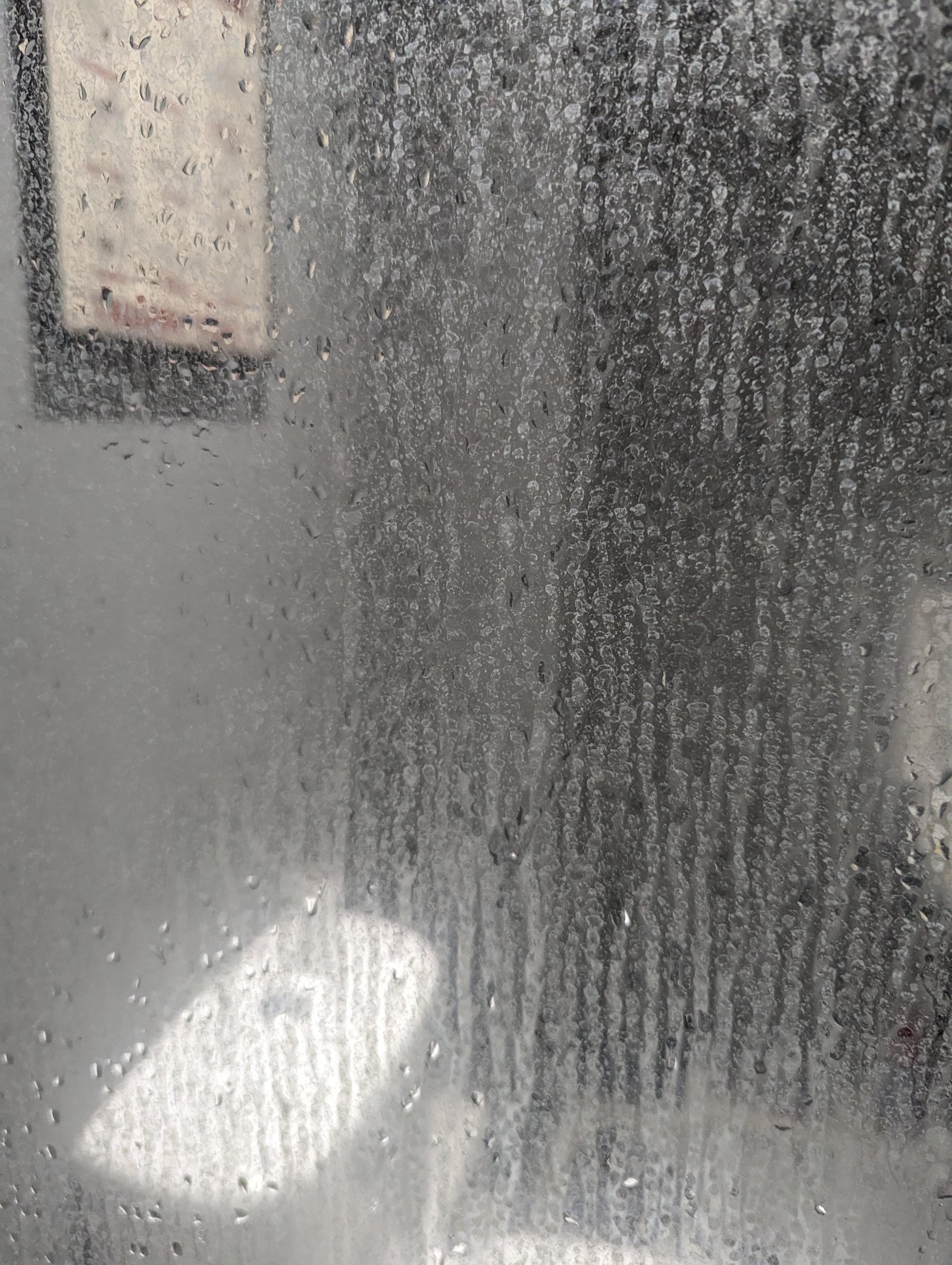
Reserve commercial acid cleaners for thick, years-old mineral crusts that home remedies fail to touch. Acid paste works where mild methods fail, but it produces strong chemical fumes and can pit stone floors.
Choose a commercial gel cleaner containing sulfamic or phosphoric acid. Wear rubber utility gloves and open every window to keep the bathroom well ventilated. Apply 1/4 cup of the gel across the affected glass using an acid-resistant foam applicator. Leave it in place for 5 minutes, but never let it dry on the pane. Wipe the surface clean with a damp towel and rinse with plenty of clean water.
If the glass has become physically etched, no chemical will fix it; you must call a local glazing professional to polish or replace the door.
What not to do
- Scrubbing with rough green scouring pads: Coarse abrasive pads scrape off the minerals, but they permanently scratch the glass surface underneath.
- Spraying bleach on mineral deposits: Bleach kills mold and mildew, but it has a high pH and does nothing to break down alkaline mineral salts.
- Mixing vinegar and baking soda together in a bottle: The acid and base immediately neutralize each other into saltwater, destroying the cleaning strength of both ingredients.
- Letting acid cleaners dry on metal hardware: Acid fumes and drips eat away chrome, brass, and aluminum finishes within minutes, leading to permanent discoloration.
How to stop it happening again
Daily moisture control keeps dissolved minerals from bonding to the panel. A common mistake people make is skipping the daily dry-down, which ruins the glass over time and costs hundreds of dollars in professional replacement.
| If you’re doing this | Do this instead | Why |
|---|---|---|
| Leaving wet doors after showering | Squeegee the glass immediately | Removes standing mineral drops before the water evaporates |
| Washing with animal-fat bar soap | Switch to liquid body wash | Synthetic detergents lack the fatty acids that make soap scum |
| Leaving the shower door shut | Leave the door open after use | Airflow speeds drying and stops moisture from settling |
| Cleaning only when haze appears | Mist weekly with diluted vinegar | Breaks down microscopic calcium deposits before they harden |
| Leaving raw glass exposed | Apply a hydrophobic glass sealant | Forces water to bead and slide straight down the drain |
Frequently asked questions
Can magic erasers remove hard water stains?
Yes, melamine foam erasers can remove light to medium mineral spots from shower glass. Wet the eraser thoroughly with water or warm vinegar before use. The foam acts like extremely fine sandpaper, which can potentially dull or scratch the glass surface if used aggressively.
Why won’t my hard water stains come off?
The minerals have chemically etched the glass surface. Over many months, alkaline minerals eat microscopic pits into untreated silica. You aren’t looking at surface dirt anymore, but physical damage that regular household cleaning products can’t remove.
How long should vinegar sit on shower doors?
Leave vinegar on the glass for 30 minutes to treat standard mineral haze. For thick, crusty buildup, soak paper towels in warm vinegar, press them against the glass so they stick, and let them sit for up to 60 minutes before scrubbing.
Is it safe to use toilet bowl cleaner on glass doors?
No, toilet bowl cleaners often contain aggressive hydrochloric acid that damages bathroom hardware. The strong acid strips protective coatings, permanently etches glass, and burns surrounding aluminum frames. Stick to cleaners formulated specifically for shower enclosures.
What happens if you use steel wool on shower doors?
Using regular steel wool will permanently scratch and ruin the door. However, using any grade of steel wool on glass carries a high risk of scratching the surface or damaging protective coatings. If you use coarse steel wool, you’ll leave visible swirl marks across the entire panel.
Final Thoughts
To keep your glass looking clear, try using a simple squeegee after every shower. It’s a quick habit that prevents mineral buildup from forming in the first place. You won’t have to scrub nearly as often, and your bathroom will stay sparkling clean without all the extra work.
Related guides
