
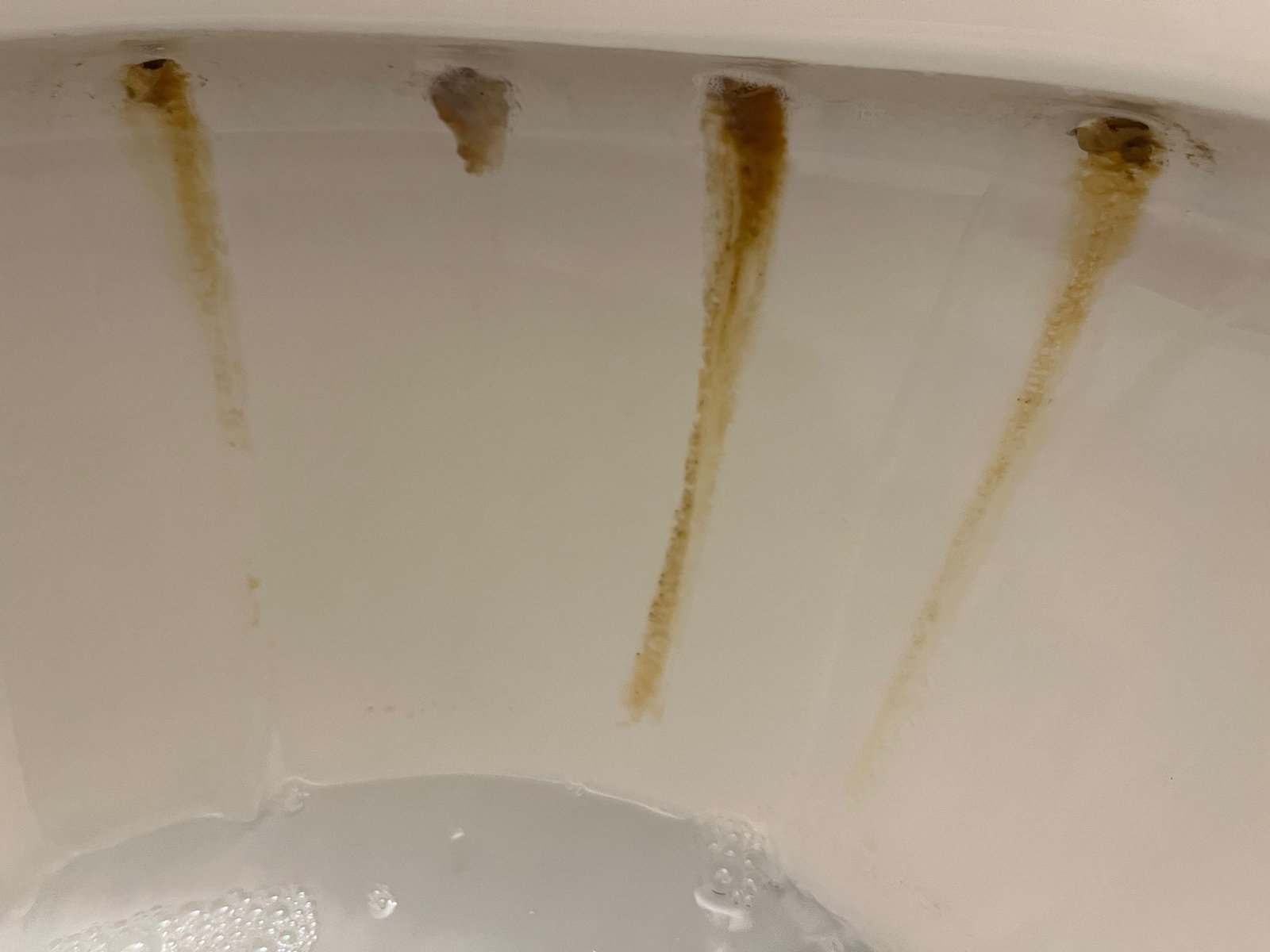
Soaking paper towels in 2 cups of distilled white vinegar and pressing them under the porcelain edge for 45 minutes shows you how to remove yellow stains from toilet rim without harsh scrubbing. This method suits anyone dealing with hard water scale and old urine salts on standard glazed porcelain toilets.
Table of Contents
Supplies to remove yellow toilet stains
- 2 cups of white distilled vinegar (5% acidity standard cleaning vinegar)
- 10 to 12 sheets of thick paper towels
- 1 pair of waterproof rubber cleaning gloves
- 1 nylon toilet rim brush with angled bristles (don’t use wire bristles)
- 3 tablespoons of baking soda
- 1 small spray bottle
Paper towels hold liquid against upside-down surfaces well; toilet paper dissolves too quickly and falls into the water. Never mix vinegar with chlorine bleach products, because combining acids and bleach produces toxic chlorine gas.
Step-by-step
- Put on your rubber gloves and open a bathroom window for fresh air.
- Flush the toilet once to wet the surface, then turn off the water valve behind the bowl if you want to lower the water level.
- Tear 10 sheets of paper towel into 3-inch wide strips.
- Pour 2 cups of white vinegar into a small bowl, dip the strips until they’re wet, and squeeze gently so they don’t drip.
- Press the wet towels directly up under the underside of the rim, overlapping them so every yellow spot stays covered. Tip: If the strips slide down, spray them with 2 squirts of vinegar from your spray bottle to help them cling to the porcelain.
- Leave the soaked towels in place for 45 minutes; if you’re dealing with thick, brown-tinted limescale, allow up to 2 hours.
- Pull the paper towels away and toss them straight into the trash can. Careful: Don’t flush paper towels down the drain, or you’ll clog your sewer line and need an expensive plumber.
- Sprinkle 3 tablespoons of baking soda onto your angled nylon brush and scrub firmly under the rim for 2 minutes.
- Turn the water supply valve back on and flush twice to rinse away all loosened residue.
Mineral Buildup and Treatment Options
Different household water conditions change the time and effort you’ll need.
| Water and Stain Level | Typical Time | Process Difference | What to Watch |
|---|---|---|---|
| Fresh urine residue | 20 minutes | Wipe down with vinegar-damp sponge | Fading yellow tint |
| Moderate hard water crust | 45 minutes | Full paper towel soak method | Towels staying wet |
| Heavy iron and scale | 2 to 3 hours | Re-wet towels every 30 minutes | Towels drying out |
| Old calcified buildup | Overnight | Paste of vinegar and baking soda | Dripping onto seat hinges |
It’s safer to start with a short vinegar soak and repeat it than to use harsh abrasives on the first try.
How to tell you did it right
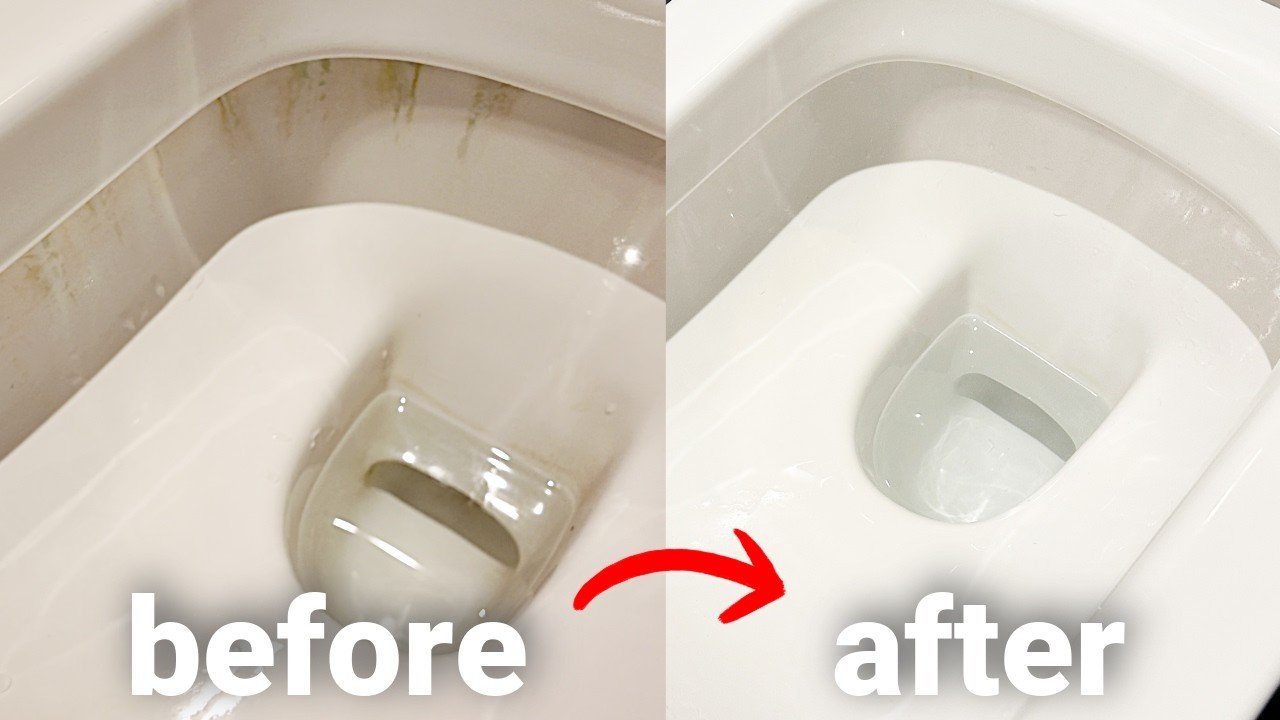
A clean rim feels slick and looks bright white under a handheld flashlight. A poor result leaves rough yellow patches or gritty crust tucked inside the flush holes. Yellow marks come back when mineral scale traps urine splashes and body oils against the unglazed channel. Scratching the smooth vitreous china makes these deposits return twice as fast. Using soft nylon brushes, rinsing with clear water, and wiping the rim weekly prevents minerals from bonding to the surface again.
Cleaning Chemicals and Proper Disposal
The EPA guide on cleaning products advises using milder ingredients before reaching for corrosive chemicals. Throw used paper towels into your plastic trash bin, not the toilet. Rinse your brushes in a bucket of fresh water and let them air-dry before storing them away. A thorough acid soak keeps porcelain clean for about 30 to 60 days in standard homes. This varies by model and local water hardness, so check your local water utility report if deposits return quickly.
Other ways to do it
Citric acid powder soak
Dissolve 4 tablespoons of food-grade citric acid powder into 2 cups of warm water. Soak paper strips in the mix and pack them under the rim for 30 minutes. It works faster than vinegar on thick calcium and smells milder, though the powder costs slightly more.
Pumice stone rub
Wet a natural pumice stone thoroughly with tap water and gently rub stubborn yellow rings. This removes mineral scale that acids won’t dissolve, but it takes 15 minutes of manual labor. This isn’t for plastic, colored, or coated bowls, because dry pumice scratches them permanently.
Commercial gel cleaners
Apply a cling-gel toilet bowl cleaner directly under the channel using the angled bottle nozzle. Leave it for 20 minutes before scrubbing. You trade the low cost of pantry vinegar for a thicker liquid that won’t drip down into the bowl water immediately.
Frequently asked questions
Can bleach remove yellow stains under the rim?
No, chlorine bleach sanitizes bacteria, but it doesn’t dissolve mineral scale or urine salts. Bleach lightens the color temporarily while the rough crust stays behind to catch new grime. Acid-based cleaners like vinegar work much better on mineral scale.
Why do yellow stains keep coming back under the toilet rim?
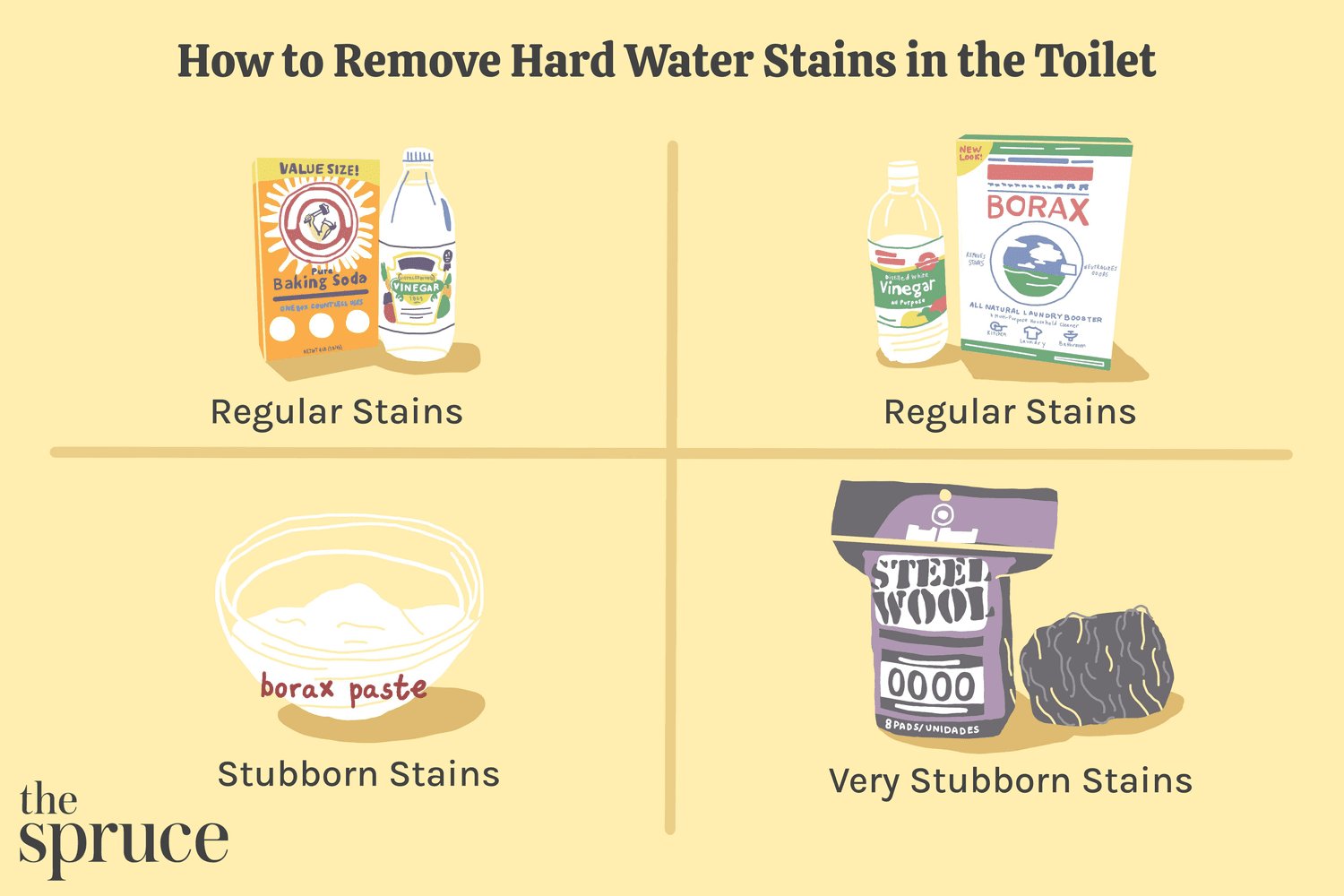
Hard water minerals gather around the flush holes every time you flush. When water evaporates, calcium deposits stay behind and trap urine splashes. Without regular wiping, these minerals build up into hard yellow crusts within a few weeks.
Is it safe to use a pumice stone on porcelain?
Yes, as long as both the stone and the bowl surface stay completely wet. Water creates a slick barrier so the soft volcanic rock grinds down mineral scale without scraping off the factory glaze. Never use a pumice stone dry.
How long should I leave vinegar under the toilet rim?
Leave it for 45 minutes for standard stains, or up to 2 hours for thick deposits. If you leave vinegar on metal parts like seat bolts for hours, it can cause corrosion, so keep the acid on the ceramic bowl only.
What happens if I accidentally flush the paper towels?
They won’t dissolve like bathroom tissue and will likely jam inside the toilet trap or your main sewer pipe. If water backs up into the bowl, stop flushing immediately and use a standard flange plunger to clear the paper blockage.
Final Thoughts
Once your bathroom is sparkling, you’ll find it much easier to maintain that fresh look. Try wiping the rim with a damp cloth once a week to prevent buildup from returning. You’ve done the hard work, so just enjoy a cleaner space and don’t worry about those stubborn spots anymore.
Related guides