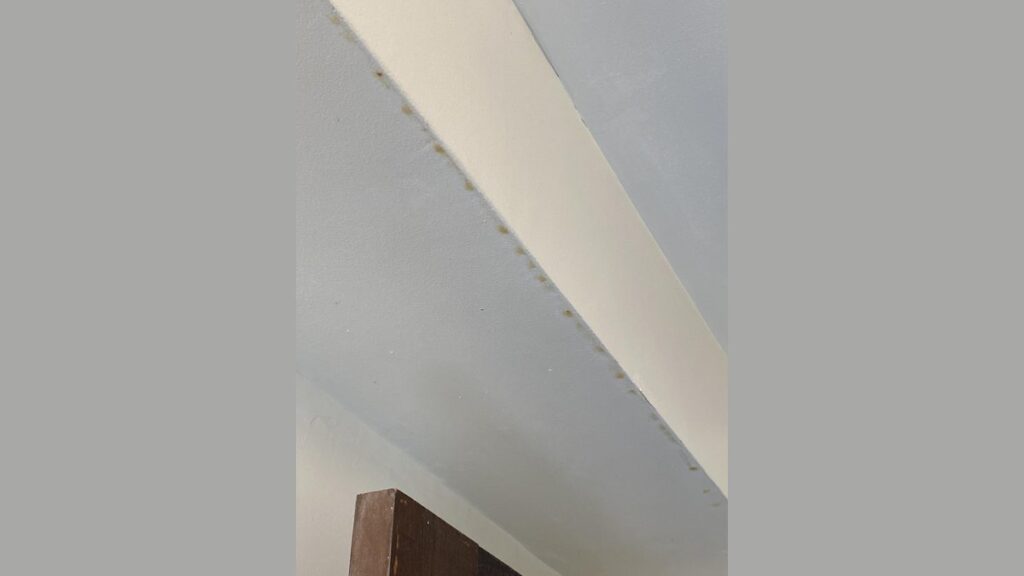
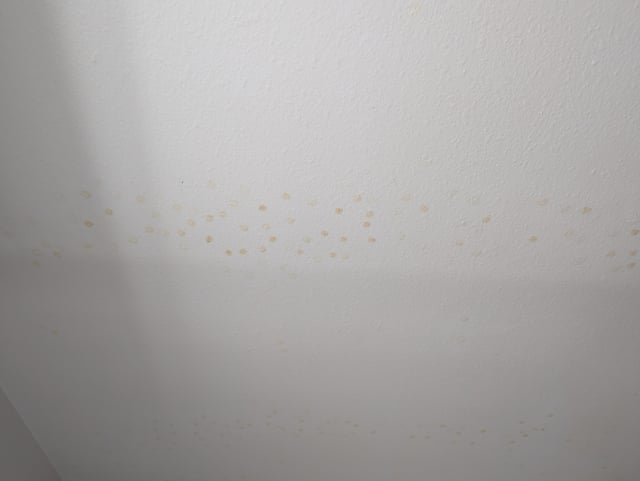
Wiping the surface with a warm solution of equal parts distilled white vinegar and water is how to clean yellow spots on bathroom ceiling drywall safely. You must have a sturdy step stool before starting so you don’t overreach and strain your shoulders.
Table of Contents
Supplies to clean bathroom yellow spots
| Item | How much | Why it’s needed | A substitute |
|---|---|---|---|
| Distilled white vinegar | 2 cups | Dissolves surfactant stains and mineral deposits | none — don’t swap this |
| Warm tap water | 2 cups | Dilutes acid so paint stays safe | none — don’t swap this |
| Dish soap | 1 teaspoon | Breaks down sticky oil films | Liquid hand soap |
| Microfiber cloths | 4 clean cloths | Lifts soil without scratching paint | Soft cotton rags |
| Empty spray bottle | 1 bottle | Applies solution in light mists | Clean plastic bowl |
| Safety goggles | 1 pair | Shields eyes from overhead drips | none — don’t swap this |
Before you start
- Turn off the bathroom circuit breaker if you must clean within six inches of ceiling light fixtures or exhaust fans.
- Clear all toothbrushes, towels, and bathmats from beneath your work area so dirty liquid doesn’t fall on them.
- Open the window and switch on the exhaust fan to maintain airflow while you work.
- Lay an old sheet or plastic tarp across the bathroom floor and over the vanity counter.
- The common mistake people skip is dusting the ceiling first; washing dry cobwebs turns them into dark paste that permanently stains ceiling paint.
This method handles moisture stains and surfactant leaching; if your ceiling feels mushy, sags, or leaks water, you have a plumbing leak that requires a licensed plumber.
Step by step
- Put on your safety glasses so overhead drops don’t fall directly into your eyes.
- Sweep the dry ceiling with a clean, dry microfiber cloth attached to a long mop pole to clear loose dust.
- Pour 2 cups of warm water and 2 cups of white vinegar into your spray bottle, adding 1 teaspoon of liquid dish soap.
- Mist the cleaning mixture directly onto a fresh microfiber cloth until it’s damp but not dripping wet.
- Press the damp cloth firmly against one yellow patch and hold it in place for 10 seconds to loosen the dried moisture residue.
- Wipe the area gently in small circular motions across a 2-foot by 2-foot section until the yellow spot disappears from the surface.
- Dip a clean cloth into plain warm water, wring it out completely, and wipe the washed area to remove any lingering soap residue.
- Press a dry cloth straight against the damp drywall spots until the surface shows no wet sheen or water rings.
How to know it worked
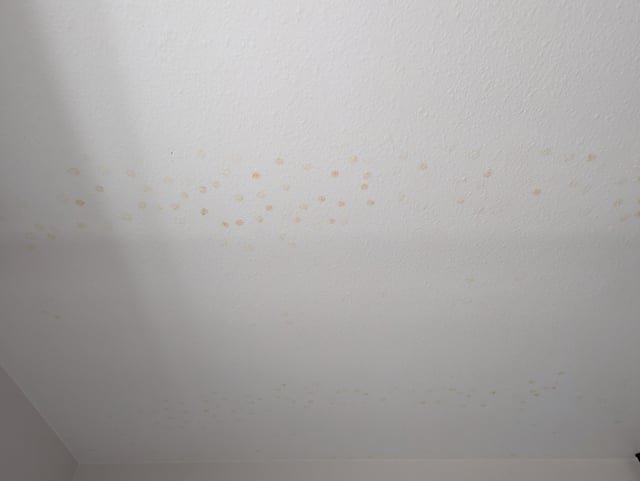
Check the ceiling two hours after cleaning when the drywall dries completely under direct light. A clean ceiling displays a uniform flat finish without sticky yellow patches, shiny surfactant streaks, or dark water outlines. If faint orange or tan spots remain, you’ll need a second round using pure undiluted white vinegar on that specific mark. If moisture issues allowed mold patches larger than 10 square feet to develop, follow the EPA guide on mold cleanup rather than trying to wipe them with household vinegar. You’re trading gentle surface safety for speed here: mild vinegar takes longer to loosen surfactant marks than bleach, but bleach damages your paint layer and leaves the stain underneath.
This guide isn’t for people with unpainted acoustic popcorn ceilings, as liquid will dissolve the texture.
If something goes wrong
| What happened | Why | What to do |
|---|---|---|
| Paint peels off | Rubbed too hard while wet | Stop immediately and repaint later |
| Spot stays bright | Water leak behind board | Inspect attic for pipe drips |
| Dark green flecks appear | Active mold beneath surface | Apply dedicated fungicide cleaner |
| Ceiling turns chalky | Soap mixture dried on paint | Wipe clean with damp cloth |
| Yellow liquid drips down | Surfactant pulled from paint | Dry ceiling and increase ventilation |
How often to do this
Wash your bathroom ceiling regularly if you take daily hot showers. Two main factors change this frequency: your bathroom exhaust fan’s power and your home’s regional humidity. A weak exhaust fan leaves heavy moisture against the ceiling paint every morning, which forces you to clean whenever you notice it. If you live in an arid climate or run a dehumidifier that keeps indoor humidity under 50%, you might only need to wipe the ceiling as part of your usual clean. The rate this residue appears varies by paint brand — check your paint manufacturer’s label to see its moisture tolerance.
Frequently asked questions
Can I use bleach to remove yellow bathroom spots?
No, because bleach strips your ceiling paint and won’t eliminate surfactant leaching. Bleach ruins the latex paint binder, leaving flat walls looking patchy and gray. Distilled white vinegar dissolves the soap and mineral films that cause yellow marks without eating into your wall’s paint finish.
Why do yellow stains appear on the ceiling?
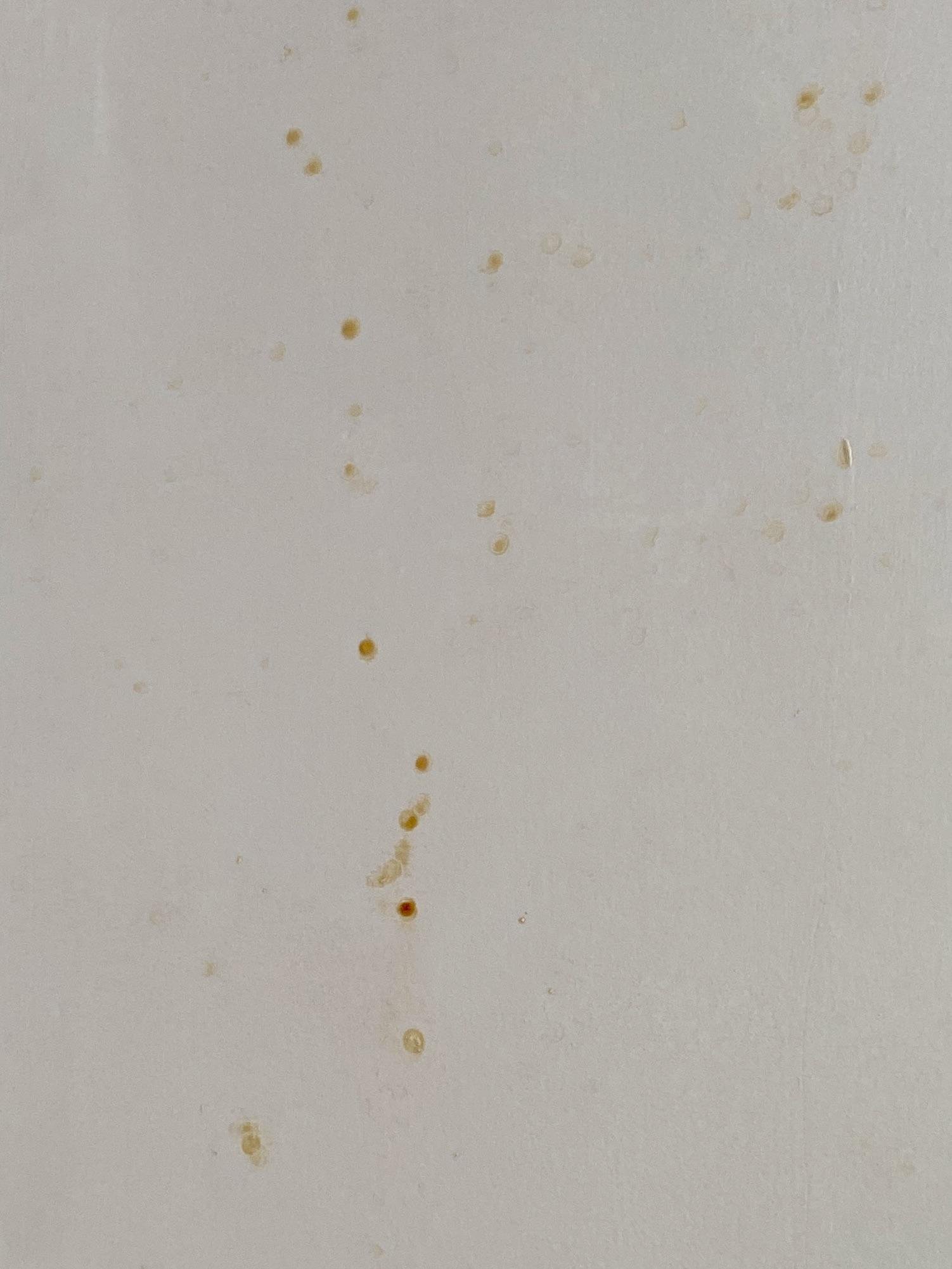
High shower humidity pulls water-soluble surfactants and soap additives out of standard latex paint layers. The moisture evaporates into the room, leaving sticky amber droplets behind on the ceiling surface. Poor ventilation and steam speed up this process over time.
How long does the ceiling take to dry after cleaning?
Pressing a clean dry towel over the cleaned spots keeps the drywall beneath from softening.
Is it safe to paint over yellow ceiling spots directly?
No, the chemical ingredients inside yellow surfactant marks dissolve straight through fresh water-based latex coats within weeks. The stains will appear again on the new paint layer. You must clean the area thoroughly and apply an oil-based primer first if you plan to repaint.
What happens if I scrub the spots with an abrasive sponge?
You’ll rub through the delicate paint film and damage the drywall paper below. Textured scrubbing pads wear away flat ceiling paint quickly. Always stick to smooth microfiber cloths and light manual pressure to protect the ceiling material.
Does it matter if I use apple cider vinegar instead?
Yes, apple cider vinegar leaves light brown tannins behind on white ceiling paint that make stains worse. Clear distilled white vinegar carries zero dyes and leaves no residue. Use only distilled white vinegar or clear cleaning vinegar for light-colored ceilings.
Final Thoughts
Once the area is completely dry, take a moment to check for any lingering moisture or leaks that might have caused the discoloration in the first place. If the spots don’t return, you won’t need to worry about them again. Keeping your bathroom well-ventilated is the best way to prevent future stains.