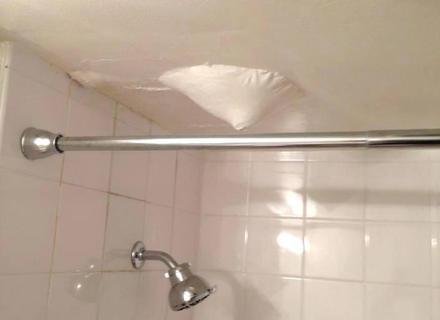
Stop right now before walking underneath. An upstairs bathroom flooded leaking through ceiling means water is pooling on sheetrock directly above an electrical room, and that wet drywall can collapse without warning. Turn off the main electrical breaker for that lower room immediately to prevent shocks or fire. Move people and pets away from the area under the stain right now.
Table of Contents
Do this first
- Shut off the bathroom fixture valve by turning the oval handle clockwise until it stops, or shut the main water valve in the basement.
- Flip the electrical breaker labeled for the ceiling lights and outlets in the downstairs room to the OFF position.
- Place an open plastic bucket directly under the lowest point of the ceiling drip downstairs.
- Push towels across the upper floorboards to pull standing water off the tiles.
What is actually happening
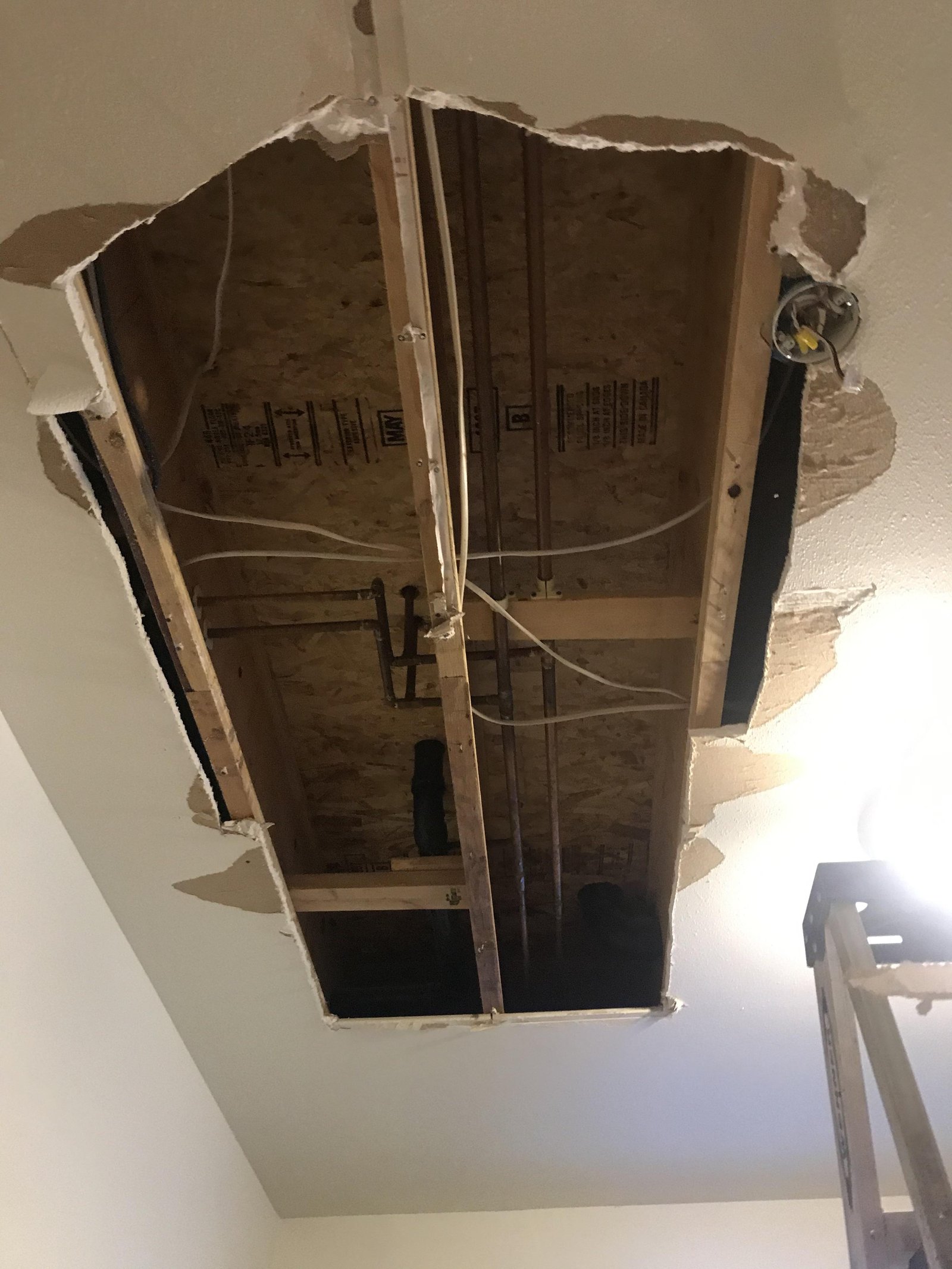
Gravity pulls the escaping water straight down through floor seams, subflooring, and joist spaces until it hits the backside of the drywall ceiling. Drywall acts like a sponge; it absorbs moisture until its core dissolves and the sheet sags under its own wet weight.
| Leak Cause | Water Flow Pattern | Typical Trigger |
|---|---|---|
| Supply line split | Constant, strong spray | Old braided steel line cracks |
| Drain line crack | Leaks only during draining | Emptying tub or flushing toilet |
| Floor overflow | Spills once, then stops | Tub fills past rim or toilet clog |
A constant leak comes from pressurized supply tubes. A leak that pauses between bathroom uses points to an open drain line or a broken toilet wax ring.
When standing water stays in the structure for 24 to 48 hours, indoor mold spores begin colonizing the timber, according to the EPA mold cleanup guide. Running dehumidifiers quickly limits this structural breakdown. This cleanup process isn’t for people with active asthma or dust allergies, because disturbed wet drywall releases airborne particulate matter.
Check these, cheapest first
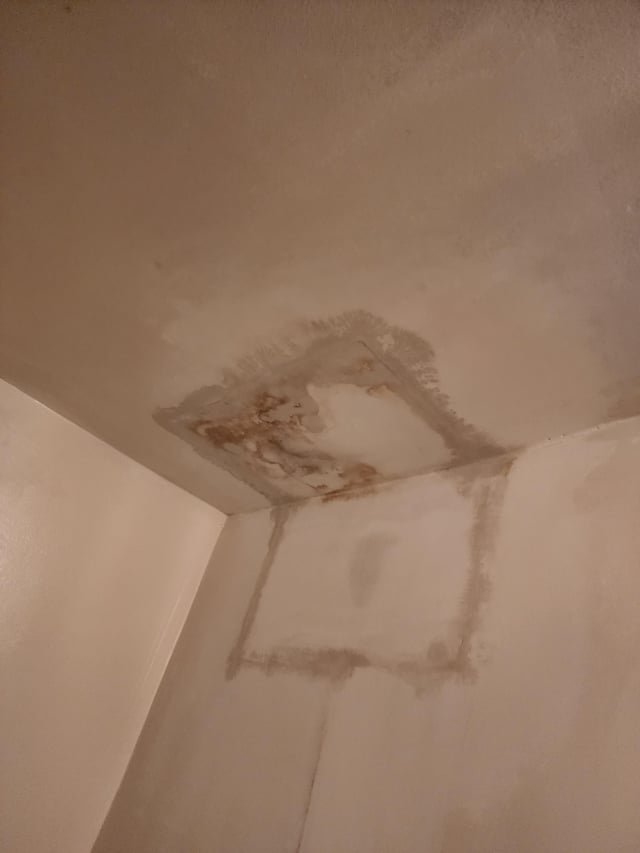
Find the exact water path before spending money on repairs.
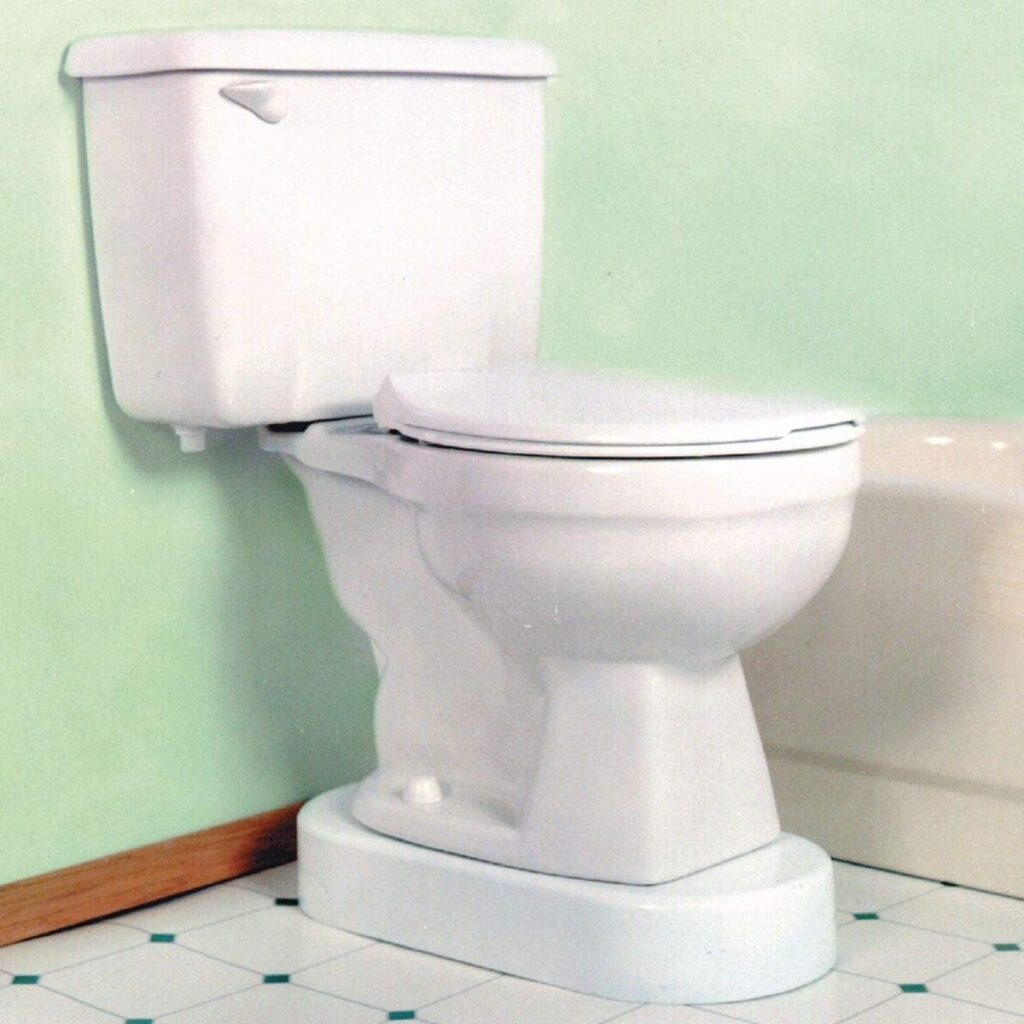
Look at the toilet base seal
Wipe the toilet base dry with paper towels, flush twice, and watch for water bubbling out around the porcelain footprint. A dry floor means the leak is underneath; wet floor edges mean a damaged wax ring let dirty water pass the subfloor.
Inspect the supply shutoff lines
Run your finger under the metal braided lines behind the toilet and under the sink cabinet. If your hand comes away wet, a rubber washer has failed or a coupling nut has split, spraying water across the floorboards.
Fill the tub drain stopper
Plug the bathtub with its rubber stopper and add three inches of cold water without splashing. If water drops through the ceiling below while the tub is empty but leaks when the drain is opened, the tub shoe or internal overflow gasket is likely cracked.
Check the shower surround caulk
Check the seam where the tile floor meets the bathtub apron for missing silicone or crumbly grout lines. Gaps wider than a coin let shower splash run under the baseboard during normal use and soak the ceiling joists beneath.
The fix
Replacing a blown toilet wax ring solves most persistent ceiling leaks. Shut the fixture valve, flush to empty the tank, and sponge out the remaining water. Unbolt the closet bolts at the floor, lift the toilet off the flange, and scrape away all old wax with a putty knife. Press a new wax ring with an integrated polyethylene horn firmly onto the clean flange, lower the bowl back down, and tighten the nuts until snug—never overtighten, or you’ll crack the porcelain bowl.
Turn the water on and flush the toilet three times while watching the lower ceiling. The repair held if the hole you poked earlier stays completely dry for one hour.
[TOILET BASE] | [NEW WAX RING] <– Press firmly onto flange | [CLOSET FLANGE] | | | | [JOIST]| | | | (HOLE) <– Must stay dry after flush | [BUCKET]
Where this stops being a DIY job
Call a licensed plumber and a structural dry-out crew if the ceiling sheetrock sags more than two inches or if the leak ran unseen for days. If water ran into breaker boxes or recessed ceiling lights, hire a licensed electrician; working on wet electrical boxes can cause severe injury.
A home repair trade-off exists here: you save money by cutting and hanging new drywall yourself, but consumer tools can’t pull hidden moisture out of structural joists like commercial air movers can. A contractor will bring a thermal imaging camera and a pinless moisture meter to measure the framing before deciding whether to pull down the whole ceiling. Tell them you turned off the water, shut the breaker, and drained the sheetrock belly.
Frequently asked questions
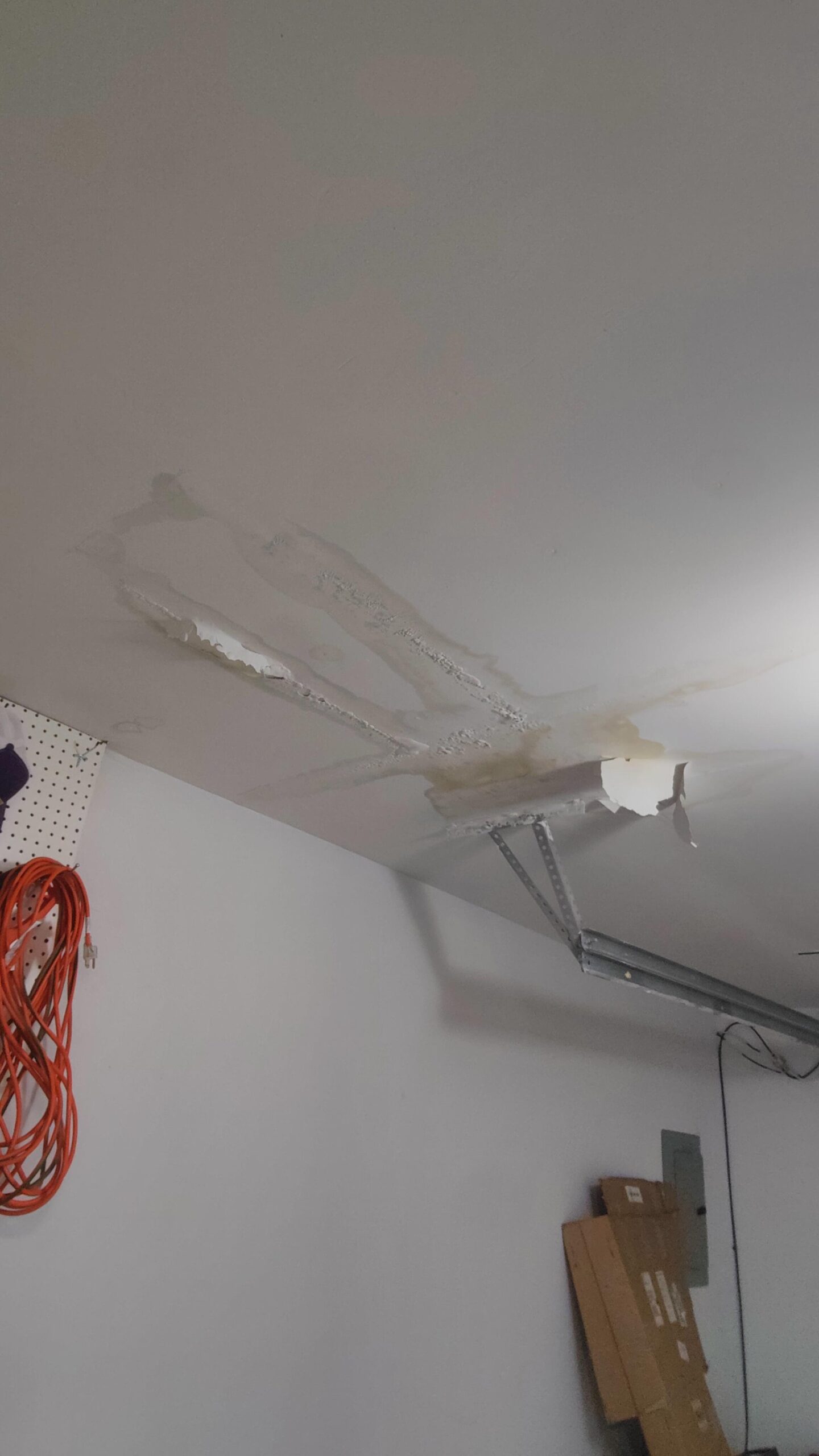
Will the ceiling collapse from the leak?
Yes, it can collapse quickly if water pools on top of it. Wet drywall loses its structural strength and turns into heavy paste. Poking a small drain hole lets trapped water escape into a bucket, taking the physical weight off the fasteners before the sheet pulls free from the joists.
How long does a wet ceiling take to dry?
This assumes you cut open the wet sheetrock and place fans pointing upward. A closed, untouched ceiling traps damp air inside the dark joist cavity, which will keep structural studs wet for over two weeks.
Can water leak through a light fixture safely?
No, water touching light fixtures creates a direct shock and short-circuit hazard. Turn off the main electrical panel switch that feeds that room before touching anything below. Don’t turn the power back on until an electrician inspects the fixture socket and the wire nuts inside the ceiling junction box.
Does homeowners insurance cover this bathroom leak?
Yes, most standard policies cover sudden and accidental damage, like a burst supply line or an overflowing tub. However, policies usually deny claims caused by gradual rot or years of neglected grout leaks. Check your specific policy declarations page to see your deductible limit and exact water damage terms.
Why is water leaking only when the shower runs?
The leak happens on the drain side or behind the shower wall tiles. When the supply pipes stay dry, water is escaping through a worn drain trap, a loose shower arm thread, or broken caulking along the floor joint. These parts only see water while someone uses the stall.
Is the water leaking through the ceiling dirty?
Yes, it’s often contaminated. Water leaking from a toilet holds sewage bacteria, while water running through dirty subfloors and old insulation carries dust, chemical residues, and insulation fibers. Wear rubber gloves and wash your hands thoroughly after handling wet ceiling pieces or emptying your catch buckets.
Final Thoughts
Once the immediate danger passes, don’t wait for the ceiling to dry on its own. You’ll need to contact a professional plumber or restoration specialist right away to find the hidden source of the leak. They’ll help you fix the damage properly so you don’t have to worry about mold later.