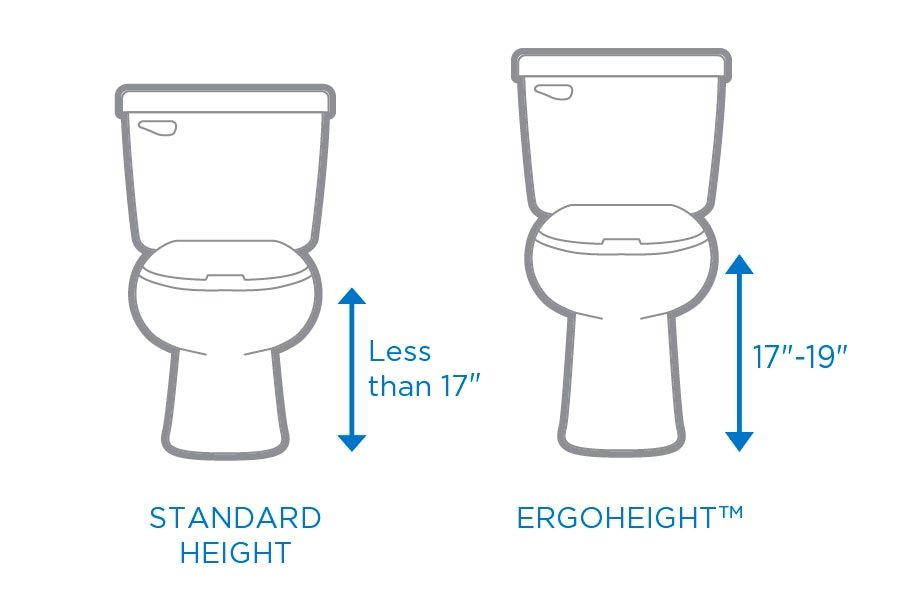
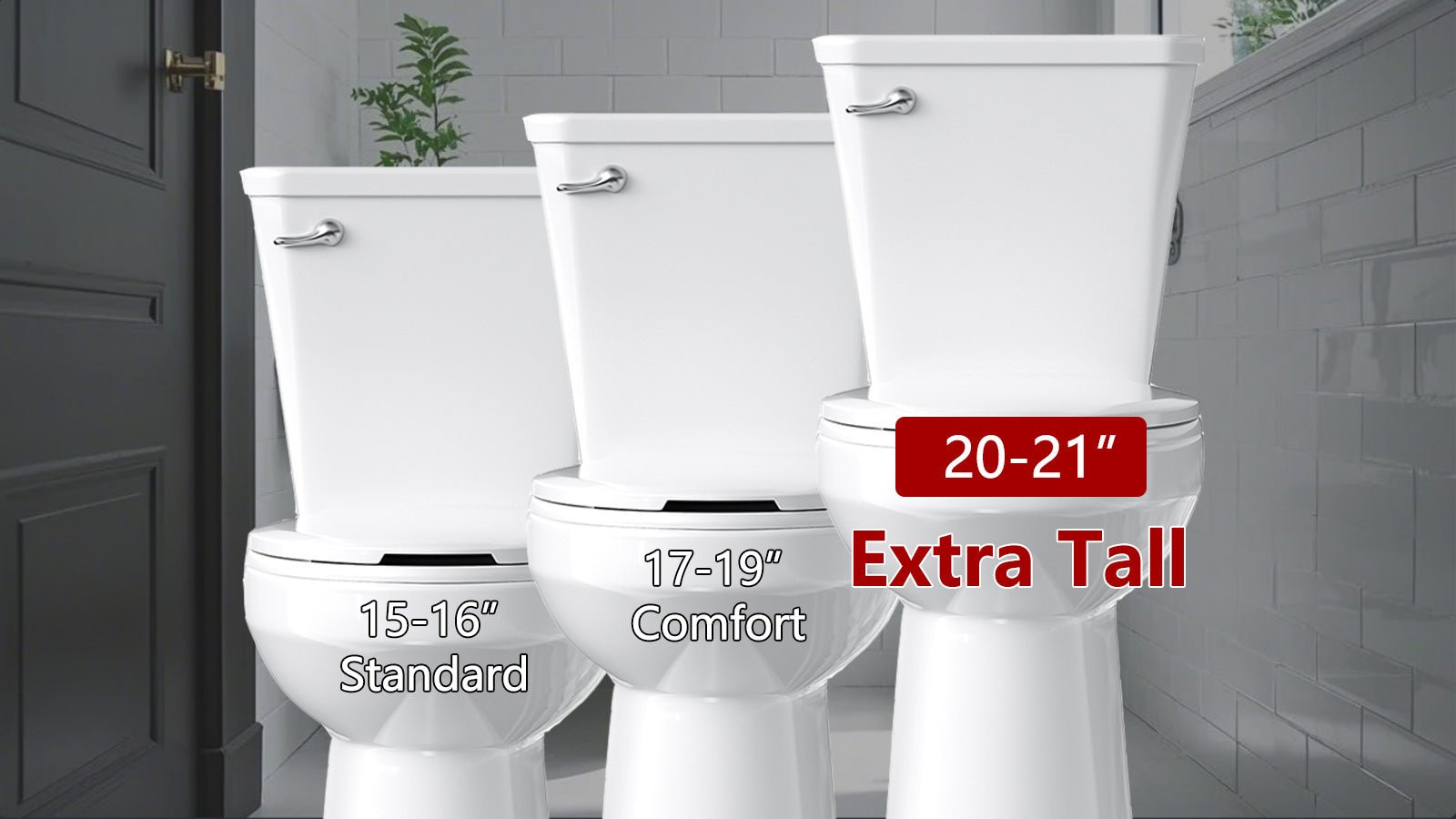
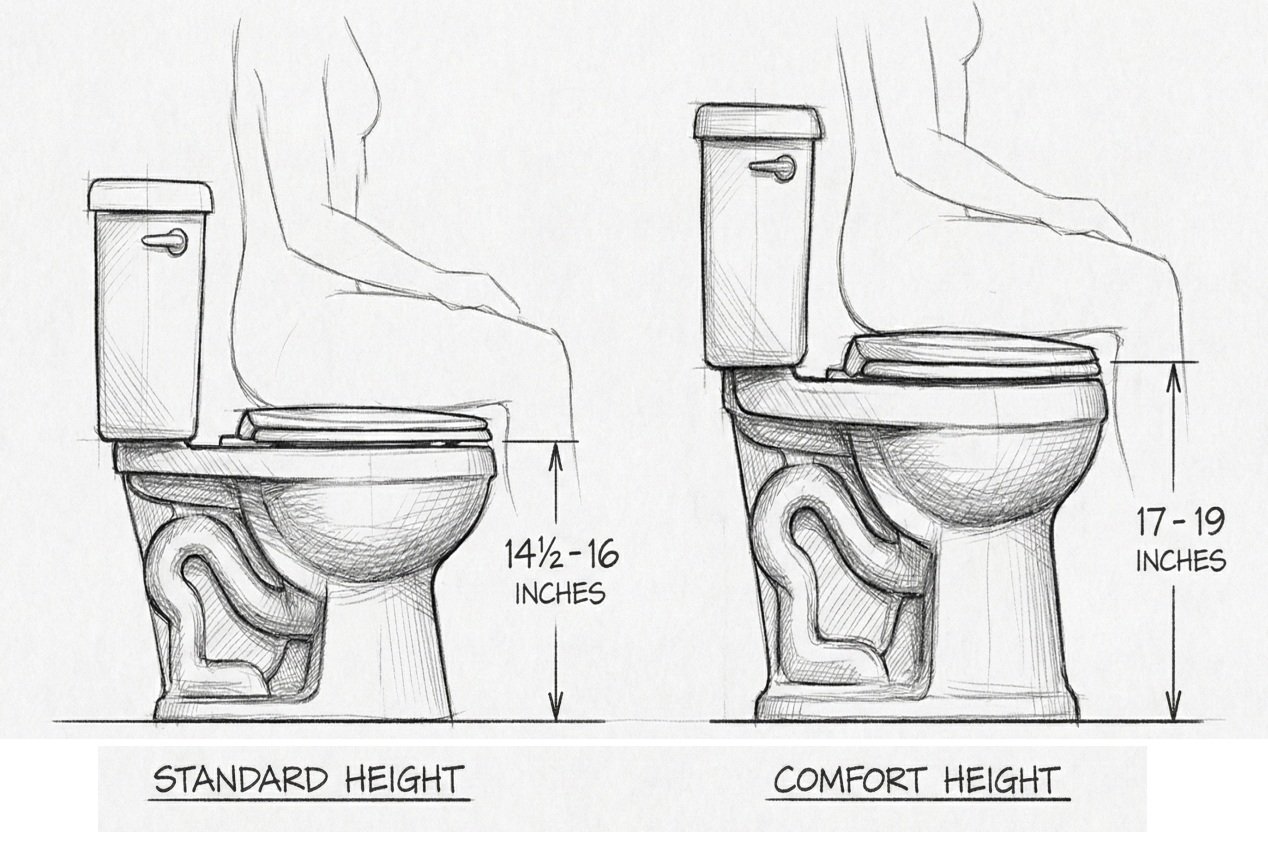
A chair height toilet is defined by a seat height between 17 and 19 inches from the finished floor to the top of the seat. Standard models sit lower at 15 to 16 inches. The extra two to three inches change how your knees bend, making sitting down and standing up far easier for most adults.
Table of Contents
Defining chair height toilets

- Chair height measures 17 to 19 inches from the finished floor to the top of the seat ring.
- Standard toilets measure 15 to 16 inches, which leaves hips lower than knees for taller users.
- Tall adults and people with stiff joints gain leverage from the higher sitting position.
- The higher seat straightens the colon angle, which makes bowel movements harder for some people.
- Children and adults under 5 feet 4 inches often end up with dangling feet that cut off leg circulation.
- Measure your current bowl without the seat; add one inch to find your true sitting height.
Why taller toilet seats exist
Standard toilets match the height of a low bench. That posture forces deep hip flexion, which requires strong quadriceps and stable knees to reverse when you stand up. Chair height fixtures match ordinary dining chairs and office seating. By keeping your hips level with your knees, the joint load drops sharply during transfers.
The physical dimensions originate from public access laws. The ADA Standards for Accessible Design require water closets in public stalls to measure 17 to 19 inches from the floor to the top of the toilet seat. Manufacturers adopted these dimensions for residential homes, branding them as comfort height or right height models.
This added height creates a trade-off between joint comfort and digestive function. Sitting higher closes the anorectal angle, which pinches the rectum and requires more straining to pass stool. Standard low bowls create a natural, semi-squat position that straightens this passage. If you choose a taller model for knee comfort, you lose that natural squat posture. A simple footstool fixes this issue by elevating your feet during use, giving you standing leverage without sacrificing digestive alignment.
When the answer is different
Room layouts, user heights, and local building rules often require a standard or custom bowl instead of a chair height model.
| Situation | What changes | What to do instead |
|---|---|---|
| Children use the bathroom | Feet dangle without floor contact | Buy a 15-inch standard bowl |
| Adults under 5-foot-4 | Thigh pressure causes leg numbness | Install a standard bowl |
| Severe chronic constipation | High seat restricts bowel emptying | Keep low bowl or add footstool |
| Low over-toilet shelf | Tall tank lid hits cabinet base | Measure vertical clearance first |
| Commercial child-care center | ADA adult heights violate daycare codes | Install a 12-inch juvenile fixture |
How to do it properly
- Clear the area around the base and wipe the floor dry so your tape measure lies flat against the surface.
- Hold a rigid tape measure perpendicular to the floor, placing the metal end flat against the finished flooring beside the bowl.
- Extend the tape upward to the top of the porcelain rim to verify bowl height; a chair height bowl measures 16 to 17 inches bare.
- Close the toilet lid and measure to the top of the seat surface; the total height must read between 17 and 19 inches.
- Sit on the toilet with your feet flat on the floor; verify your knees form a clean 90-degree angle without thigh pressure.
- Check your floor-to-foot contact; if your heels lift off the floor, the seat is too tall for your body frame.
The mistakes that ruin it
- Ordering a bowl without measuring the seat: Porcelain bowls measure 16 inches, but adding a thick padded seat pushes the total height past 18.5 inches, leaving shorter users with numb legs.
- Installing tall fixtures in a shared kids’ bathroom: Young children can’t stabilize their core while perched high, which leads to bathroom accidents and falls.
- Overlooking over-toilet shelving: The taller tank on a chair height unit often hits pre-existing floating shelves or recessed medicine cabinets, requiring costly wall repairs.
- Forgetting about family members who suffer from constipation: The elevated seat increases straining, which worsens pelvic floor pain and hemorrhoids unless someone buys an extra footstool.
Frequently asked questions
Is a chair height toilet the same as comfort height?
Yes. Comfort height is a trademarked brand name used by Kohler for its 17 to 19-inch toilets. Different plumbing brands use names like Right Height or Tall Height, but they all refer to the same 17 to 19-inch measurement from the floor to the seat top.
Can a chair height toilet cause constipation?
Yes. Sitting on a taller seat keeps your anorectal canal bent at an angle, which pinches the rectum. Standard lower toilets push your knees up toward your chest, which straightens the muscle sling around the rectum and allows stool to pass freely without forceful abdominal straining.
Does a chair height toilet require special plumbing?
No. Chair height models use the exact same plumbing rough-in dimensions as standard toilets. The standard distance from the finished wall to the center of the floor drain is 12 inches. A chair height toilet bolts to the identical floor flange using standard closet bolts and a normal wax ring.
Who shouldn’t use a chair height toilet?
This fixture isn’t for children or adults shorter than 5 feet 4 inches. When shorter people use a tall seat, their feet dangle above the floor. The front edge of the seat presses into the back of their thighs, cutting off blood flow and causing leg numbness.
How much taller is a chair height toilet than standard?
About 2 to 3 inches taller. A standard toilet measures 14 to 15 inches from the floor to the bare rim, or 15 to 16 inches with the seat attached. A chair height model measures 16 to 17 inches bare, reaching 17 to 19 inches once you bolt on the seat.
What happens if you install the wrong toilet height?
Your legs go numb or your joints hurt. If the bowl is too tall for you, your feet dangle and blood flow stops at the thighs. If the bowl sits too low, your knees and hips take excessive strain every time you pull yourself up to stand.
Final Thoughts
Choosing this upgrade can make a real difference in your daily comfort. If you’re planning a bathroom renovation, it’s worth visiting a local showroom to test a few models in person. You’ll quickly see how much easier it’s to move, and your knees will definitely thank you for the change.