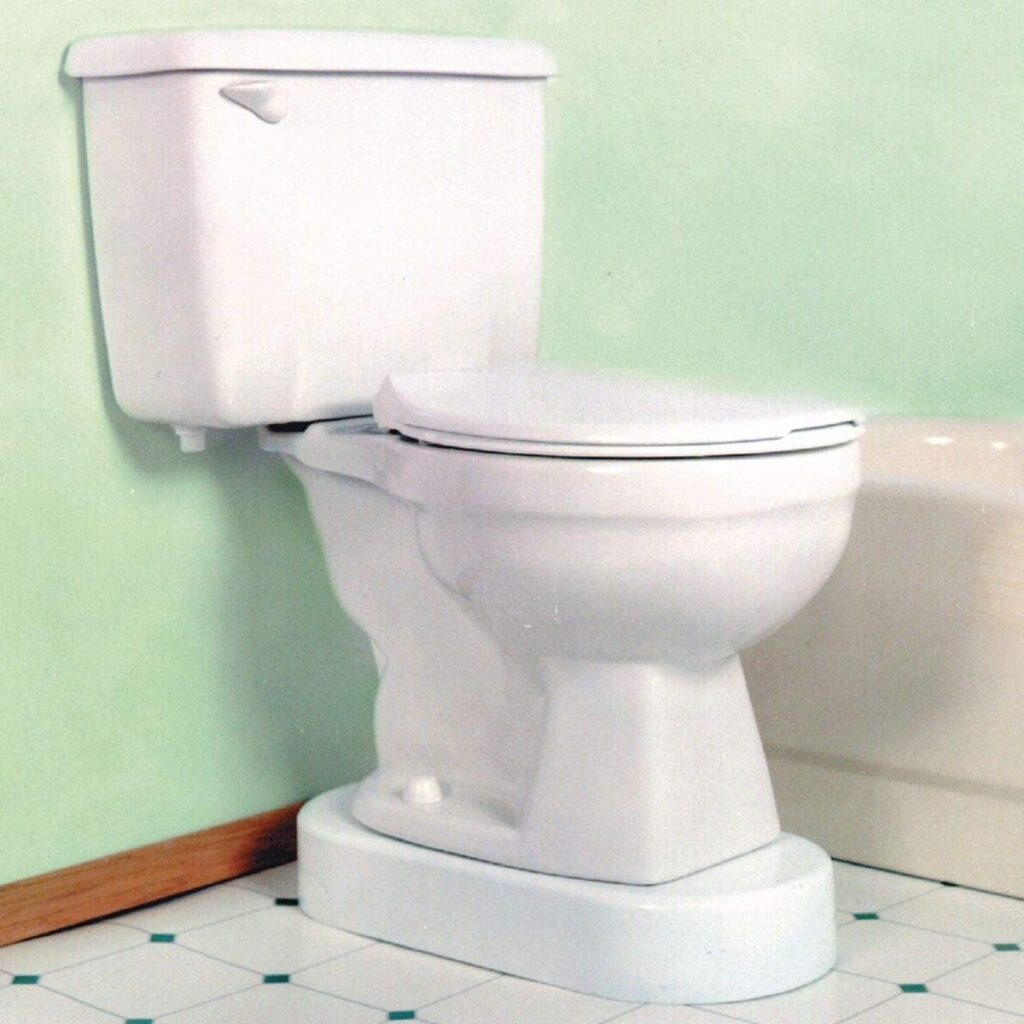
Most surgeons clear you to return to standard seats at 6 to 12 weeks, which is when you can safely use a regular toilet after hip replacement without bending past 90 degrees.
Your hip joint needs time for the surrounding capsule and muscles to heal, which prevents accidental dislocation. The biggest mistake is assuming all home toilets are the same height before your surgery date.
A low seat forces your operated hip into extreme flexion. This risks popping the artificial ball out of its socket, especially if you had a posterior approach.
Table of Contents
Using a regular toilet after replacement
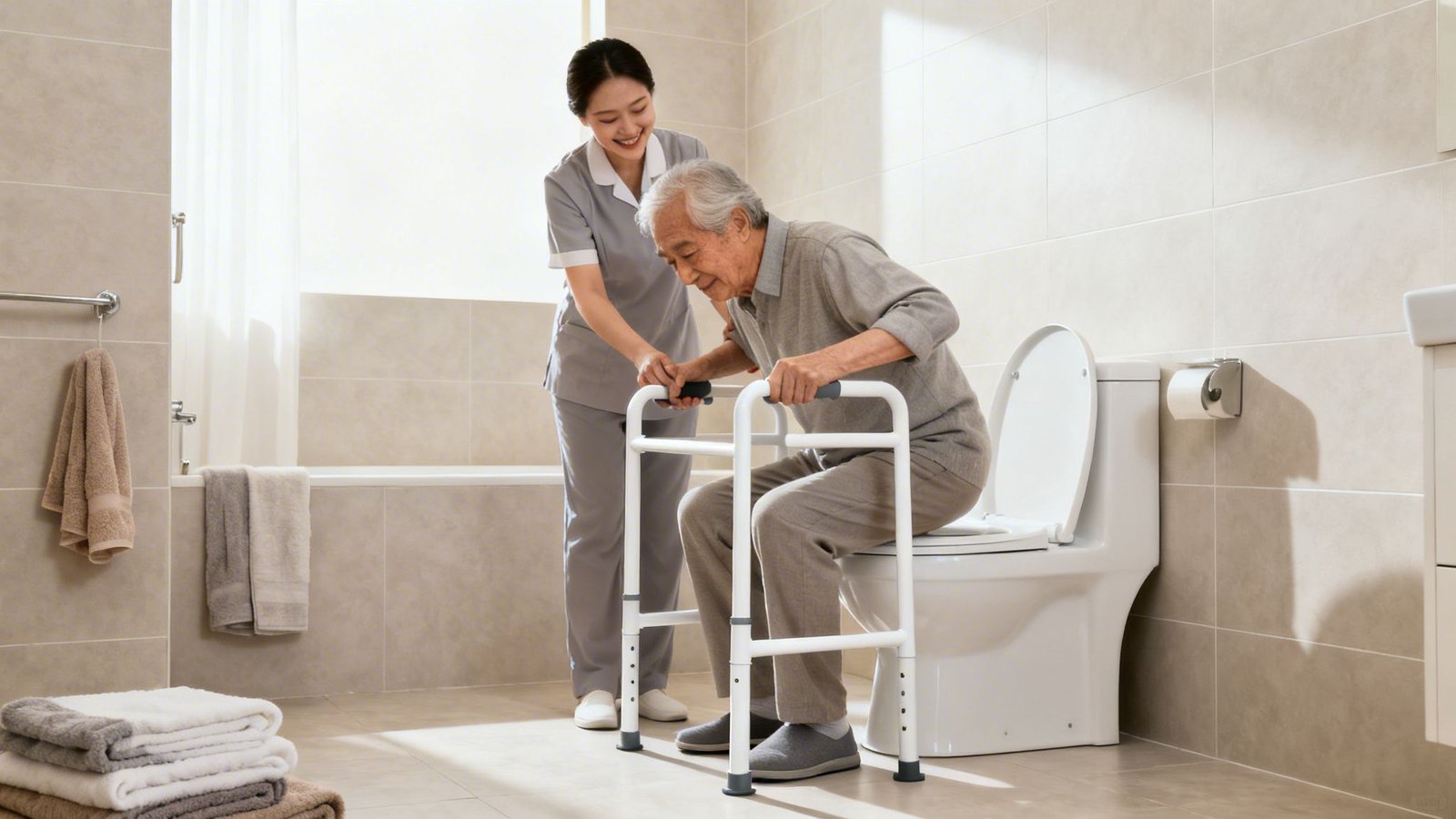
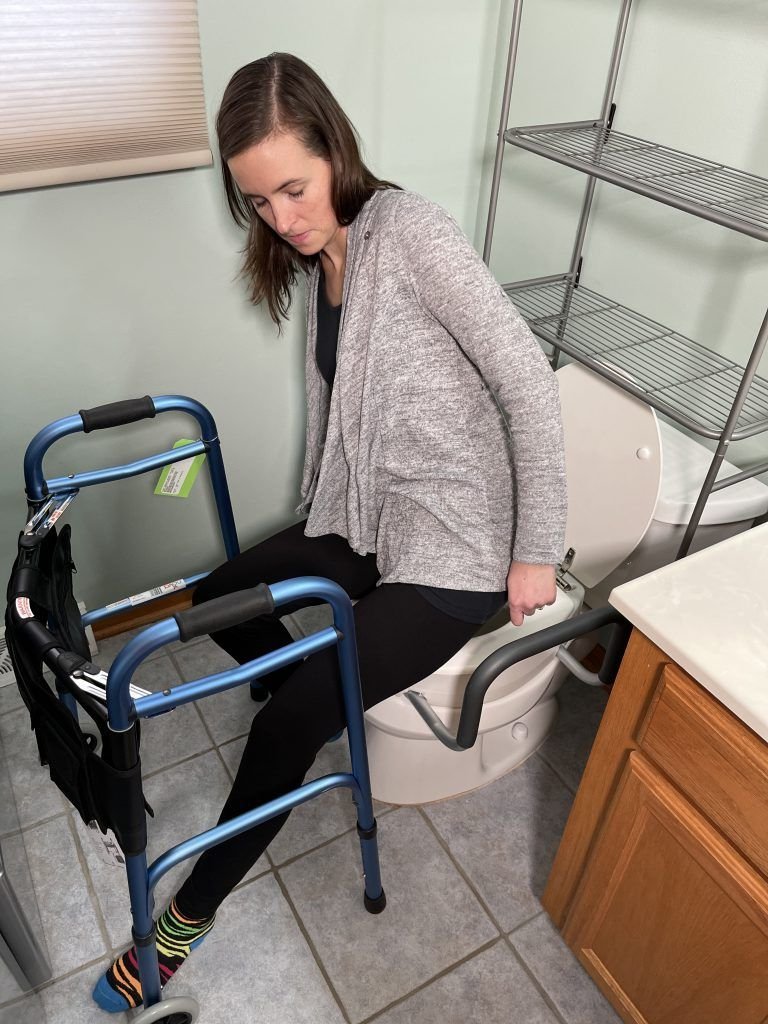
- Back up slowly until the backs of both calves touch the front of the toilet bowl.
- Slide your operated leg forward by 4 to 6 inches, keeping the knee straight and your weight on the healthy leg. Tip: Never tuck your operated foot underneath you to gain balance.
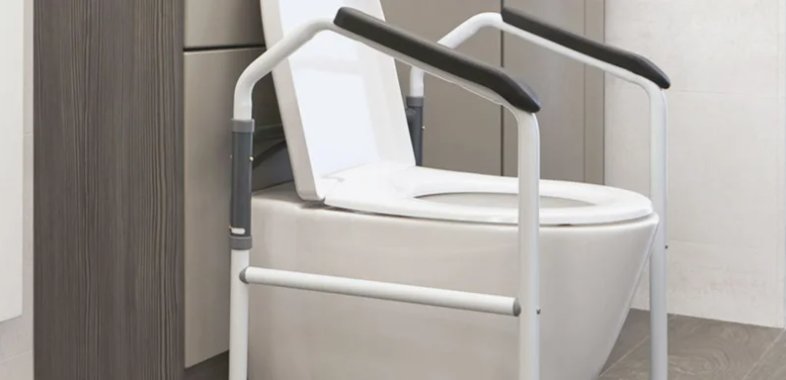
- Reach backward with both hands to grip the armrests or stable safety rails beside the bowl.
- Lower yourself slowly by bending only at your good knee and keeping your chest upright.
- Push firmly through your healthy leg and both handrails when rising, leaving the operated leg extended forward until you’re upright. Tip: Don’t reach for the flush handle or toilet paper holder to pull yourself up.
If your bathroom lacks sturdy grab bars or a raised seat, you’ll need a physical therapist to evaluate your home setup before attempting low surfaces alone.
How long it takes
Recovery timelines depend heavily on the surgical approach, toilet bowl height, and your leg strength.
| Situation | How long | What changes it | What to watch for |
|---|---|---|---|
| Anterior approach | 2 to 6 weeks | Fewer muscle restrictions | Sudden groin pain |
| Posterior approach | 6 to 12 weeks | Strict 90-degree flexion limit | Hip twisting inward |
Call your surgical team if you still can’t rise without deep groin pain after 12 weeks.
How to tell when it’s done
You’re ready for a standard seat when your operated knee stays lower than your hip crease while sitting flat. The American Academy of Orthopaedic Surgeons recovery guidelines explain that avoiding extreme hip flexion protects your implant while tissues repair. Test this by sitting on a firm, flat chair: if your thigh slopes slightly downward toward the knee, your joint angle is safe. If your knee rises level with or above your hip, the seat is too low.
Mistakes that ruin it
- Twisting your torso to reach toilet paper: This rotates the hip joint inward and can cause instant dislocation, so place the paper roll directly in front or beside your reach instead.
- Pulling on unstable sink edges or towel racks: These fixtures easily tear off the wall and cost you hundreds in bathroom repairs while causing dangerous falls; install wall-bolted grab bars instead.
- Using a soft, padded raised seat permanently: Soft foam compresses under body weight and drops your pelvis below safe thresholds, so choose a rigid plastic riser with locking clamps.
Frequently asked questions
Can you use a regular toilet without a riser right away?
No. Standard bowls sit around 15 inches high, which forces your hip past a 90-degree angle. You must use a 3-to-5-inch raised seat until your surgeon lifts movement precautions.
Why does a low toilet risk hip dislocation?
Low seats force your thigh up toward your chest. This deep flexion can cause the femoral head to lever out of the acetabular component before the surrounding soft tissues have healed.
How long do you need toilet safety rails?
Rails keep your upper body upright and bear body weight so your healing leg doesn’t twist or take sudden impact loads.
Is it safe to wipe normally after surgery?
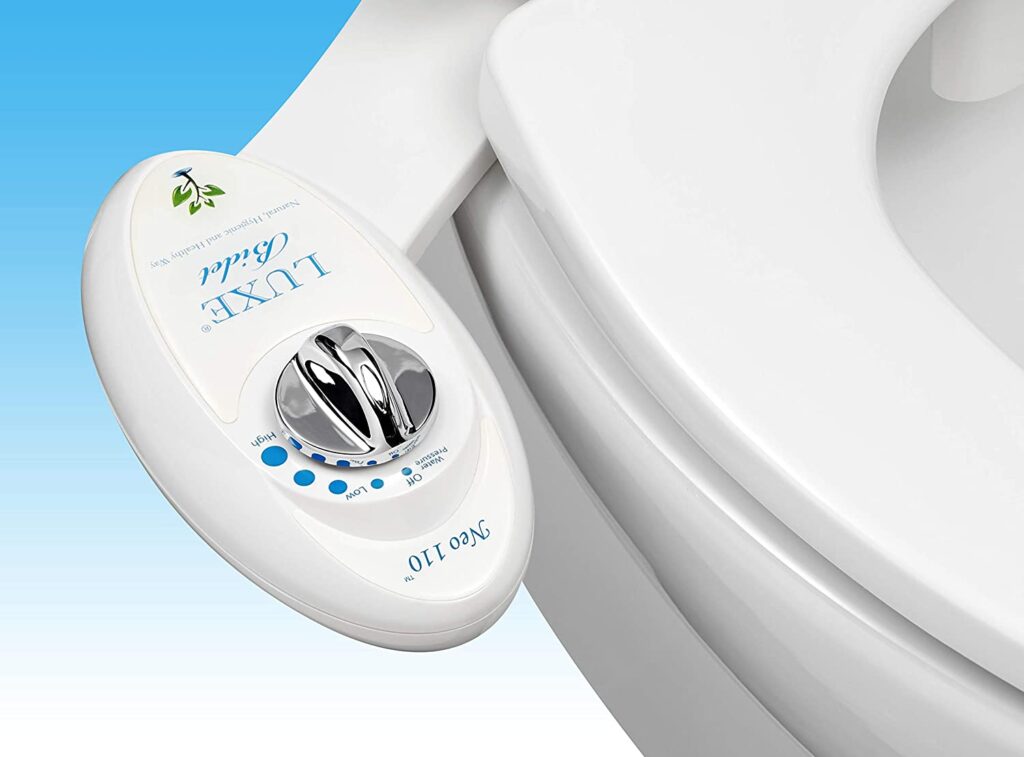
No. Reaching behind your back twists the surgical hip inward. Reach between your legs from the front, or install a bidet attachment to clean yourself without dangerous twisting motions.
What happens if your knees sit higher than your hips?
Your joint violates the 90-degree safety rule. This puts intense leverage on the new implant, stretching healing muscles and significantly increasing the risk of mechanical joint dislocation.
Final Thoughts
Getting back to your normal routine takes patience, but you’ll feel more independent every day. If you’re still feeling unsure about your movement, don’t hesitate to ask your physical therapist for a quick check-up. They’re there to help you move confidently, so you won’t have to worry about your recovery anymore.