
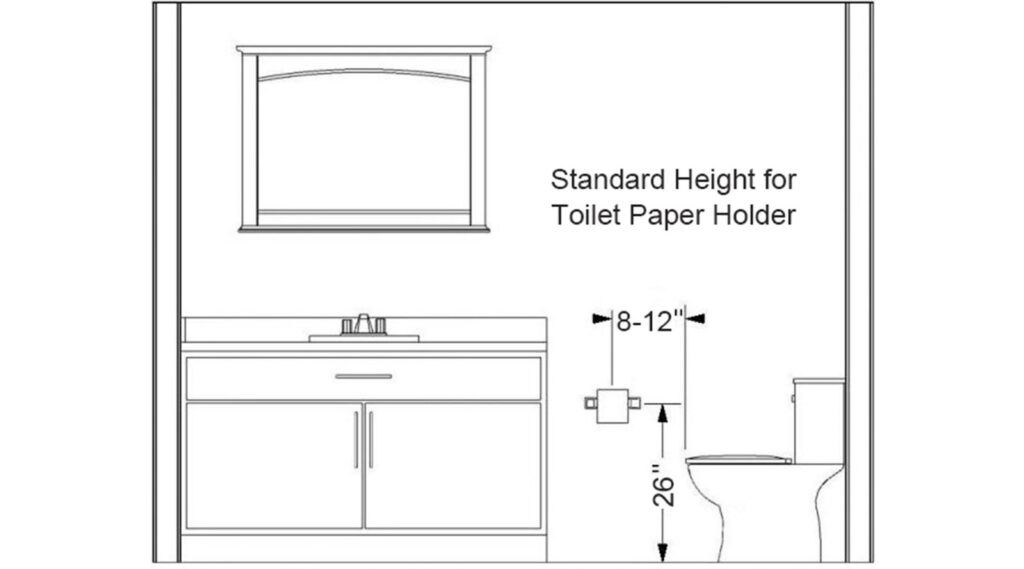
Standard bathroom planning guidelines specify how high should toilet paper holder be installed at 26 inches above the finished floor, measured to the center of the roll. That height matches standard 15-inch toilet bowls. If your bathroom uses a comfort-height bowl at 17 to 19 inches, mount the fixture at 28 to 30 inches instead so you won’t bend downward.
Table of Contents
Ideal toilet paper holder height
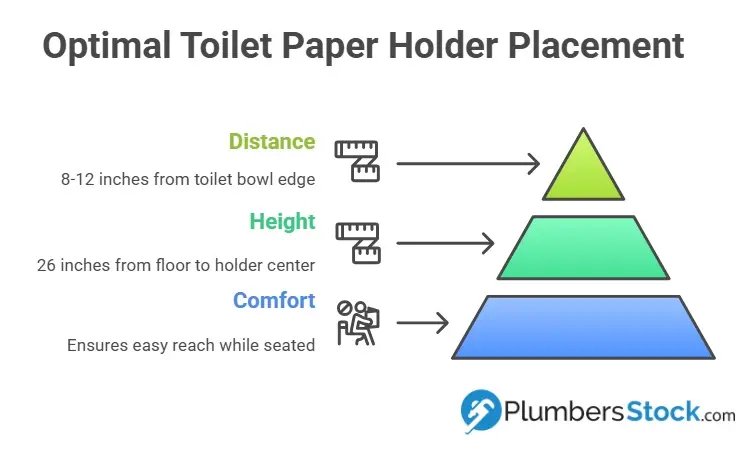
- Standard installation sits at 26 inches above the finished floor to the center of the mounting bracket.
- Forward distance should measure 8 to 12 inches from the front rim of the toilet bowl to the holder’s center.
- Taller comfort-height toilets require mounting the dispenser higher at 28 to 30 inches off the floor.
- Wall studs provide the best hold, but hollow-wall toggle bolts work when stud spacing puts the roll out of reach.
- The 26-inch measurement assumes an adult user; drop the height down to 18 to 20 inches in dedicated children’s bathrooms.
- Always measure vertical height from the finished flooring material, not the rough subfloor during active renovations.
Why holder placement matters
The average human arm rests naturally around seated waist level, making 26 inches the sweet spot for natural forward reach. Mounting the roll too low forces your spine into an awkward twist while seated. Reaching behind your body places unnecessary strain on lower back muscles, which leads to sudden slips or accidental bracket damage over time.
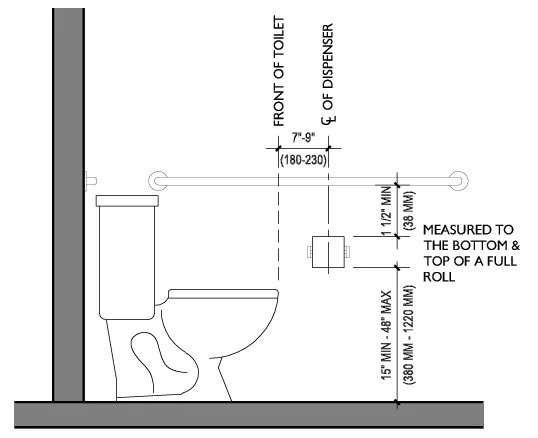
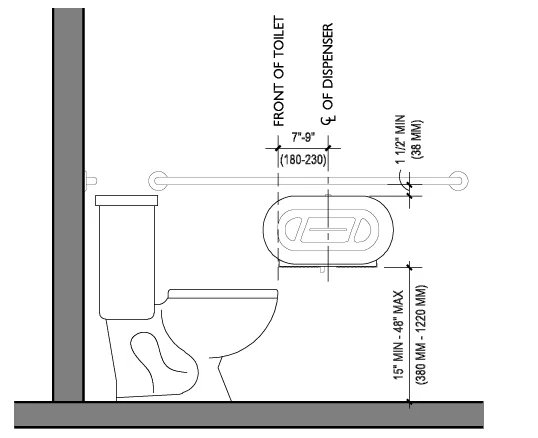
Federal accessibility standards provide clear structural rules for shared spaces. According to the ADA Standards for Accessible Design, toilet paper dispensers must sit between 15 inches minimum and 48 inches maximum above the finished floor, with the roll centerline placed 7 to 9 inches in front of the toilet bowl rim. If your project must pass a commercial building inspection, follow the ADA rule; if you’re building an ordinary home bathroom, use the 26-inch residential guideline instead.
Stud placement often creates a trade-off: you gain solid wood backing inside the wall, but the roll ends up mounted three inches too far forward or backward. Secure toggle anchors solve that placement problem on plain drywall without relying on poor positions.
When the answer is different
Special bathroom designs require adjusted dimensions to maintain easy reach.
| Situation | What changes | What to do instead |
|---|---|---|
| Comfort height bowl | Seat sits two inches taller | Mount roll at 28 inches |
| Young children | Shorter arm reach | Mount roll at 18 inches |
| Wheelchair access | ADA commercial building code | Mount dispenser between 15-48 inches |
| Glass shower divider | Can’t drill side wall | Use a weighted floor stand |
| Small powder room | Vanity vanity blocks side reach | Mount on vanity cabinet side |
| Padded subfloor rough-in | Final floor height unknown | Add tile thickness before drilling |
How to do it properly
- Measure the toilet seat height from the finished floor using a tape measure to confirm whether you have a 15-inch standard or 17-inch comfort-height bowl.
- Sit squarely on the closed toilet lid, reach your arm forward naturally without leaning your torso, and note the comfortable grasping point on the adjacent wall.
- Mark a vertical point at 26 inches above the finished floor using a pencil, adjusting upward to 28 inches if your bowl measured over 16 inches tall.
- Measure horizontally 8 to 12 inches forward from the front edge of the toilet bowl porcelain, then mark an intersecting crosshair for the bracket center.
- Hold the mounting plate against your crosshair, place a mini torpedo level across the top edge, and mark the screw holes through the plate slots.
- Drill 1/4-inch pilot holes for drywall anchors, or 1/8-inch holes if a wall stud sits directly behind your mark.
- Tap plastic anchors flush using a rubber mallet, drive the mounting screws tight with a screwdriver, and attach the holder with its underside set screw.
The mistakes that ruin it
- Measuring from bare subflooring before tile installation: the holder ends up an inch too low once finished flooring goes down.
- Using basic plastic wedge anchors in plain drywall: everyday pulling quickly works the screws loose and tears holes in the wall.
- Placing the bracket directly alongside the toilet tank: reaching behind your torso strains shoulder joints and bends the mounting arm.
- Skipping a small bubble level: horizontal single-post holders tilt downward and let paper rolls slide off onto the bathroom floor.
Frequently asked questions
Can you put a toilet paper holder on a vanity?
Yes. Mounting on a wooden vanity cabinet works well in narrow bathrooms. Make sure the roll sits at least 8 inches forward from the toilet bowl rim. Use short 1/2-inch wood screws with shallow pilot holes so you don’t puncture completely through the cabinet interior wall.
How far forward should toilet paper holder be from toilet?
Between 8 and 12 inches forward. Measure horizontally from the very front porcelain edge of the toilet bowl to the center of your mounting bracket. Placing it farther than 12 inches forces users to lean out of their seat to reach the paper roll.
Which side of the toilet should the holder be on?
Either side works equally well for most people. Pick the wall that allows the standard 8 to 12-inch forward clearance without blocking doors, cabinets, or heater vents. If both walls offer open space, right-side mounting feels most natural for roughly ninety percent of users.
Does the toilet paper roll hang over or under?
Over the front. The original 1891 manufacturing patent filed by Seth Wheeler shows the paper hanging over the exterior side. Hanging it over keeps the paper away from bathroom wall surfaces and makes the loose edge much easier to see and grab without hunting.
What happens if you hit a wall stud while drilling?
Drive your wood screws directly into the stud. You won’t need the hollow-wall plastic anchors that came in the hardware pack. Use a small 1/8-inch drill bit for your pilot holes instead, which prevents the mounting screws from snapping off inside the hardwood framing.
Is a freestanding toilet paper holder worth using?
Yes, especially if you have glass walls, expensive tile, or rented apartments where drilling isn’t allowed. This option isn’t for homes with active toddlers or large pets, because free-standing metal stands easily tip over when bumped or pulled too fast. Check the base weight before buying.
Final Thoughts
Before you drill any holes, grab a roll and hold it against the wall while sitting down. It’s a simple way to see if the position feels natural for your reach. You’ll find that a quick test run makes all the difference in creating a bathroom that’s truly comfortable for everyone.
Related guides
- Cheapest Place to Buy Toilet Paper Near Me: Where to Save
- Can Toilet Paper Be Used as Hamster Bedding? The Safe Answer
- Cheapest Place to Buy Toilet Paper and Paper Towels: Our Guide






