
Incinerating toilets burn waste into a small amount of sterile ash using electricity or gas — no water, no septic system and no compost to manage. They are popular for remote cabins, ice-fishing houses, workshops and anywhere a septic system or sewer connection is impractical. This guide explains the leading incinerating toilet brands and, because these units are mostly sold through manufacturers and dealers rather than Amazon, five waterless alternatives you can order on Amazon today.
Home Throne is reader-supported. As an Amazon Associate, we earn from qualifying purchases. This guide is based on researching and comparing manufacturer specifications, product listings and general owner feedback — we did not physically test these products.
Good to know: At the time of writing, the major incinerating toilet brands are not stocked on Amazon in the U.S. We cover them first so you understand the category, then compare waterless toilets that are available on Amazon.
Table of Contents
The Leading Incinerating Toilets
1. Incinolet Electric Incinerating Toilet
Incinolet is the best-known American incinerating toilet brand and has been made in the U.S. for decades. Before each use you drop a paper bowl liner into the bowl; when you step on the foot pedal, the waste drops into the incineration chamber and the heating cycle starts. The result is a small amount of clean ash that is emptied periodically.
- Power: electric (standard and higher-capacity models are available)
- Needs: a dedicated electrical circuit and a vent to the outside
- Best for: cabins, garages, workshops and homes without septic access
- Where to buy: through the manufacturer and authorized dealers
2. Cinderella Incinerating Toilet
Cinderella is a Norwegian brand offering both electric and gas (propane) incinerating toilets. The gas models are especially useful off-grid where a large electrical supply is not available. Cinderella toilets use bowl liners and an automatic burn cycle, and are designed for frequent use in cabins and remote homes.
- Power: electric or propane, depending on model
- Needs: venting, and either a suitable electrical circuit or a propane supply
- Best for: off-grid cabins and remote sites
- Where to buy: through North American distributors and dealers
Waterless Alternatives Available on Amazon
Quick picks
- Closest Low-Effort Alternative: Laveo Dry Flush
- Best Composting Alternative: Nature’s Head
- Best for Cabins & Homesteads: Separett Villa
- Best Compact Composting: Cuddy Composting
- Most Innovative Design: Thinktank Waterless
| Product | Type | Power | Venting | |
|---|---|---|---|---|
| Laveo Dry Flush | Dry flush (bag) | Battery | None | View on Amazon |
| Nature’s Head | Composting | 12V fan | Vent hose | View on Amazon |
| Separett Villa | Urine-separating | Fan (per model) | Vent + urine line | View on Amazon |
| Cuddy Composting | Composting | 12V fan | Optional vent | View on Amazon |
| Thinktank Waterless | Urine-diverting (bag) | Fan | Intake + exhaust | View on Amazon |
3. Laveo Dry Flush Waterless Toilet

If the appeal of an incinerating toilet is “no water, no compost to manage,” the Laveo Dry Flush is the closest low-effort alternative sold on Amazon. Instead of burning waste, it seals each use in an airtight bag cartridge with a battery-powered “flush.”
It is a full-size toilet with a normal seat height. The kit includes a battery and charger, two cartridges and a bottle of absorbent powder. Laveo says each cartridge handles about 15 solid flushes, and it carries a 2-year limited warranty.
Key features:
- Waterless, sealed-bag “dry flush”
- Rechargeable battery and charger included
- About 15 solid flushes per cartridge (per brand)
- Full-size seat height
- 2-year limited warranty
Pros
- No venting, plumbing or composting
- Odor sealed in bags
- Very simple to use
Cons
- Ongoing cartridge cost
- Bags go to landfill
Best for: Cabins, vans and guest spaces where you want no installation at all.
4. Nature’s Head Self-Contained Composting Toilet

Nature’s Head is one of the best-known composting toilets for boats, RVs and tiny homes. It separates liquids from solids and uses a hand-crank spider handle to mix solids with a bulking material such as coco coir.
The brand says two people using it full-time will empty the solids bin every 4–6 weeks, and it carries a 5-year warranty. It needs a small vent fan connection to stay odor-free.
Key features:
- Urine-diverting composting design
- Spider handle agitator
- 2 people full-time: empty about every 4–6 weeks (per brand)
- 5-year warranty
- Vent fan (12V) for odor control
Pros
- No ongoing bag or cartridge costs
- Proven in boats and tiny homes
- Low power use
Cons
- Requires bulking material and emptying liquids often
- Needs a vent
Best for: Full-time off-grid living on a budget for running costs.
5. Separett Villa Urine-Separating Compost Toilet
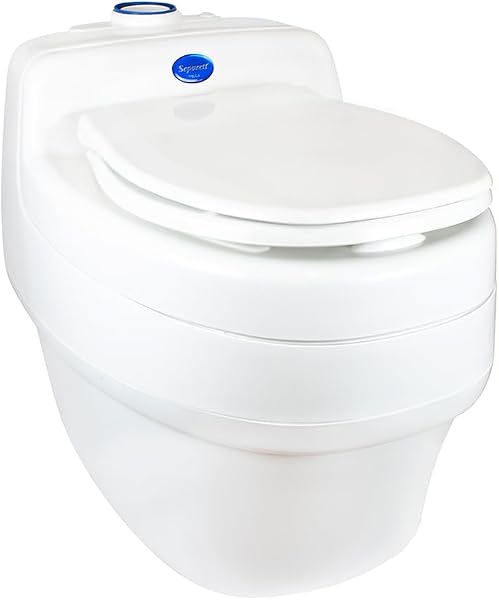
The Swedish-made Separett Villa diverts urine away from solids and dries the solids with airflow, so you do not need additives or mixing. It has a high-capacity design suited to homesteads, cabins and converted buses.
Being completely waterless, it requires no plumbing connections — just a vent and, for most setups, a urine drain or container.
Key features:
- Urine-separating, no additives or mixing
- High-capacity solids container
- Waterless, no plumbing required
- Designed for cabins, homesteads, buses
Pros
- No stirring or bulking material
- Large capacity
- Low maintenance
Cons
- Needs a vent and urine outlet
- Larger footprint
Best for: Cabins and off-grid homes with room for venting.
6. Compo Closet Cuddy Composting Toilet

The Cuddy is a compact composting toilet for vans, RVs, boats and tiny homes. You add composting material before use and mix manually with the built-in handle. A 12V fan and carbon filter actively remove odors.
The removable solids bin with a bottom handle is emptied about every 2–3 weeks, and the liquids container has a no-spill valve. It can run without power if needed and external venting is optional.
Key features:
- 3.9-gallon capacity (per listing)
- 12V fan and carbon filter
- Manual mixer handle
- Removable solids bin; no-spill liquids valve
- Optional external venting
Pros
- Compact for small spaces
- Venting optional
- Works without power in a pinch
Cons
- Smaller capacity means more frequent emptying
- Manual mixing required
Best for: Vans and small RVs.
7. Thinktank Waterless Urine-Diverting Toilet

The Thinktank takes a different approach to waterless toilets. Waste is contained in a bag behind a patented trap door, so users see very little of it, and a strong airflow keeps odors out of the room.
It is airtight with separate intake and exhaust pipes, which helps avoid losing heated or cooled air. The listing notes it is designed so women do not need to aim and men can stand.
Key features:
- Urine-diverting with bagged solids
- Patented trap door hides waste
- Separate intake and exhaust pipes
- High airflow for odor control
Pros
- Very easy to clean
- Waste kept out of sight
- Airtight design for climate-controlled spaces
Cons
- Requires venting
- Less widely known brand
Best for: Tiny homes where cleanliness and odor control are top priorities.
Incinerating vs. Composting vs. Dry Flush
| Incinerating | Composting | Dry flush | |
|---|---|---|---|
| End product | Sterile ash | Compost + liquid | Sealed bags |
| Power | High (electric) or propane | Low (small fan) | Low (battery) |
| Ongoing supplies | Bowl liners, energy | Bulking material | Cartridges |
| Maintenance | Empty ash, clean | Empty liquids often, solids every few weeks | Swap cartridges |
| Best for | Cold climates, heavy use, no compost handling | Full-time off-grid living | Occasional use, easy setup |
Buying Guide
Power supply
Electric incinerating toilets typically need a dedicated high-amperage circuit, which can be a challenge on solar setups. Propane models or composting toilets are better for limited power.
Venting
Incinerating and most composting toilets need a vent pipe to the outside. Plan the vent route before you buy.
Usage level
Consider how many people will use the toilet and how often. Burn cycles, cartridge counts and composting capacity all limit daily use.
Local codes
Some jurisdictions regulate alternative toilets. Check with your local building or health department, especially for permanent dwellings.
Frequently Asked Questions
Do incinerating toilets smell?
Properly vented units are designed to vent odors and combustion gases outside. Poor venting is the most common cause of odors.
How much electricity does an incinerating toilet use?
Each burn cycle uses a significant amount of electricity compared with composting toilets. Check the manufacturer’s specifications for exact figures before installing on an off-grid system.
Can I install an incinerating toilet myself?
Many owners do, but you may need an electrician for the dedicated circuit and must follow venting instructions carefully.
Why aren’t incinerating toilets sold on Amazon?
Availability changes, but these units are typically sold through manufacturers and dealers who also provide installation support and parts.
Final Thoughts
If you need a true incinerating toilet, Incinolet (electric) and Cinderella (electric or propane) are the names to compare through their dealers. If you would rather order on Amazon, the Laveo Dry Flush is the simplest no-install option, while the Nature’s Head and Separett Villa suit full-time off-grid use. Check current details on Amazon before you buy.
Related post

Hi John I am looking at getting an incinerating gas operated toilet for use in a house on an Island in New Zealand. I would be very interested in what you have to say about them and where I can acquire one from that would be most suitable. Thanking you Doug
You are welcome Doug. Please, stay on this site to get a better experience. You get one from Amazon or local market.
Hello Mr Lee,
I’m on disability so the $900+ toilets is not an option. However, you did list a much cheaper one for $262.24, but didn’t include any pros or cons for it. I know the saying, “you get what you paid for”, but would you recommend it anyway and I’m sure there’s some cons. Could you tell me what they are, please? I just need something reliable as I, live in a cottage in cold Canada and also pay to empty my septic a few times a year which can easily pay for this toilet instead.
If I could afford to move, I would, but I lost everything in 2018 and it’s not an option at this point.
Thank you for your time.
Actually, the incinerating toilet is expensive. I found the 264.24 price toilet awesome but the cons are that the toilet may use limited users. It also works in a cold areas. What do you want to know more about?
What do you mean by ” limited users” i like the porcelain toilet. Can’t have a septic tank unless it is the powered one ….i live near a river. I am on my own with family and friends visiting.
Limited users mean some users. Thank you for your comment.
Your discussion on incinerator toilets leaves out one very important type. Gas fired toilets Gasoline, propane and natural gas. Can you do a synopsis on these?