
To solve how to fix a running toilet without a ball float, lower the cylinder float on the fill valve shaft so water stops filling before it spills into the overflow pipe. A float cup set too high is the most common cause. Modern toilets use this vertical cylinder instead of an old brass arm.
Table of Contents
Why your toilet keeps running
Water keeps running when the tank can’t hold its water or doesn’t know when to stop filling. In cylinder-style systems, the float cup slides up and down the main fill tube. If sediment builds up on that tube, the float sticks, leaving the valve cracked open.
The second cause is a failing rubber flapper or flush valve seal at the base of the tank. When rubber decays, water steadily leaks into the bowl. The valve detects this dropping level and runs continuously to refill the tank.
Finally, a fill valve’s internal seal can wear out from grit or age. When this happens, incoming water pressure pushes past the gasket even if the float cup lifts fully to the top.
Lower the float adjustment screw
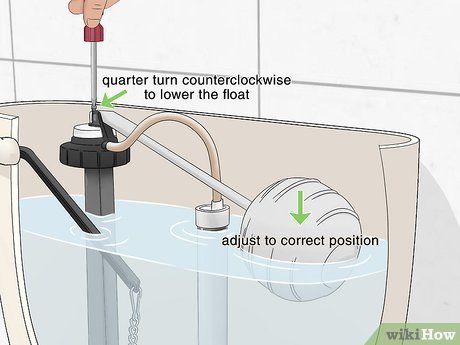
This fix is for tanks where water continuously spills into the top of the open overflow tube. Look at the vertical plastic valve on the left side of your tank. You’ll see a small plastic rod or screw connected to the cylinder float cup.
Turn this screw counterclockwise with your fingers or a screwdriver to lower the float. If the water level is above the marked fill line, lower the float so water sits about 1 inch below the overflow pipe rim; if the water is already below the line, skip this step. Flush the toilet once and watch where the water rests. It works when the water shuts off cleanly below the rim. This varies by model — check the label or stamp inside your tank wall for exact waterline marks.
Reset the flapper chain slack
This step targets a toilet that intermittently turns on and off by itself, often called a ghost flush. A short chain holds the flapper slightly open, while a chain that’s too long gets trapped under the rubber flapper when it closes.
Unhook the chain from the flush lever arm. Re-hook it so it has about one-half inch of slack when the flapper rests flat over the drain hole. This simple fix takes seconds, but the trade-off with plastic clips is that they snap easily if pulled hard. Test it by flushing three times in a row. It worked if the rubber seal drops flat and water stops running completely within one minute after flushing. This fix isn’t for modern dual-flush push-button towers, which don’t use flappers or lift chains at all.
Clean the valve seal assembly
This fix is for stubborn leaks where water runs even when you pull the float cup up manually. Turn the shutoff valve clockwise under the tank until water stops flowing. Reach in and twist the upper cap of the fill valve a quarter-turn counterclockwise while holding the shaft steady.
Remove the rubber diaphragm seal under the cap and rinse away any trapped mineral grit under a sink faucet. If you see cracks in the rubber, buy a direct replacement diaphragm rather than a whole valve assembly. If the shutoff valve under the toilet is stuck or corroded, stop immediately and call a licensed plumber, as forcing it can break your household water pipe.
What not to do
- Don’t bend the plastic rods or force the cylinder float down, because brittle plastic will snap and require an entire valve replacement.
- Don’t drop chlorine bleach tablets directly into the tank, because harsh chemicals eat away flexible rubber seals within months according to plumbing manufacturer warranties.
- Don’t pull or twist the vertical valve base without holding the shank below, as you can crack the porcelain tank base.
- Don’t ignore a silent leak, because letting clean water run down the drain wastes hundreds of gallons per day; the EPA WaterSense guide on fixing leaks notes that household leaks can waste thousands of gallons annually.
How to stop it happening again
Routine checks catch worn components before water bills spike.
| If you’re doing this | Do this instead | Why |
|---|---|---|
| Leaving chemical drop-in tablets inside the tank | Use bowl-hanging cleaners or liquid bowl brushes | Tank pucks rot rubber flappers and warp valve gaskets |
| Letting hard water minerals crust on the float cylinder | Wipe the valve stem with a soft sponge twice a year | Scale creates friction that traps the cylinder float down |
| Ignoring a soft hissing sound after the tank fills | Do a food-coloring test in the tank immediately | Hissing signals water escaping silently past a flapper |
| Forcing an old brass water shutoff valve with pliers | Spray penetrating fluid and let it soak first | Heavy torque can shear the valve stem and cause indoor flooding |
Frequently asked questions

Can a running toilet increase my water bill?
Yes, a running toilet can significantly increase your water bill within a single billing cycle. A steady leak sends hundreds of gallons of clean municipal water down the sewer drain every week. Overlooking the sound regularly often costs more in wasted water than replacing the entire fill assembly.
Is it safe to leave a running toilet on overnight?
No, leaving a running toilet on overnight risks indoor flooding if an overflow pipe becomes obstructed. The continuous flow also stresses worn tank gaskets and wastes water while you sleep. Turn the shutoff valve on the wall behind the base clockwise until the water stops before going to bed.
How long do toilet fill valves last?
A limited lifespan is typical for most plastic fill valves under normal municipal water conditions. Harsh well water, high sediment, or aggressive water softeners degrade internal parts much faster.
What happens if the flapper chain is too tight?
The rubber flapper can’t rest flush against the valve opening, creating a steady leak straight into the toilet bowl. This constant leak triggers the fill valve to cycle on every few minutes. Giving the chain a half-inch of slack lets the rubber seal drop securely against the seat.
Why does my toilet make a hissing sound after filling?
A worn fill valve diaphragm or high household water pressure causes incoming water to seep past the seal constantly. Debris stuck under the top cap can also prevent complete shutoff. Rinsing the internal valve gasket or lowering the tank’s float height usually silences the sound.
What is the food coloring test for toilets?
Place five drops of dark food coloring directly into the full toilet tank and wait twenty minutes without flushing. If color seeps into the bowl below, the flapper or flush tower seal is leaking. If the bowl water stays clear, the problem lies entirely with the fill valve level.
Final Thoughts
If the water still runs after these adjustments, check the rubber flapper at the bottom of the tank for cracks or debris. It’s often the culprit when a simple float tweak doesn’t do the trick. You’ll save a lot on your water bill once you’ve got everything sealed up tight.
Related guides
- Bathroom Sink Filling With Water By Itself: How to Fix It
- Charcoal Filter for Bathroom Fan: Essential Air Quality Fix