
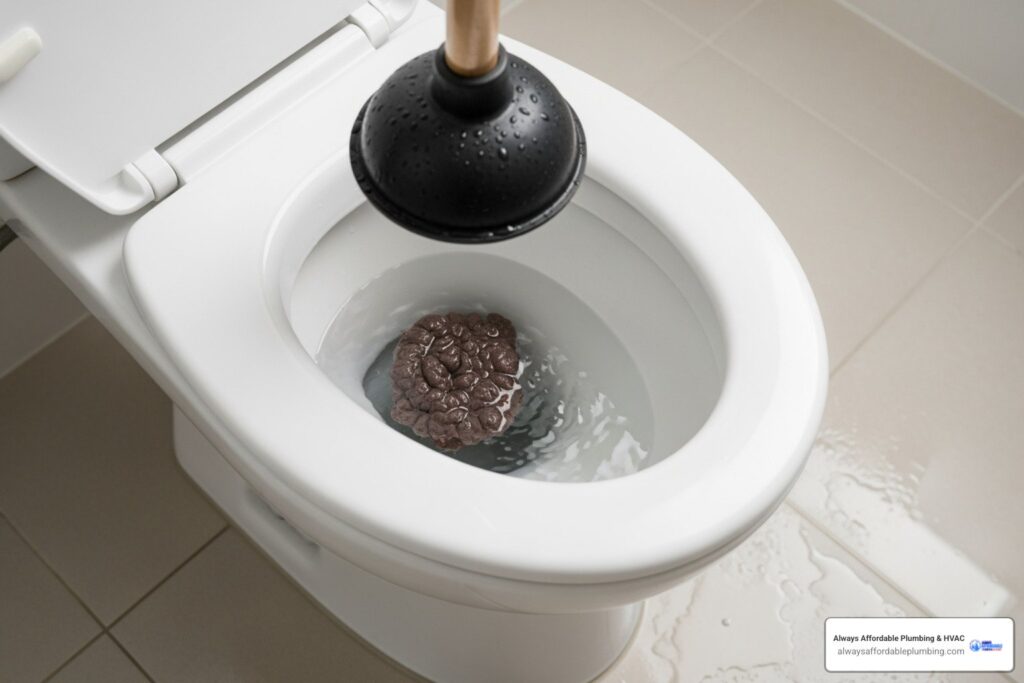
To clear the bowl safely, how to unclog a toilet with poop in it requires dish soap and hot tap water, or a flange plunger if the water sits low enough. The most common cause is too much bulky waste trying to pass through the narrow trapway at the same time.
Table of Contents
Why your toilet is clogged with poop
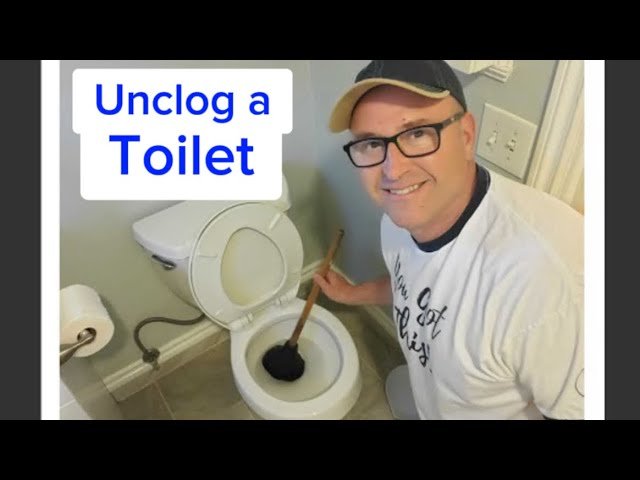
Most household toilets have a curved trapway that’s only about two to two and a half inches wide. When hard waste mixes with large amounts of toilet paper, it forms a thick plug inside this tight bend. If the water pressure from your tank isn’t strong enough, the blockage gets stuck.
Flushing non-flushable items makes this far worse. Even wet wipes labeled “flushable” don’t break down quickly in water. The EPA guidelines on what not to flush explain that wipes create deep blockages in home plumbing and municipal sewers. If a toy or hard object fell in, don’t use water pressure; if you’re dealing only with toilet paper and waste, standard household methods will clear it.
Soak with hot water and dish soap
This fix is for full bowls where plunging might splash dirty water across the bathroom floor.
- Squirt roughly 1/2 cup of liquid dish soap directly into the bowl water.
- Let the soap sink down to coat the trapway for 15 minutes.
- Slowly pour one gallon of hot tap water into the bowl from a low position. The water should be hot, but not boiling.
- Wait 20 minutes to see if the water level drops.
The soap helps break down the surface tension of the water and waste, allowing it to pass more easily. You’ll know it worked when the water level slowly drains down on its own. If the bowl empties, flush once to clear the pipe completely.
Seal and plunge with a flange plunger
This fix is for low or normal water levels when the waste needs direct mechanical pressure to move. This isn’t for flat cup plungers, which are made for flat sink drains, not curved toilet bowls.
- Wear rubber gloves and lay towels around the base of the toilet.
- Insert a flange plunger into the bowl at an angle so the cup fills with water instead of air.
- Press the rubber flange tightly over the drain hole to form an airtight seal.
- Push and pull straight up and down sharply 10 to 15 times without breaking the seal.
- Pull the plunger away quickly on the final stroke.
You’ll hear a gurgling sound as the water rushes down the drain when the clog releases.
Clear deep blocks with a toilet auger

Use a toilet auger when hot water and plungers fail to move the clog. This fix takes more effort and requires buying a specific tool, but it’s worth it before calling a professional.
- Pull the auger cable handle all the way up so the coiled snake stays inside the protective tube.
- Place the curved rubber elbow into the bottom of the toilet bowl to protect the porcelain from metal scratches.
- Push the cable down into the drain while cranking the handle clockwise with steady pressure.
- Once you hit resistance, rotate the crank to hook or break up the waste plug.
- Pull the snake back up and wipe it clean with a rag.
If the cable hits a hard stop that won’t budge after three tries, stop immediately and call a licensed plumber to prevent cracked pipes.
What not to do
- Never flush the toilet a second time. If the bowl is full, a second flush forces water from the tank to spill dirty waste across your floor.
- Never pour boiling water into the bowl. Rapid temperature changes will crack the cold porcelain, which costs hundreds of dollars in water damage and toilet replacement.
- Never dump harsh chemical drain openers into a clogged toilet. Caustic chemicals sit in the bowl, create toxic fumes, and will burn your skin if you have to plunge later.
- Never use a wire coat hanger without protection. The bare metal tips scrape permanent black marks into the bowl’s finish and can poke holes in thin plastic pipes.
How to stop it happening again
Good bathroom habits prevent messy backups and keep your pipes flowing freely. This varies by model — check the label or tank stamp for your toilet’s gallons-per-flush rating, as older low-flow toilets struggle with larger loads.
| If you’re doing this | Do this instead | Why |
|---|---|---|
| Flushing massive wads of paper at once | Flush waste first, then flush paper | Smaller bundles glide easily through the curved trap |
| Tossing personal wipes in the bowl | Throw all wipes in a lined wastebasket | Wipes don’t dissolve and grab onto solid waste |
| Using thick, ultra-plush toilet paper | Switch to rapid-dissolving two-ply paper | Thinner paper breaks down faster in still water |
| Ignoring a weak or slow tank flush | Adjust the water level screw on your fill valve | Higher tank water creates stronger downward pressure |
Frequently asked questions

Can poop dissolve on its own in the toilet?
Yes, solid waste naturally softens and breaks down in water over time. If left alone for two to four hours, the paper and waste often loosen enough to slip through the trapway. However, bacteria growth causes bad odors, so waiting all day isn’t recommended for high-traffic bathrooms.
How long does dish soap take to unclog a toilet?
Dish soap usually takes between 15 and 30 minutes to work. The soap needs time to slide down around the waste and lubricate the porcelain walls. If the water level hasn’t dropped after half an hour, add another splash of hot tap water or switch to using a plunger.
What happens if I use boiling water in a toilet?
The toilet bowl can crack from thermal shock. Rapid temperature changes can cause the porcelain to fracture, leading to leaks. Always stick to hot tap water around 120°F to 140°F instead of stove-boiled water.
Why won’t my toilet unclog with a plunger?
You may have the wrong tool or a broken seal. Flat sink plungers can’t seal the curved base of a toilet drain, letting air escape instead of moving water. Alternatively, the blockage could sit past the toilet trap in your main sewer stack, which requires a mechanic’s snake.
Is it safe to leave a clogged toilet overnight?
Yes, it’s generally safe as long as the water isn’t rising and you close the supply valve behind the toilet. Shutting the valve prevents the tank from slowly leaking more water into the bowl overnight. Keep children and pets out of the room to avoid hygiene issues.
Final Thoughts
If the water still won’t drain, you shouldn’t hesitate to call a professional plumber. They’ve got the right tools to handle stubborn blockages that don’t respond to home remedies. It’s better to get help quickly than to risk a messy overflow that’ll damage your bathroom floor. You’ll be glad you did.
Related guides
- How to Unclog Toilet When Plunger Doesnt Work: Dish Soap Fix
- How to Unclog a Shower Drain Without Chemicals: Simple Fixes






