
Usually, the answer to is it safe to use toilet during thunderstorm conditions is that you should only do so if you avoid touching metal parts and stay off connected plumbing during heavy lightning strikes.
Table of Contents
Is it safe to use the toilet

| Situation | Safe? | Why |
|---|---|---|
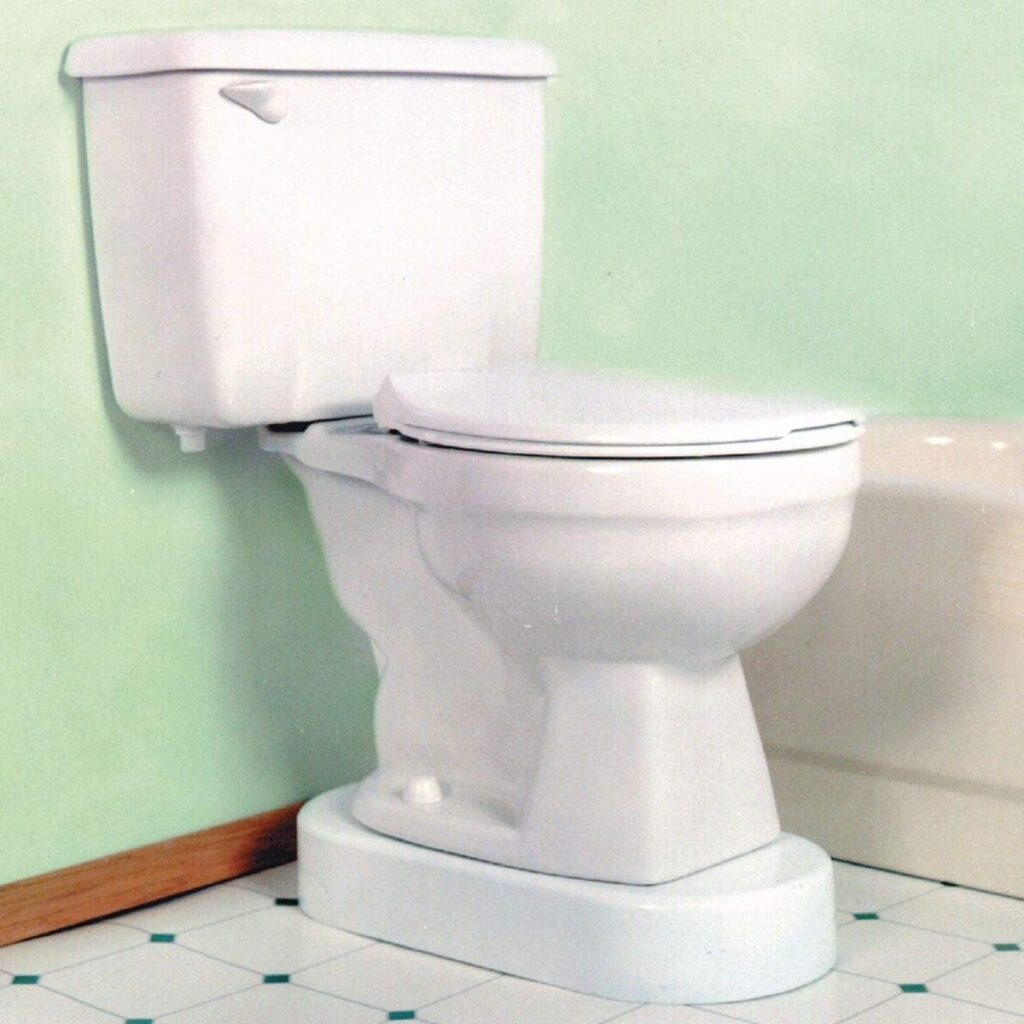
| Sitting on plastic seat | Yes | Plastic insulates you from plumbing current |
| Flushing metal handle | No | Metal contacts directly link to pipes |
| Washing hands in sink | No | Water and metal faucets conduct charge |
| Using an outhouse | No | Open ground exposure attracts direct strikes |
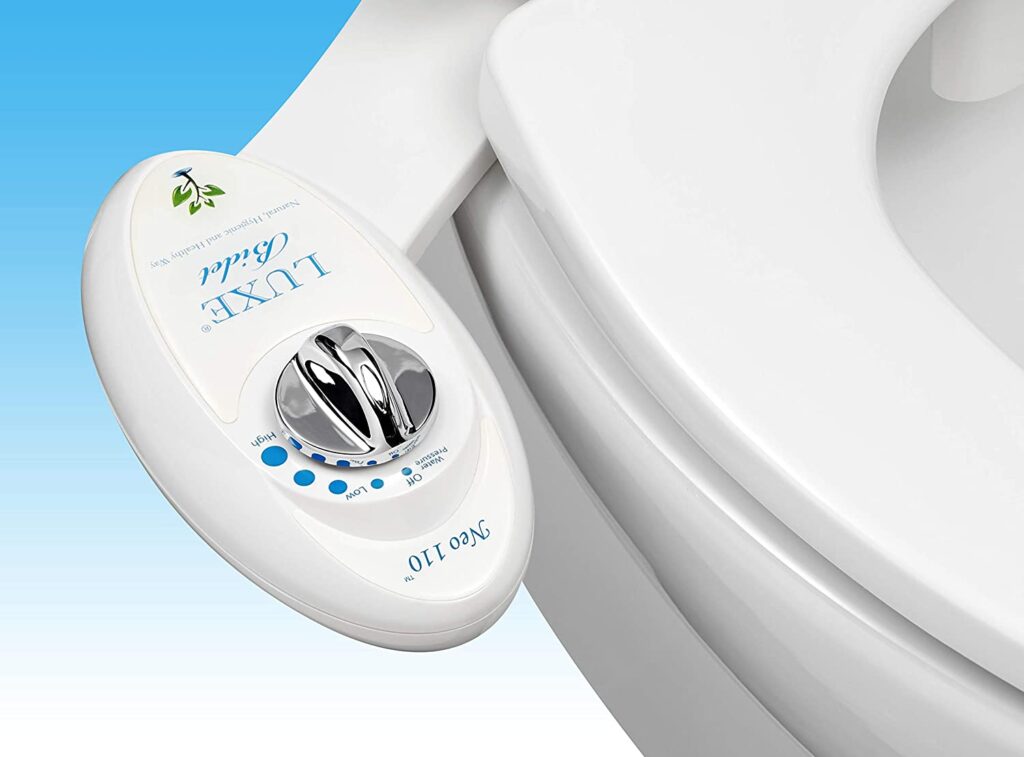
| Using an electric bidet | No | Water line and wiring carry surges |
What the risk actually is
Lightning strikes ground surfaces, trees, and utility lines, seeking the easiest path to disperse its charge. Metal plumbing pipes, vent stacks on your roof, and standing tap water create low-resistance paths straight into your home. The CDC and NWS state that people should avoid all contact with indoor plumbing and water during a storm because electrical current can travel through plumbing.
The actual chance of a strike hitting your home’s exact pipe branch is low, but the physical harm is severe. Direct conduction delivers thermal burns, nerve damage, or temporary paralysis. A common mistake people actually make is touching the metal flush lever or reaching over to wash their hands immediately, which costs them safe isolation from the line.
This warning isn’t for people using fully off-grid, non-plumbed dry composting toilets with zero outdoor metal vents. If your home uses modern plastic PVC pipes, your physical shock risk drops significantly, but water inside the lines can still carry a partial charge.
The signs to stop immediately
- Hair standing up on your arms means static charge is building nearby.
- A sudden ozone smell indicates an electrical arc occurred near your structure.
- Flickering bathroom lights during thunder indicates utility surges on shared grounds.
- Thunder rumbling less than five seconds after lightning means strikes are within one mile.
If lightning hits the house directly, stop using the facilities and call local emergency services immediately to check for attic fires.
The safer way to do it
- Check your distance from the storm by counting the seconds between lightning flashes and thunder claps; if it’s under thirty seconds, wait indoors away from plumbing.
- Choose an interior half-bath on the ground floor rather than an upstairs bathroom attached directly to roof vent pipes.
- Keep your feet flat on a dry floor mat rather than bare concrete or wet tiles to maintain insulation.
- Use the toilet without letting your bare skin touch the porcelain bowl, metal hinges, or nearby water pipes.
- Close the lid without touching any metal parts before you prepare to clear the bowl.
- Flush using an insulating barrier like a thick, dry wad of toilet paper or wait thirty minutes until the storm passes completely.
- Clean your hands with alcohol-based hand sanitizer instead of opening the metal sink faucet during the squall.
If it has already happened
Check the person for responsiveness, normal breathing, and a steady pulse first. A lightning charge doesn’t remain in the human body, so touching the victim is completely safe. If the person is unresponsive, start hands-only CPR immediately and have someone call 911 without delay. Look for surface burns where skin touched the plumbing or floor, and treat the area with a dry, sterile dressing if skin is broken.
Don’t attempt to check electrical panels, breaker boxes, or bathroom pipes yourself if you smell smoke or hear buzzing inside the walls. That level of structural hazard requires a licensed electrician and the local fire department to inspect the property before you use the home’s water system again.
Frequently asked questions
Can lightning come up through the toilet?
No, lightning doesn’t shoot up out of the water like a geyser. The real threat comes from electrical charge traveling down metal waste vents into the water and pipe fittings, which shocks anyone touching connected metal parts.
Is it safe to shower during a thunderstorm?
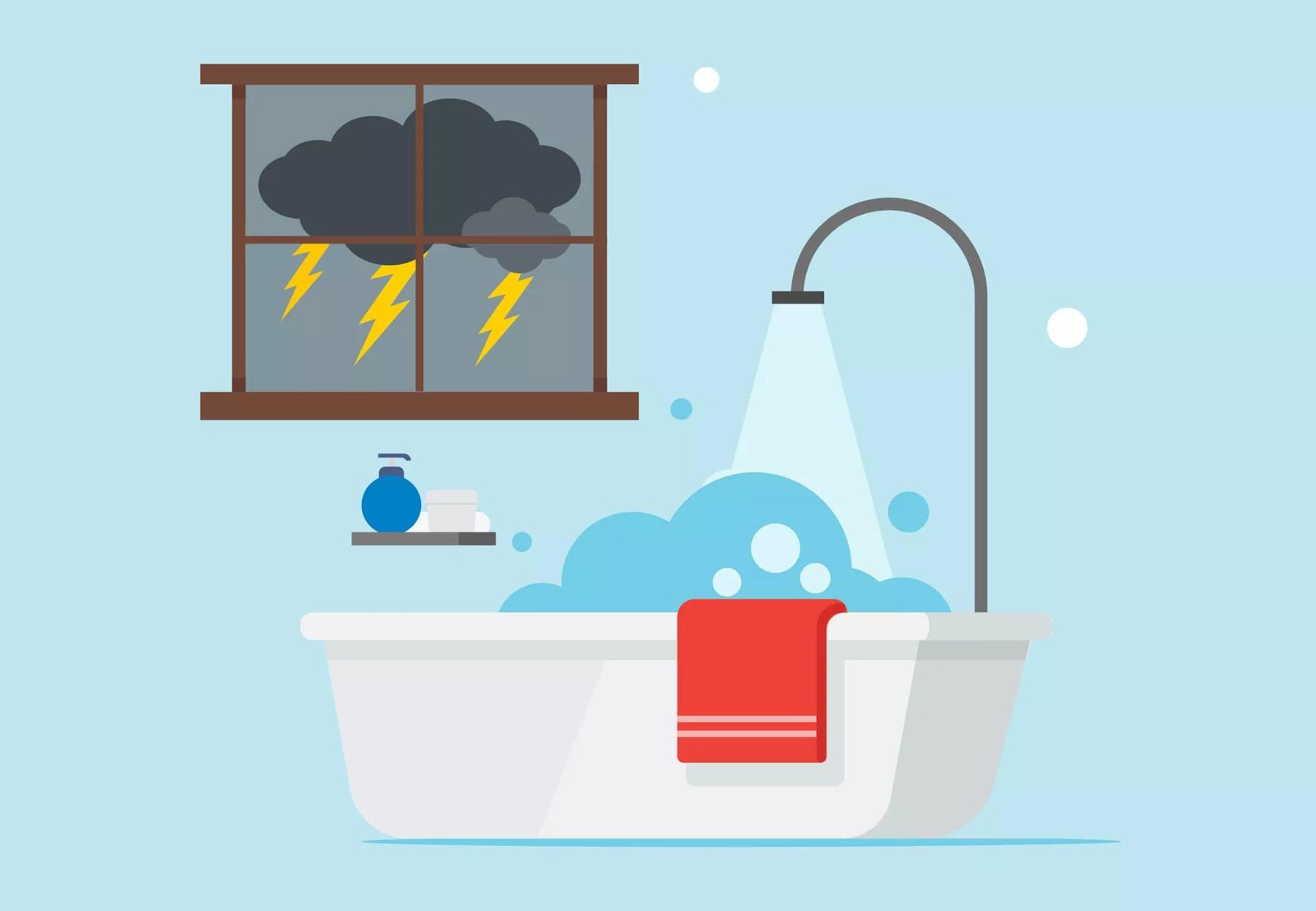
No, showering during a storm carries far more danger than using a toilet. Showering exposes your entire body to running tap water and metal handles, which readily conduct electrical charges straight from outdoor strikes.
Can you flush the toilet when it’s lightning?
Yes, if you push the handle with an insulating object like dry paper. Avoid skin contact with metal flush handles because metal connects through the wall directly to plumbing lines that can carry electrical surges.
Does plastic plumbing protect you from lightning?
Yes, plastic pipes like PVC don’t conduct electricity like copper lines do. However, you should still avoid touching flowing water during a storm as a general safety precaution.
How long should you wait after thunder to use plumbing?
Wait 30 minutes after you hear the final rumble of thunder before using showers, sinks, or metal fixtures. Lightning can strike from clouds up to ten miles away from active rain areas.
What happens if lightning strikes a plumbing vent?
The electrical current travels down the pipe system toward the ground outside your home. Along the way, the charge can jump across metal connections, blow out pipe joints, or shock anyone touching bathroom fixtures.
Final Thoughts
While the risk is low, it’s always smart to prioritize your safety when the sky turns dark. If you’re ever worried about a particularly intense storm, just wait until the thunder passes before heading to the bathroom. You’ll feel much more relaxed once the weather clears and everything’s calm again.
Related guides
- How to Remove Urine Scale from Toilet Bowls Quickly
- How to Make the Toilet Flush Better: Easy DIY Fixes
- How to Fix a Toilet That Keeps Running Intermittently