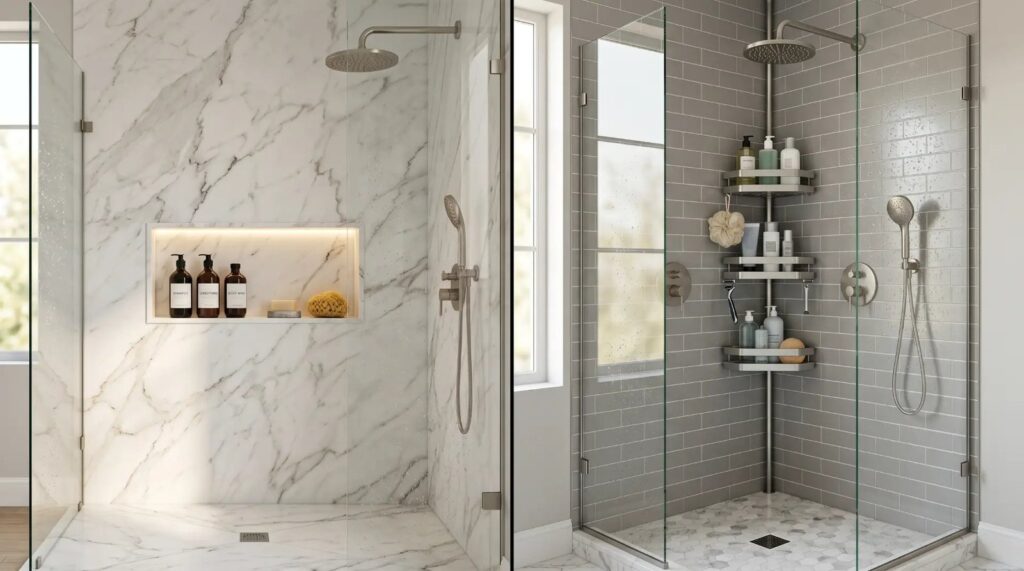
Choosing a 304 stainless steel or anodized aluminum build is the best way to get a rust proof corner shower caddy for small stall showers that won’t corrode in tight spaces. For standard 32×32-inch stalls, a unit extending less than 9 inches from the corner keeps your elbows free. This guide details real load thresholds, mounting physics for wet walls, and ways to prevent costly surface damage.
Table of Contents
How rust proof corner shower caddies save space
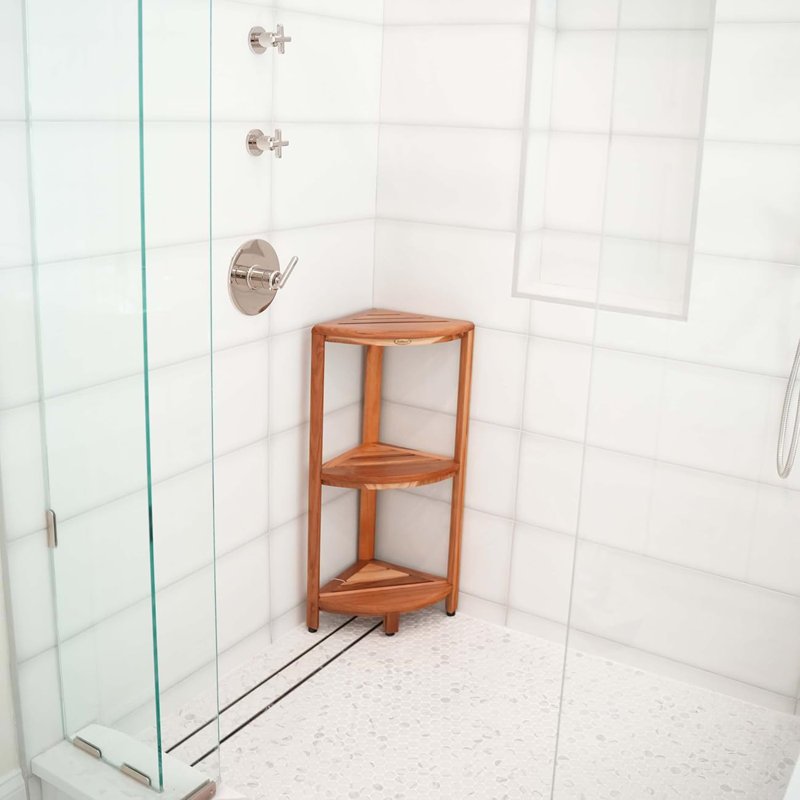
A corner caddy turns unused, angled wall seams into vertical storage for soaps and bottles. In compact stalls, every inch counts. Sticking a flat rack on a main wall steals standing room, but corners stay outside your normal wash zone.
People often believe that any shiny metal labeled “water resistant” will never rust. Thin chrome plating over plain steel fails quickly once bathroom steam hits micro-cracks in the coating. True rust resistance requires non-ferrous metals like aluminum or high-nickel alloys like 304 stainless steel. A chemical reaction between chromium and oxygen forms an invisible, self-healing oxide film across the steel surface, preventing iron breakdown even under constant shower spray. This makes the material safe against regular water contact. It provides a stable place for your toiletries without cluttering your floor.
The basic method
- Measure your corner radius with a builder’s square to confirm the angle is an exact 90-degree corner, as warped drywall throws off adhesive mounts.
- Clean the tile using 70% isopropyl alcohol on a lint-free cloth, rubbing firmly for 30 seconds to dissolve old soap oils.
- Allow the tile surface to air-dry completely for 15 minutes in a room with the exhaust fan running.
- Peel the backing off the waterproof adhesive strip, align it to your pencil mark, and press firmly for 60 seconds with your palm.
- Smooth out trapped air bubbles with your thumb, pushing from the center toward the outer perimeter.
- Wait a full 24 hours before hanging the metal baskets or placing any weight on the setup.
The critical choice is checking the grout line before sticking the pads. Never place an adhesive strip across a recessed grout line; air will slip into the gap, break the seal, and drop your caddy. If your stall uses heavy textured stone, adhesive will fail, so you must switch to a tension pole or drill-in brackets.
Key numbers and settings at a glance
Your shower wall texture dictates the mounting hardware you must use.
| Situation | What to use | How long | What to watch for |
|---|---|---|---|
| Smooth ceramic tile | Clear adhesive corner pads | Cure for 24 hours | Air channels across grout lines |
| Acrylic or fiberglass stall | Silicone-backed adhesive hooks | Cure for 24 hours | Wall flexing when bottles are pumped |
| Natural slate or travertine | Compression pole with rubber feet | 15-minute assembly | Uneven ceiling slope slipping under load |
| Glass shower enclosure | Dual-action lever suction cups | As needed | Hard water mineral crust breaking vacuum |
| Rough subway tile with wide grout | Drill-in 304 stainless screws | 45-minute install | Cracking the tile glazed surface |
What separates good results from bad ones
Preparation and mechanical balance
A clean surface decides whether your caddy stays up for years or falls in a week. Running a finger over tile isn’t enough; skin oils mask body wash residues that stop adhesives from bonding. Wiping with alcohol breaks that invisible film down completely. When loading the unit, balance the weight across the baskets. If X is a tall, heavy shampoo pump, put it on the lowest shelf closest to the wall corner; if Y is a light sponge or razor, place it on the higher, outer tier.
Managing pump leverage
The hidden killer of corner shelves is the downward thrust of your hand. Pressing a shampoo pump applies downforce that easily exceeds the weight of the bottle itself. The trade-off of quick-stick adhesive pads is their vulnerability to this sudden peeling force. Experienced users pump heavy bottles by supporting the bottle neck with their fingers, or they take the bottle off the shelf to dispense it. Leaving the caddy undisturbed during the initial adhesive curing stage also protects the bond from micro-tears.
Common problems and quick fixes
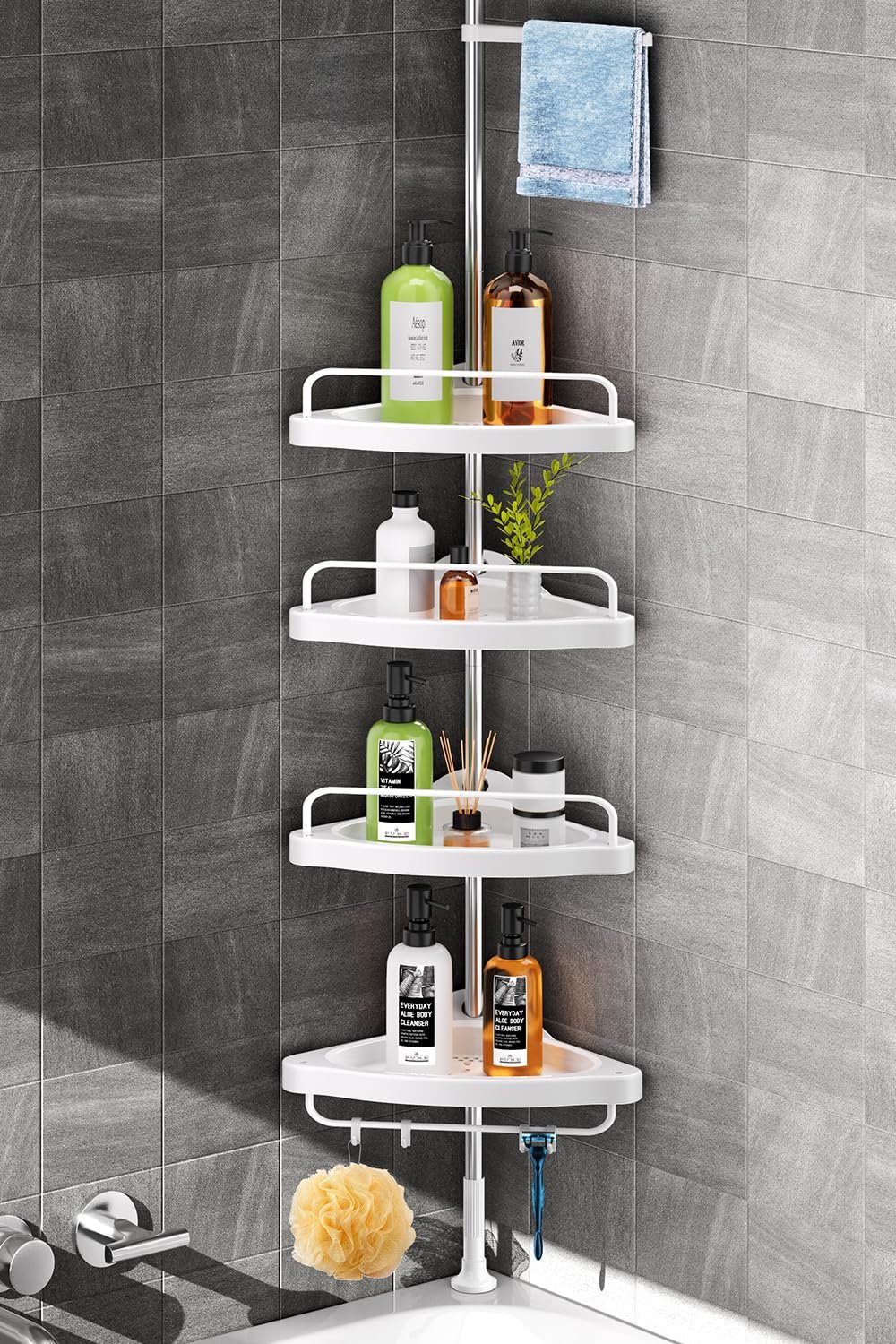
When shelves tip or shift, the cause is usually mechanical rather than a defect in the metal.
| What you notice | What it usually means | What to do first |
|---|---|---|
| Orange streaks near wire joints | Surface iron contamination from factory welds | Scrub with a baking soda paste and nylon brush |
| One adhesive corner peels away | Mount was set over a recessed grout line | Relocate pad 2 inches higher onto solid tile |
| Tension pole slips sideways | Floor pan flexes when stepped on | Re-position pole to a more rigid area of the floor |
| Shelf tilts down at the outer tip | Weight placed too far from the corner vertex | Move heavy 32-ounce bottles to the rear corner |
| White crust on basket wires | Calcium build-up from evaporating hard water | Soak a rag in white vinegar and wipe clean |
Standards for wet-area metals
Thin sheet metal corrodes quickly in high humidity. When buying alloy products, look for standard material ratings. The ASTM International standard specifications define grade 304 stainless steel by its minimum content of 18% chromium and 8% nickel. This specific balance creates dependable corrosion resistance in wet environments.
Don’t drill into tiled walls if you rent your home or lack a diamond-tipped masonry bit. Drilling through glazed ceramic or porcelain without proper cooling water can crack the tile, break the hidden vapor barrier, and cause wall leaks that cost thousands to fix. When you can’t verify what sits behind the wallboard, stick to tension-based or adhesive mounts.
Keeping it working afterwards
Hard water minerals slowly degrade protective oxide coatings if left to dry repeatedly. Every two to three weeks, rinse the caddy wires with warm water and dry them with a towel. Don’t use bleach, abrasive scouring pads, or muriatic acid cleaners nearby; harsh fumes from bathroom bleach can pit stainless steel and ruin anodized aluminum coatings.
When you notice chalky white spots forming along wire joints, scrub them away gently with a soft microfiber cloth and a mild dish soap solution. If your unit uses suction cups, pull them off whenever you notice them, clean the rubber flange in warm water, and press them back down against clean glass to reset the vacuum seal.
When to use a different approach
This type of organizer isn’t for everyone. If you share a tiny stall with roommates and store more than six large pump jugs, a corner caddy will crowd your space and pull away under the weight. Use an over-the-showerhead rack instead.
If your stall features genuine river rock, handmade wavy tile, or raw unsealed concrete, adhesives can’t make airtight contact. A floor-to-ceiling tension pole is the right tool here. Finally, if your shower is under 30 inches wide, skip wire shelves entirely; hang a mesh pocket caddy from your shower curtain rod to keep hard metal edges away from your shoulders.
Frequently asked questions
Will 304 stainless steel rust in a shower?
No, it won’t rust under normal shower conditions if cleaned regularly. It only develops surface spots if exposed to harsh bleach fumes, industrial tile acids, or standing salt deposits that starve the chromium alloy of oxygen.
Can adhesive caddies be removed without damaging tile?
Yes, you can remove them safely by warming the plastic backing with a hair dryer for two minutes. The heat softens the acrylic glue, allowing you to peel the strip off without chipping smooth ceramic tile.
How much weight can a corner shower caddy hold?
Most adhesive corner caddies hold between 15 and 30 pounds on smooth tile, but this varies by model — check the label. A normal 32-ounce shampoo bottle weighs about two pounds, giving you plenty of capacity for daily wash supplies.
What is the best material for a shower caddy?
Anodized aluminum is a popular choice because it’s highly resistant to the type of oxidation commonly referred to as rust. Grade 304 stainless steel is a close second, offering higher structural strength for holding multiple heavy bottles on deep wire shelves.
Why do suction cup caddies keep falling down?
They fall because microscopic air leaks breach the edge seal over time. If your tile has faint textures, tiny grout lines, or soapy mineral residue, the cup can’t hold its vacuum and drops when loaded with bottles.
Is rust on a shower caddy dangerous?
No, bathroom surface rust isn’t a direct health hazard, but flaking metal edges can scratch your skin. The orange runoff will also leave stubborn stains on light porous grout and fiberglass shower floors that take hard work to remove.
Final Thoughts
Once you’ve picked your favorite model, take a moment to double-check your shower wall material before you drill. If you aren’t comfortable with power tools, don’t hesitate to try a tension-pole version instead. You’ll find that a clutter-free space makes your morning routine feel much more relaxed and enjoyable.