
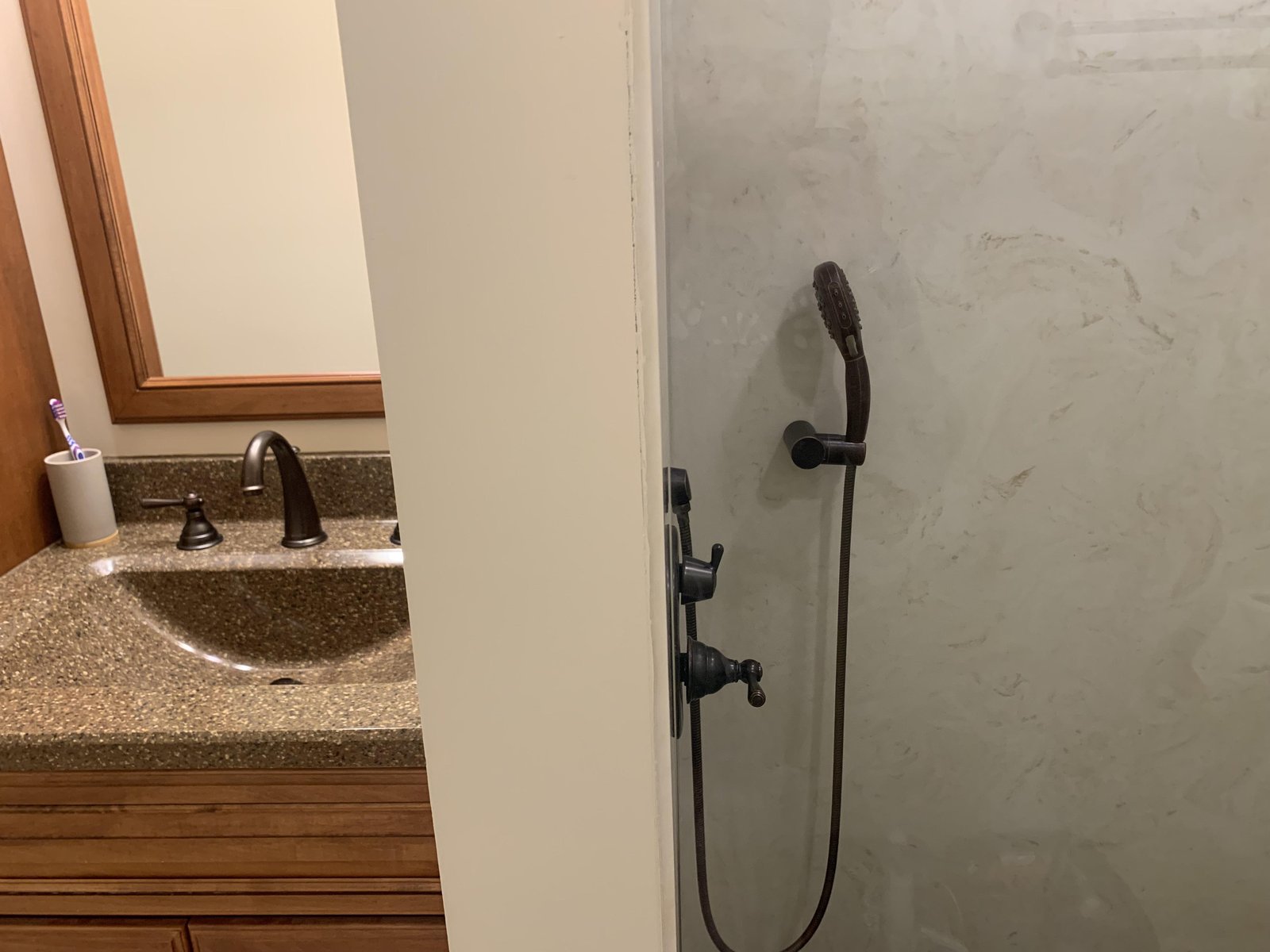
A faulty diverter valve is the primary reason for a shower not working but sink is running fine, causing the issue most of the time in tub-and-shower combos. You can confirm it quickly by running the tub faucet: if water flows freely from the spout but refuses to climb up to the showerhead when you pull the knob, the diverter has failed to redirect the stream.
Table of Contents
Why the shower stopped working but the sink works
| Cause | How common | How to confirm it | Fix it yourself? |
|---|---|---|---|
| Stuck tub diverter valve | Most common | Water runs from lower tub spout only | Yes |
| Mineral-clogged showerhead | Very common | Water trickles weakly from spray holes | Yes |
| Failed mixing cartridge | Common | Faucet handle turns without releasing water | Yes with care |
| Closed fixture shut-off | Less common | No water after recent plumbing work | Yes |
| Frozen branch pipe | Rare | Freezing weather and dry shower line | No |
| Pipe blockage or leak | Rare | Sudden pressure loss behind shower wall | No |
Stuck or broken tub spout diverter
The diverter sits directly inside or above your bathtub spout, operating a small internal gate that blocks the lower opening. When you pull the diverter lift-rod, water should stop escaping the spout and travel up the riser pipe to the showerhead instead. If mineral sediment jams the gate or the rubber seal tears, the water takes the easiest path and exits straight into the tub.
To confirm this problem, turn on the bath faucet handles completely. Pull the diverter knob upward with normal pressure. If water keeps pouring out of the main spout while nothing comes out above, the diverter gate is stuck open.
You can fix a dirty diverter by cleaning off mineral scale, which takes about 30 minutes. Spray a vinegar-based cleaner directly up inside the spout opening and work the rod up and down ten to twelve times. A broken internal seal requires a new spout or gate assembly, which costs a small fraction of a new plumbing fixture. This fix isn’t for modern standalone walk-in stalls, because standard walk-in showers use internal wall valves rather than external tub spouts.
Clogged showerhead spray face
Mineral buildup blocks the microscopic spray channels in the showerhead while leaving the sink’s wider aerator unaffected. Municipal tap water carries dissolved calcium and magnesium that dry out and harden across brass and plastic nozzles. If your tub spout runs with heavy force but the overhead head delivers nothing, the showerhead itself is choked with scale.
You can tell this cause apart from a bad diverter by checking where the water stops: a bad diverter lets water pour out of the tub spout, but a clogged head stops water even though the riser pipe is pressurized.
To verify the clog, unscrew the showerhead from the metal arm by hand or with an adjustable wrench turned counter-clockwise. Point the bare metal pipe into an empty bucket and switch the handles on briefly. If water gushes out of the bare pipe with normal force, your showerhead is completely blocked. Submerge the removed head in a bowl of warm distilled white vinegar for 2 to 4 hours. You’ll avoid replacing parts this way, but the trade-off is the waiting time while the acid dissolves the crust.
Failed shower valve cartridge
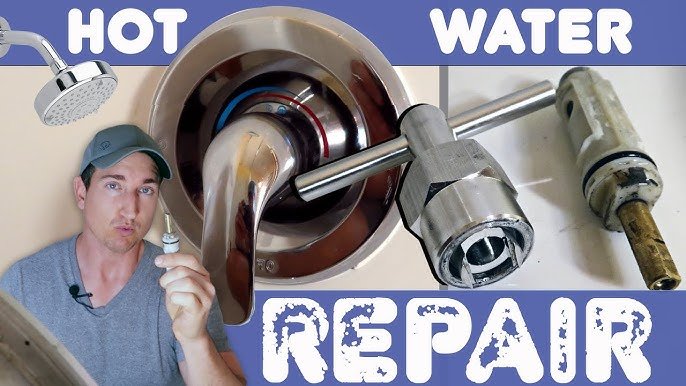
The shower valve cartridge is an internal brass or plastic cylinder housed inside the wall behind your shower trim handle. It balances hot and cold water pressure while controlling the overall flow rate. If its internal springs break, or if tiny o-rings shred inside the chamber, the valve stays shut even when you rotate the external handle to the full-on position.
This problem mimics a main water shut-off, but the sink just inches away continues running at full pressure. Turn the shower handle back and forth between cold and hot. If the handle spins loosely, catches roughly, or makes a faint clicking noise without any water coming out, the cartridge has failed internally.
Replacing a cartridge takes about 45 minutes if the housing is clean. Shut off your main water supply valve first, pull the handle off, and extract the old unit using pliers. This varies by model — check the label or manufacturer stamp on the decorative escutcheon plate before buying a replacement part. A common mistake people make is buying a replacement cartridge by sight alone; installing an incorrect cartridge model damages the brass valve body, turning a minor repair into an expensive wall excavation. The U.S. Environmental Protection Agency WaterSense program provides guidelines showing how modern pressure-compensating shower hardware works inside the wall.
The less likely causes
- Hidden shut-off valves behind an access panel might be closed, which usually happens if a contractor forgot to reopen them after a recent bathroom repair.
- A frozen pipe segment may sit inside an exterior wall, which shows up when sub-zero outdoor temperatures freeze the shower line while interior sink pipes stay warm.
- Heavy sediment from a failing water heater tank can clog the narrow shower mixer, signaled by bits of white or brown grit gathering around your other home aerators.
- A snapped valve stem inside the handle assembly simply spins the metal knob without turning the brass rod underneath.
- A cracked pipe inside the wall cavity stops water flow, which requires an immediate licensed plumber before structural water damage destroys the subfloor.
What a fix usually involves
Fixing this problem usually demands simple household items or an inexpensive replacement part. Clearing mineral scale takes an hour of soaking, a bucket, an old toothbrush, and household vinegar. Swapping an old tub spout requires an adjustable wrench, a screwdriver, and some fresh thread-seal tape.
A replacement valve cartridge costs slightly more than a tub spout, but still represents a tiny fraction of the price of a whole new shower faucet. If X reveals water flowing behind the wall, stop and call a professional immediately; if Y shows water simply running out the bottom spout, handle the fix yourself in the afternoon. When an internal wall pipe bursts or the valve body corrodes severely, professional labor makes up most of the final bill. You can check the exact trim model number printed behind your handle faceplate to get an accurate parts quote from a local supply counter.
Frequently asked questions
Can a clogged showerhead completely stop water flow?
Yes. Heavy mineral deposits can seal off every single nozzle on the spray face, particularly in areas with hard water. If calcium crust builds up over several years without cleaning, it creates a solid barrier that blocks all outgoing water.
Why does water come out of the bath spout but not the shower?
The diverter valve is broken or jammed. When the internal gate fails to drop down or seal properly, water follows gravity and flows straight out of the tub spout instead of traveling up into the shower pipe.
How long does a shower cartridge usually last?
Over time under normal daily use. The lifespan depends directly on your local water quality, as high levels of sediment or dissolved minerals wear down the rubber o-rings and internal plastic gates much faster.
Is it safe to replace a shower cartridge myself?
Yes, as long as you shut off the home’s main water supply before loosening any screws. Failing to turn off the water will trigger high-pressure flooding behind your bathroom wall the moment the retaining clip is removed.
Does a broken diverter waste hot water?
Yes. A leaking or stuck diverter sends hot water down the bathtub drain while you wait for pressure to build up top. This wastes energy from your water heater and increases your utility bills every time someone bathes.
What happens if I use pliers directly on a decorative shower arm?
You’ll ruin the metal finish. Pliers leave deep scratches and gouges in chrome, nickel, or matte black coatings. Always wrap the pipe in a thick rag or several layers of electrical tape before applying a wrench.
Final Thoughts
If you aren’t comfortable handling plumbing repairs yourself, don’t hesitate to call a local professional. They’ll have the right tools to swap out the valve quickly so you’re back to enjoying a warm rinse. It’s a simple fix that’ll make a big difference in your daily routine once it’s finished.
Related guides
- Push Button Shower Diverter Not Working: How to Fix It Fast
- Mold on Shower Curtains: How to Stop It for Good
- Bathroom Sink Stopper Replacement: A Simple DIY Guide