Why is my poop so big it clogs the toilet? Often, it’s because delayed bowel movements allow waste to sit in the colon for days, where it packs together and loses water. Most of the time, stool builds up simply because you waited too long to go or lacked daily fluids. The fastest way to confirm it’s tracking your bathroom frequency; going fewer than three times a week confirms a backup.
Table of Contents
Why your poop clogs the toilet

| Cause | How common | How to confirm it | Fix it yourself? |
|---|---|---|---|
| Infrequent bowel habits | Most common | Stool passed fewer than three times weekly | Yes |
| Low water intake | Very common | Dark urine and hard, dry lumps | Yes |
| Weak toilet flush | Common | Water level rises slowly without waste | Yes with care |
| Sudden fiber increase | Somewhat common | Large, bulky stools after diet change | Yes |
| Partial pipe obstruction | Less common | Multiple flushes fail on normal stool | Yes with care |
| Pelvic floor dyssynergia | Rare | Straining hard despite very soft stool | No |
Infrequent bowel emptying and water loss
Stool grows excessively wide when it sits inside the large intestine for several days. The colon absorbs water continuously from digested food waste. When you hold your bowel movements or experience slow gut transit, the waste stays in the rectosigmoid area, dries out, and packs tightly into one massive mass.
Confirm this by checking the Bristol Stool Form Scale, which classifies bowel output into seven types. Types 1 and 2 represent hard lumps and sausages, showing prolonged colon transit. According to the National Institute of Diabetes and Digestive and Kidney Diseases on constipation, passing fewer than three bowel movements per week defines chronic delays.
If your stool is hard, drink 64 fluid ounces of water daily; if it remains dry after three days, add an osmotic stool softener. The trade-off with osmotic laxatives is softer bulk at the expense of temporary gas. This dietary routine isn’t for people with diagnosed kidney disease who must restrict fluid volume. A common mistake people make is taking stimulant laxative pills every night, which costs them normal bowel muscle tone over time.
Low water intake with high dry matter
A lack of daily hydration creates dense, wide waste that refuses to bend around a toilet trap. When the body runs low on fluids, it pulls extra liquid out of the digestive tract, shrinking overall lubrication while leaving the dry matter rigid. You can tell this cause apart from delayed transit because your bathroom timing might be daily, yet the stool remains as hard and thick as a brick.
Check your hydration by inspecting your urine color before noon. Pale yellow indicates balanced fluids, while dark amber proves your colon is stripping moisture directly from your waste. Increase your water intake by 16 to 32 fluid ounces spread evenly across your working hours. Expect this adjustment to soften stool diameter within 24 to 48 hours. If you increase dietary fiber without increasing fluids, you’ll form even larger blockages that worsen plumbing clogs.
Low toilet water volume or weak flush power

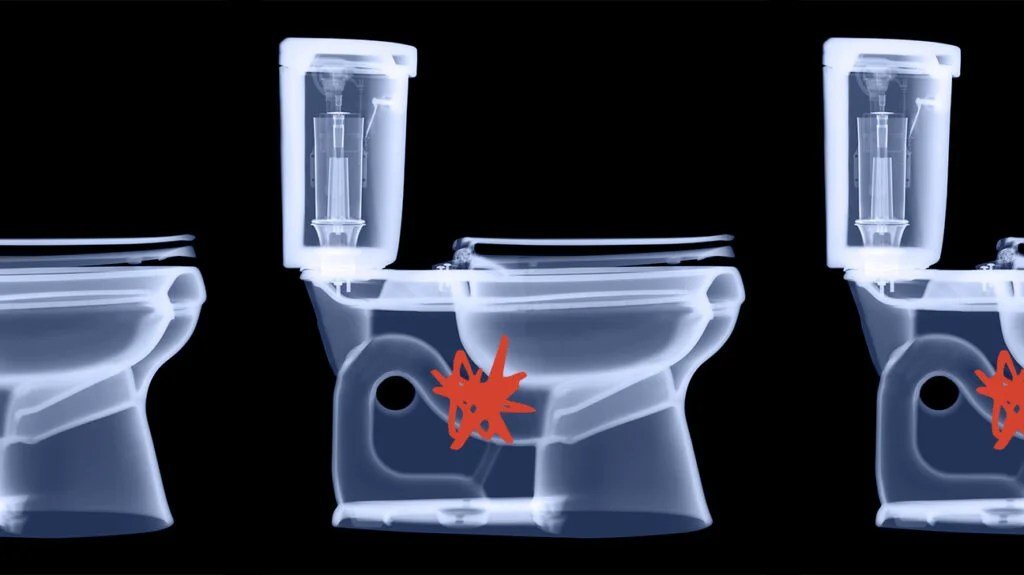
A weak flush mechanism often makes normal, dense waste seem too large for the drain. Modern gravity toilets rely on a precise volume of water dropping quickly from the tank to start a siphon. If the tank water level sits too low, the flush lacks the kinetic force to push dense solids through the internal trapway.
Look inside your toilet tank to test this mechanism safely. The water surface should reach the fill line marked on the inside of the tank or approximately one inch below the top of the overflow pipe, depending on your specific toilet model. If the water rests lower, turn the adjustment screw on the fill valve clockwise to raise the resting level. A worn flapper that drops shut prematurely also starves the bowl of necessary momentum. This mechanical fix takes about 10 minutes, although water pressure varies by model —
The less likely causes
- Narrow drain pipe buildup from mineral scale catches wide waste, which you can spot if bathroom sinks also drain slowly.
- A foreign item dropped into the porcelain trap catches waste, confirmed when even thin toilet paper snags repeatedly.
- Pelvic floor dyssynergia prevents rectal muscles from relaxing, signaled by severe physical straining even when your stool feels soft.
- An enlarged colon from long-term nerve issues creates giant waste, marked by zero natural urge to push for a full week.
- When main sewer line clogs cause raw sewage backups into bathtubs, stop using plumbing immediately and call a licensed plumber to run a mechanical drain auger.
What a fix usually involves
Resolving oversized stool requires lifestyle adjustments, bathroom hardware tweaks, or specialist tools. Softening daily stool demands an extra bottle of water and soluble fiber, which costs very little at any grocery store. Correcting a weak toilet flush requires simple hand adjustments or a replacement flapper, which demands about 15 minutes of labor and represents just a tiny fraction of a toilet’s value.
Clearing stubborn drain obstructions requires a manual toilet auger, requiring moderate physical effort. When tree roots invade underground sewer pipes, standard plungers fail completely. Clearing those exterior pipes requires a professional plumbing contractor with motorized line-clearing equipment. For accurate pricing on sewer clearing, request a written camera inspection quote directly from licensed local plumbing services.
Frequently asked questions

Can eating too much fiber make poop too big?
Yes, eating large amounts of insoluble fiber without matching fluids creates massive stool diameter. Insoluble fiber adds bulk to the stool and helps move material through the digestive system more quickly.
Why does my poop clog the toilet even without paper?
The stool is denser than water and wider than the internal porcelain trap. Gravity toilets feature trapways between two and two-and-one-eighth inches wide, which firm waste quickly bridges and blocks.
How long can poop stay inside you before coming out?
About two to five days is the typical upper limit before severe compaction occurs. Food usually takes 24 to 72 hours to pass through your entire digestive tract under normal, healthy conditions.
Is it safe to use stool softeners every day?
Yes, osmotic softeners are generally safe for daily use under medical supervision. Unlike stimulant laxatives that force bowel contractions, osmotic products simply pull fluid into the intestines to keep waste pliable.
What happens if you ignore large hard stools?
You risk developing bleeding hemorrhoids, painful anal fissures, or rectal impaction. Ignoring hard stool also causes the rectal walls to stretch over time, dulling your natural urge to use the bathroom.
Does drinking cold water help with bowel movements?
Yes, drinking liquids at any temperature stimulates your gastrocolic reflex to get your colon moving. Drinking a glass of water first thing in the morning encourages prompt, regular rectal emptying before waste hardens.
Final Thoughts
If you’re still struggling after adjusting your routine, don’t hesitate to reach out to your doctor. They’ll help you rule out any underlying issues that could be causing these blockages. It’s a common conversation for them, so you shouldn’t feel embarrassed about asking for a little extra guidance.