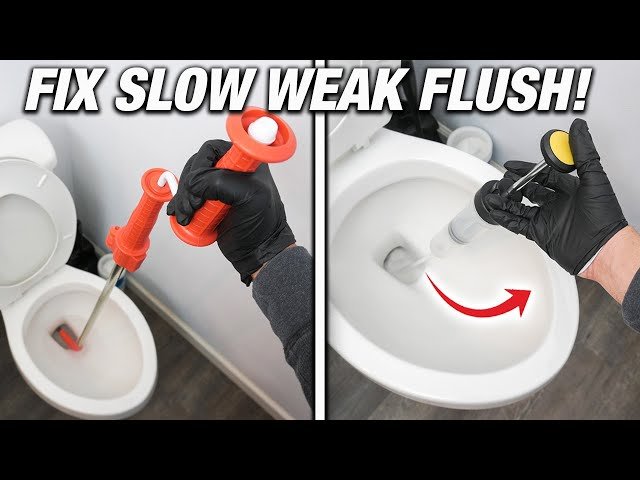
How to fix a slow flushing toilet: raise the tank water level to one inch below the overflow tube and clear mineral buildup from the rim jets using vinegar. A low water level in the tank is the single most common cause, which stops the bowl from getting enough water to create a strong siphon.
Table of Contents
Reasons your toilet is flushing slowly

A weak flush happens when water can’t leave the tank quickly or can’t flow freely through the drain pipe.
First, low tank water reduces head pressure, so the siphon never starts properly.
Second, hard water deposits build up inside the small rim jets and the siphon jet hole at the bottom of the bowl. When these holes narrow, water enters the bowl too slowly to push waste out.
Third, a partial blockage in the trapway or drain pipe restricts the exit flow. If your home has standard fixtures, the EPA WaterSense program requires certified models to use no more than 1.28 gallons per flush, so even minor blockages immediately cause a weak flush.
Adjust the tank fill level
This fix is for toilets where the water level inside the tank sits several inches below the overflow pipe. Take off the tank lid and check the water line. If the water is low, find the adjustment screw on top of the fill valve arm, or the clip on the float rod. Turn the screw clockwise with a screwdriver to raise the float, or slide the clip up. Flush once to test the change.
The water should stop filling exactly one inch below the top of the tall overflow tube. If the water reaches this mark, your flush power will return immediately. If turning the screw does nothing, the fill valve seal is broken; replace the entire fill valve rather than attempting to glue cracked plastic parts.
Clear mineral deposits from the bowl jets
This fix works when the tank fills completely, but water swirls lazily around the bowl instead of dropping fast. Mineral scale from hard water often clogs the small holes tucked under the inside rim.
To clean the rim jets, you must block the rim holes from the underside with tape and pour the vinegar directly into the rim channel, or use a funnel to direct it into the rim feed. Let it sit untouched for at least two hours to dissolve calcium deposits. Next, scrub under the rim with a stiff nylon brush, or gently poke each small hole with a bent wire coat hanger. Flush the toilet. If water flows rapidly straight down the bowl walls, the passages are clear. This fix isn’t for people with cracked porcelain bowls, as metal tools can widen an existing crack and cause major leaks.
Clear the trapway with an auger
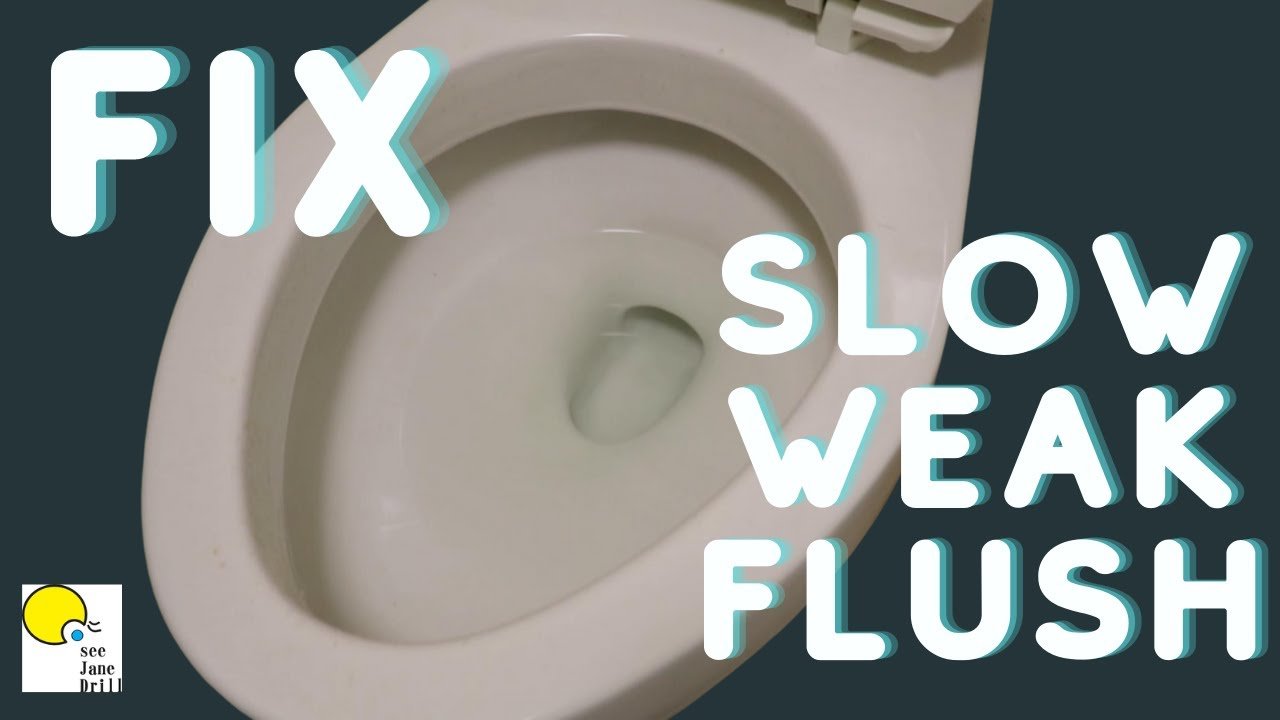
This fix is for stubborn clogs where the bowl fills up high with dirty water before draining out at a crawl. A standard rubber plunger only moves loose paper, but an auger removes stuck solid items like wipes or toys.
Insert the rubber-coated end of a six-foot closet auger into the bottom hole of the bowl. Crank the handle clockwise while pushing gently forward until you feel resistance. Rotate the handle several times to hook the object, then pull it straight back out. This job takes physical effort and makes a mess, but it saves the expense of removing the entire toilet from the floor. If the auger cable stops completely against a solid cast-iron pipe restriction, stop pushing; you need a licensed plumber with a motorized sewer machine.
What not to do
- Don’t drop chemical drop-in bleach tablets into the tank, because the harsh oxidizers rot the rubber flapper and fill valve seals within months.
- Don’t pour boiling water directly into the toilet bowl, since the sudden temperature shock easily cracks cold porcelain and floods the floor.
- Don’t force a drain snake without a protective sleeve down the bowl, as bare metal leaves dark, permanent scratches on the visible vitreous china.
- Don’t pour caustic chemical drain cleaners into a slow toilet, because standing chemicals create toxic fumes and burn your skin if plunging becomes necessary later.
How to stop it happening again
Good maintenance keeps toilet components moving freely and prevents buildup inside the porcelain passages.
| If you’re doing this | Do this instead | Why |
|---|---|---|
| Flushing personal wipes | Throw all wipes in a trash can | Wipes don’t break down in water and snag inside the trapway |
| Ignoring hard water stains | Acid breaks down limescale before it chokes the rim jets | |
| Leaving a sagging flapper chain | Shorten the chain so it has one half-inch of slack | Excess slack stops the flapper from opening all the way |
| Using chemical tank pucks | Clean the bowl manually with a brush and liquid soap | Corrosive tank chemicals destroy the flexible rubber flush valve |
| Holding the handle down to finish a flush | Adjust the float height higher up the valve body | A proper tank volume empties completely with one quick press |
Frequently asked questions

Can hard water cause a toilet to flush slowly?
Yes. Minerals like calcium and magnesium settle inside the small holes under the bowl rim over time. As these holes shrink, water enters the bowl too slowly to create the suction needed for a full flush. Pouring warm vinegar down the overflow tube dissolves these mineral plugs safely.
Is it safe to clear toilet jets with a wire hanger?
Yes, but you must be gentle. Insert the wire tip only a half-inch into each jet hole to break up limescale. Don’t scrape hard against the visible surfaces of the bowl, because the metal tip will leave dark gray marks on the shiny porcelain glaze that are difficult to remove.
Why does the toilet flush slow only sometimes?
A partial obstruction in the trapway causes intermittent weak flushes. Light liquid waste slips past the caught item easily, but solid waste or toilet paper catches on it and stops the water flow. If the problem comes and goes, an item like a toothbrush is likely lodged inside the internal trap.
How long does a toilet flapper usually last?
About four to five years under normal conditions. However, harsh city water or in-tank drop-in tablets can degrade the rubber in under one year. If the flapper feels slimy, warped, or leaves black residue on your fingers, it will close too early and cause a short, weak flush.
What happens if the tank water level is set too high?
Water spills continuously down the open overflow tube and runs directly into the bowl. This won’t make your flush stronger, but it wastes hundreds of gallons of clean water each week and raises your utility bill. Always adjust the water level to stop one inch below the tube opening.
Final Thoughts
If your toilet still doesn’t perform properly after these checks, don’t worry. There might be a deeper blockage in the sewer line that requires a professional’s help. It’s better to call a plumber sooner rather than later, as they’ll get things running smoothly again before a small issue becomes a messy disaster.
Related guides
- Bathroom Sink Filling With Water By Itself: How to Fix It
- Charcoal Filter for Bathroom Fan: Essential Air Quality Fix
- Why You Should Always Flush the Toilet Before Using It