
The benefits of low flow toilet fixtures include saving money on utility bills, cutting household water waste, and reducing strain on local sewer systems.
The mechanical design of the trapway decides whether this upgrade works well or clogs repeatedly. Early models failed because they simply reduced water volume without widening the drain path, leading to frequent double flushes.
Buying without checking your home’s drain pipe slope creates problems. If your waste pipe has less than a quarter-inch drop per foot, gravity units struggle to push waste out to the street.
Table of Contents
Key benefits of a low flow toilet
- Measure your rough-in distance from the finished wall to the center of the floor bolts, which is normally 12 inches. If your measurement is 10 or 14 inches, buy a specialty rough-in model rather than forcing a standard unit to fit.
- Shut off the water supply valve completely, turning it clockwise until it stops. Flush the existing tank, then sponge out the remaining 2 to 3 cups of pooled water.
- Disconnect the flexible supply line and unbolt the bowl from the floor flange. Lift the fixture straight up and scrape away the old wax ring using a putty knife. Tip: Stuff a rag into the open drain hole immediately so sewer gas doesn’t enter your home.
- Set the new wax ring onto the floor horn, lower the new bowl onto the brass flange bolts, and press down firmly with your body weight.
- Secure the nuts by hand first, then turn them one half-turn past snug with an open-end wrench.
- Attach the tank, reconnect the braided supply line, and turn the shutoff valve counter-clockwise to fill the tank. If your shutoff valve leaks around the stem when opened, call a licensed plumber to replace the valve before proceeding.
How long it takes
Swapping an existing fixture takes around two hours under normal conditions, though older plumbing adds time.
| Situation | How long | What changes it | What to watch for |
|---|---|---|---|
| Direct swap on modern flange | 1 to 2 hours | Easy access to shutoff valve | Rust on old floor bolts |
| Broken cast iron flange | 3 to 5 hours | Need to anchor a repair ring | Cracked pipe below floor |
| Dual-flush valve retrofit | 30 to 45 minutes | Tank internal dimensions | Flapper clearance space |
| Multi-bathroom replacement | 4 to 6 hours | Moving heavy porcelain safely | Floor rot around base |
If removing the old bowl takes more than an hour due to seized bolts, cut them off with a hacksaw blade rather than prying against the porcelain.
How to tell when it’s done
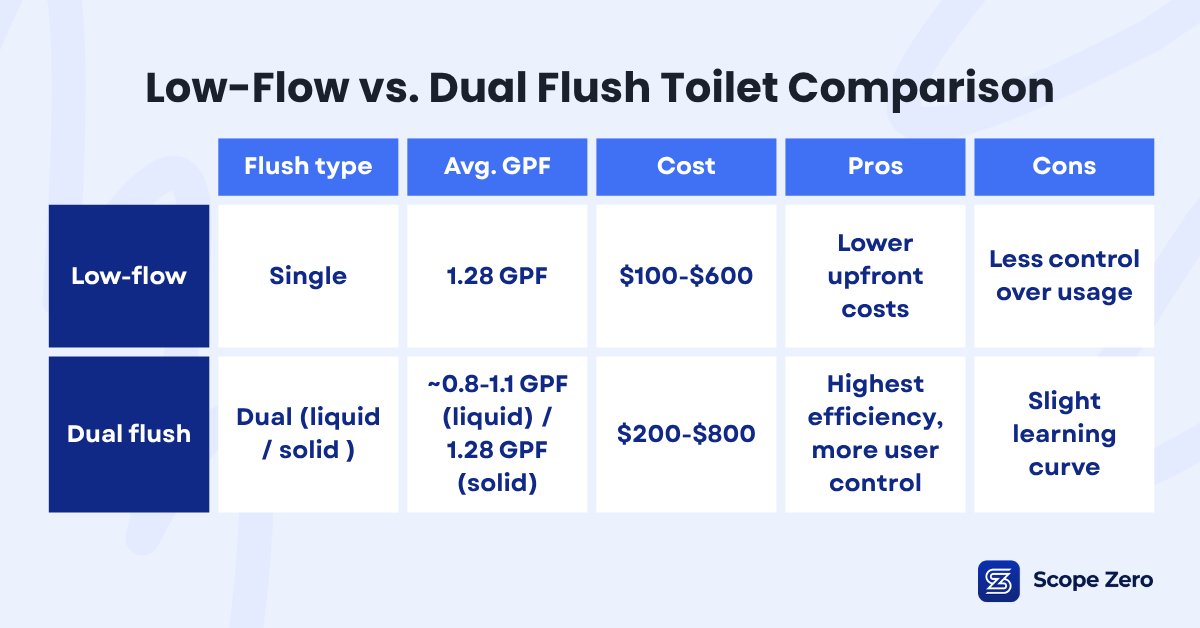
A proper installation clears waste cleanly on a single cycle and refills in roughly 45 to 60 seconds. You shouldn’t hear water trickling into the overflow tube after the fill valve clicks shut. The unit meets federal efficiency standards when certified under the EPA WaterSense program, confirming it uses no more than 1.28 gallons per flush. To verify your seal, drop ten drops of food coloring into the tank and wait 15 minutes; if color seeps into the bowl without flushing, the flapper isn’t seated correctly.
Mistakes that ruin it
- Overtightening the floor bolts: Cracking the porcelain base ruins the fixture instantly and creates hidden water damage. Tighten nuts evenly side to side, stopping the moment the bowl no longer rocks.
- Skipping the rough-in check: Buying a standard model for an irregular wall gap costs you extra trips to the store and restocking fees. Always measure from the finished wallboard, not the baseboard molding, before purchasing.
- Using chemical tank drop-in tablets: Harsh chlorine corrodes silicone seals and flappers within months, causing constant phantom flushing. Clean the bowl with a standard brush and liquid soap instead of placing corrosive pucks in the reservoir.
Frequently asked questions
Do low flow toilets clog more often?
No, modern units rarely clog because manufacturers redesigned the internal trapways to be wider and fully glazed. Early designs from the 1990s had narrow pathways, but modern gravity-fed and pressure-assisted models push solids through with significantly greater force.
Can old plumbing handle low water fixtures?
Yes, most cast iron and PVC pipes carry waste fine, though flat runs need attention. If pipe slope drops below one-quarter inch per foot, liquids outrun solids. Homeowners with flat drain runs often choose pressure-assist models to ensure waste travels properly.
How much water does a low flow toilet use?
Standard low flow models use 1.28 gallons per flush, while older toilets use 3.5 to 5.0 gallons. High-efficiency dual-flush designs drop water use down to 0.8 gallons for liquid waste. This varies by model — check the label on the porcelain behind the seat.
What is the trade-off with pressure-assisted models?
Pressure-assisted tanks flush aggressively and prevent clogs, but they create a loud whooshing sound during operation. Replacement cartridges also cost more than standard rubber flappers. If quiet operation matters in your household, stick to high-performance gravity models instead.
Who is this fixture not suitable for?
This upgrade isn’t for homes with severely damaged sewer lines full of tree roots. Low water volume can’t push past physical obstructions in cracked pipes. Fix broken underground drain lines first before lowering the amount of water moving through them.
Final Thoughts
Switching to a more efficient model is a simple way to care for the environment while keeping your home running smoothly. If you’re ready to make the change, check with your local water department to see if they’re offering any rebates. You’ll be glad you did when you see the difference.
Related guides
- Low Flow Water Pump Guide: Efficiency and Installation Tips
- Rainfall Shower Head for Low Water Pressure: Fix Your Flow






